
10 Best Manufacturing Automation Technology Solutions
A conveyor stops mid-shift, and operators spend twenty minutes tracing a faulty sensor. Nearby, a packaging line keeps producing inconsistent seals. These everyday problems explain why manufacturing automation technology matters beyond faster machines. The right solution can reduce repetitive work, improve process visibility, and help teams address defects before they spread. Results still vary. A robotic arm may improve handling consistency, yet struggle when product dimensions change unexpectedly. Automation works best when its capabilities match the actual process, including the awkward exceptions operators encounter daily.
This guide explores ten manufacturing automation solutions, covering technologies such as industrial robots, machine vision, programmable controllers, and connected sensors. Each addresses a different operational need, from inspecting bottle caps to coordinating material movement between workstations. Selection requires more than comparing purchase prices. Integration costs, maintenance access, worker training, and compatibility with existing equipment all affect long-term value. Safety needs attention. Robot applications require suitable risk assessments, protective measures, and procedures that reflect how people actually use the equipment. A successful demonstration does not guarantee reliable performance across three production shifts.
There are trade-offs. Adding inspection cameras can reveal defects, but poor lighting may create false rejections and unnecessary scrap. Connecting older machines can improve monitoring while introducing cybersecurity and data-quality challenges. Even useful automation can expose weak processes rather than fix them. That deserves reflection before a purchase. The solutions ahead offer a practical starting point for evaluating production needs, implementation demands, and measurable outcomes. The strongest choice should fit your factory, your workforce, and the problems you can clearly define.
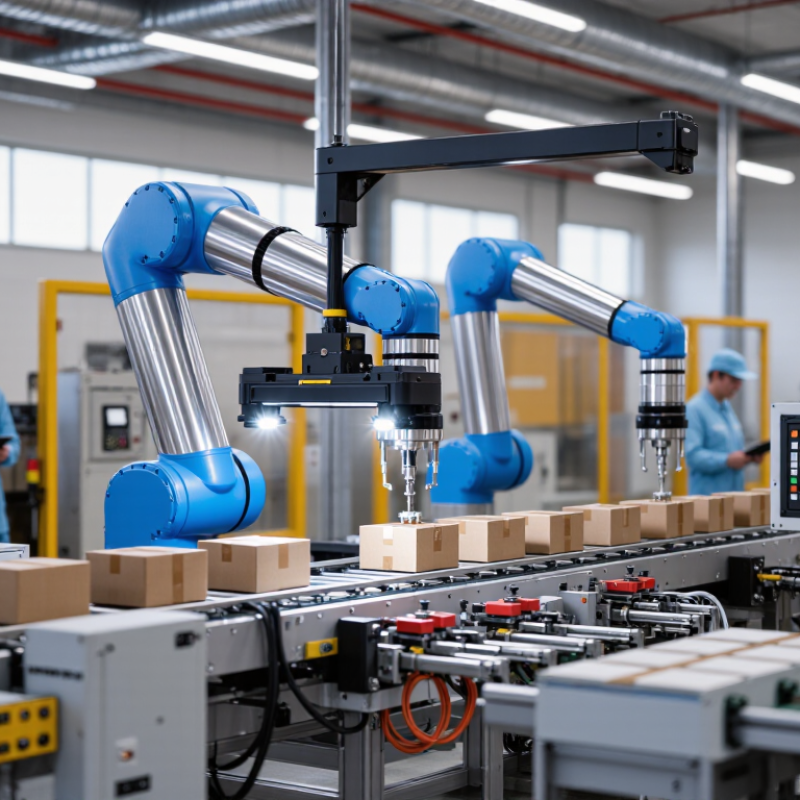
Manufacturing Automation Technologies: Definitions and Core Functions
Manufacturing automation technologies combine machines, control systems, and software to perform production tasks with limited manual intervention. Their core functions include sensing conditions, executing instructions, moving materials, and checking product quality. These functions connect individual machines into coordinated production systems. A sensor might detect a missing component before a press completes its stroke. Small details matter. Reliable automation depends on accurate signals, suitable equipment, and clearly defined operating limits.
Programmable logic controllers execute machine sequences, while robots handle repetitive movements such as welding or palletizing. Machine vision checks dimensions, surface defects, and component placement using cameras and image analysis. Manufacturing execution systems track production orders, equipment status, and material movement across the factory floor. Meanwhile, connected sensors monitor vibration and temperature to support maintenance decisions. Scale is substantial. The International Federation of Robotics’ World Robotics 2024 report recorded 4,281,585 industrial robots operating worldwide in 2023. That represented a 10% increase over the previous year, indicating continued adoption of robotic production equipment.
Selecting automation requires more than comparing cycle times or equipment specifications. A robot may repeat its programmed path accurately yet struggle when incoming parts vary. Vision inspection can also reject acceptable products when lighting changes or lenses become dirty. These weaknesses deserve attention during trials using actual production materials. Teams should measure downtime, false rejection rates, changeover time, and operator interventions before expanding deployment. Some manual checks may remain necessary, especially for unusual defects or frequently changing products.
| Technology | Definition | Core Functions | Typical Manufacturing Applications | Key Implementation Considerations |
|---|---|---|---|---|
| Programmable Logic Controllers (PLCs) | Industrial controllers that execute programmed logic to operate machines and processes using signals from connected devices. | Read sensor inputs, execute control sequences, manage interlocks, and command actuators. | Conveyor control, packaging equipment, automated assembly stations, and process sequencing. | Match input/output capacity, execution speed, communication interfaces, and environmental ratings to the application. Safety functions require suitable safety-rated equipment and engineering. |
| Industrial Robotics | Automatically controlled, reprogrammable manipulators used to move tools, parts, or materials through programmed motions. | Perform repeatable movement, manipulate components, follow programmed paths, and coordinate with production equipment. | Welding, painting, palletizing, machine tending, and assembly. | Select appropriate payload, reach, repeatability, and tooling. Complete an application risk assessment and provide the required protective measures. |
| Computer Numerical Control (CNC) | Computer-based control of machine tools using programmed instructions for motion and machining operations. | Control tool paths, coordinate axis movement, set feed rates and spindle speeds, and execute machining cycles. | Milling, turning, drilling, grinding, and precision component production. | Part accuracy depends on machine capability, workholding, tooling, thermal conditions, and process setup. Programs and tool offsets require verification. |
| Machine Vision | Imaging hardware and software that capture and analyze visual information for inspection, measurement, or machine guidance. | Detect defects, measure features, identify parts, read codes, and determine object position. | Surface inspection, dimensional verification, label checking, assembly verification, and robot guidance. | Lighting, optics, image resolution, part presentation, and inspection speed influence performance. Validate detection results against representative production samples. |
| Supervisory Control and Data Acquisition (SCADA) | A system for collecting operational data and providing supervisory monitoring and control of industrial equipment and processes. | Display process status, manage alarms, record trends, and issue supervisory commands or setpoint changes. | Production-line monitoring, utility supervision, tank farms, and water or wastewater processes. | Plan controller connectivity, alarm priorities, data retention, access control, and network segmentation. Local controllers typically handle time-critical control. |
| Manufacturing Execution Systems (MES) | Software that manages and records production execution between enterprise planning systems and shop-floor operations. | Dispatch work, track work in progress, record production results, maintain genealogy, and support quality workflows. | Electronic production records, lot traceability, operator instructions, and production performance tracking. | Define production workflows, equipment interfaces, master data, and traceability requirements. Functionality varies by implementation and industry. |
| Industrial Internet of Things (IIoT) | Connected industrial devices, sensors, and software that exchange operational data for monitoring and analysis. | Collect equipment data, transmit measurements, monitor condition, and support analytical alerts. | Energy monitoring, equipment condition monitoring, remote diagnostics, and maintenance planning. | Consider interoperability, timestamp accuracy, network availability, cybersecurity, and data ownership. Predictive maintenance requires suitable data and validated analytical methods. |
| Autonomous Mobile Robots (AMRs) | Mobile robots that use onboard sensing and navigation software to move through an environment and transport materials. | Localize within a facility, plan routes, detect obstacles, and execute material transport tasks. | Moving components between workstations, delivering materials to production lines, and transporting finished goods. | Assess payload, floor conditions, traffic patterns, charging needs, and transfer interfaces. Safe operation depends on the robot, facility layout, and application risk assessment. |
| Additive Manufacturing | Processes that build parts from digital model data, usually by adding material layer by layer. | Execute digitally defined builds, control material placement or solidification, and produce complex geometries. | Prototypes, production fixtures, tooling inserts, and selected end-use components. | Evaluate material properties, build orientation, dimensional accuracy, process qualification, and post-processing. Suitability depends on part requirements and production volume. |
| Digital Twins | Digital representations of physical assets or processes that are updated using data from their physical counterparts. | Represent operating state, simulate behavior, compare expected and measured performance, and evaluate proposed changes. | Equipment monitoring, production-system analysis, maintenance support, and process optimization. | Define the intended use, data update frequency, model fidelity, and validation method. Decision quality depends on the accuracy of both the model and its input data. |
Selection note: These ten established technologies address different manufacturing needs and are presented without ranking. The best solution depends on the process, production volume, quality requirements, integration needs, and total cost of ownership.
Related Posts
-
How to Choose Manufacturing Automation Technology in 2026
-
How to Choose Industrial Automation Technology in 2026?
-
China Top 10 Industrial Automation Technology Manufacturers
-
How to Choose the Best Automated Production Systems?
-
What Is Industrial Process Automation and How Does It Work?
-
Top 10 Automated Assembly Systems in China You Should Know?


