How to Choose the Best Automated Production Systems?
Choosing the best automated production systems is no longer a simple equipment purchase. It is a strategic decision about people, data, resilience, and measurable output.
The International Federation of Robotics reported 541,302 industrial robots were installed worldwide in 2023. The global operational stock also exceeded 4.28 million units. These figures show strong market confidence, but adoption alone does not guarantee success. Deloitte’s 2024 Smart Manufacturing and Operations Survey found that manufacturers continue investing in connected technologies, analytics, and artificial intelligence. Yet many companies still struggle to convert pilot projects into reliable, scalable operations.
The right system should match your product mix, cycle time, floor space, workforce skills, and maintenance capacity. A robotic cell may increase throughput, but poor integration can create bottlenecks beside it. Small details matter. Check changeover time, sensor accuracy, software compatibility, safety access, and spare-part availability before signing a contract.
MIT roboticist Daniela Rus has emphasized that robots should “augment human capabilities, not replace them.” That principle remains practical on the factory floor. Operators need clear interfaces, useful training, and authority to stop unsafe or unstable processes. The best automated production systems support judgment instead of hiding problems behind dashboards.
There is no perfect system.
A careful evaluation should compare total cost of ownership, energy use, uptime, cybersecurity, and future expansion. These factors are often underestimated. A cheaper machine can become expensive when integration delays, specialist repairs, or production interruptions appear. This guide examines the evidence, questions supplier claims, and identifies the design choices that separate durable automation from an impressive but fragile demonstration.
Defining Automated Production Systems and Their Core Functions
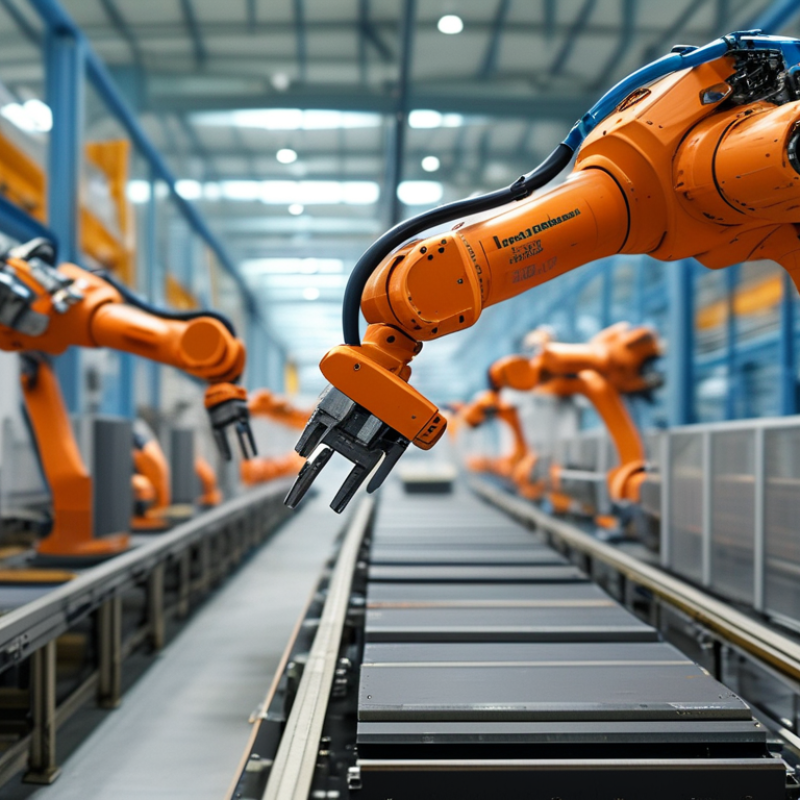
An automated production system is a coordinated network of machines, sensors, controllers, software, and material-handling equipment. It performs production tasks with limited manual intervention. Not just robots. Its core functions are sensing, decision-making, movement, inspection, and data recording. Sensors measure position, temperature, pressure, or quality. Controllers compare these signals with programmed limits. Actuators then move tools, parts, or conveyors. Inspection systems check dimensions and surface defects before products continue. Data records create traceability for maintenance and process improvement.
The scale of adoption is significant. The International Federation of Robotics reported 541,302 industrial robots installed worldwide in 2023. Its World Robotics 2024 report also recorded more than 4.2 million robots operating globally. These figures show market maturity, but they do not guarantee suitable automation. Deloitte’s 2024 Smart Manufacturing and Operations Survey found that 86% of manufacturers viewed smart manufacturing as important for future competitiveness. That expectation can pressure companies into buying systems too quickly.
Choose a system by matching functions to real production needs. Measure cycle time, changeover frequency, defect rates, uptime, and operator workload. Check whether the controls can exchange data with existing planning and quality systems. Maintenance access matters. So does training. A highly automated cell may fail when one inexpensive sensor becomes unavailable. That detail is easy to miss. Flexible equipment can also add unnecessary complexity when products rarely change. Pilot testing with representative materials, operators, and faults provides stronger evidence than a polished demonstration. Perfect automation is unrealistic. Reliable, understandable automation is more valuable.
How to Choose the Best Automated Production Systems?
Core Functions and Reference KPI Targets
The best automated production system should support reliable equipment operation, consistent output, high product quality, and safe data-driven control. The reference targets shown here reflect commonly used manufacturing performance indicators: approximately 90% availability, 95% performance, 99% quality, and 85% overall equipment effectiveness (OEE). Actual targets should be adjusted for the process, product mix, and operating environment.
Assessing Production Goals, Constraints, and Product Requirements
Choosing an automated production system starts with measurable goals, not a machine catalogue. Define hourly output, acceptable defect rates, changeover time, and operator involvement. A packaging line, for example, may require 240 sealed units per hour and fewer than two defects per thousand. These figures create a practical reference. Without them, “high efficiency” remains vague.
Production constraints must be recorded honestly.
Consider floor space, ceiling height, power capacity, ventilation, budget, maintenance skills, and delivery schedules. A compact cell may fit beside an existing conveyor, while a larger line could block emergency access. Check cleaning procedures, material flow, noise, and worker reach. Safety and regulatory requirements should be verified by qualified professionals. Do not treat compliance as paperwork.
Product requirements deserve equal attention.
Record dimensions, weight variation, surface sensitivity, packaging material, and likely product updates. A rigid fixture may handle one size accurately but struggle with frequent changes. Modular tooling can help, though it may increase setup time and cost. Request trial runs with real materials, not ideal samples. Measure cycle time, rejected pieces, jams, and recovery time. I have seen promising tests fail during dusty shifts. That weakness matters. Document assumptions and challenge them. No forecast is perfect. Allow room for training, spare parts, and future demand.
Evaluating Costs, Integration, Safety, and Long-Term Scalability
How to Choose the Best Automated Production Systems?
Evaluating Costs, Integration, Safety, and Long-Term Scalability
The cheapest system is rarely the lowest-cost system. Calculate equipment, installation, training, maintenance, energy, downtime, and software updates. The spreadsheet must include changeover losses.
The International Federation of Robotics reported 541,302 industrial robots were installed worldwide in 2023. This growth shows strong demand, but automation is not automatically efficient. A pilot cell should measure cycle time, first-pass yield, unplanned stops, and operator travel. Deloitte’s 2024 Smart Manufacturing and Operations Survey found that 86% of executives expect smart manufacturing to drive competitiveness within three years. That expectation can create rushed purchases. It should not replace site evidence.
Integration needs equal attention. Check communication protocols, data ownership, legacy equipment, and recovery procedures before signing. A system that cannot share reliable production data becomes an expensive island. Safety validation should follow risk assessment, guarding, emergency stops, and applicable machinery standards, including ISO 10218 for industrial robots. Operators also need practical training, not only digital manuals. A blocked sensor or poorly placed control panel can expose weaknesses that demonstrations hide.
Think beyond today’s product. Select modular fixtures, accessible control cabinets, spare-part standards, and software that supports future stations. Yet scalability has limits. More machines may increase bottlenecks, cybersecurity exposure, and maintenance workload. The uncomfortable truth is that forecasts are often wrong. Review assumptions quarterly, test the smallest useful deployment, and keep a manual fallback while performance data accumulates.
Selecting and Validating the Best-Fit Production System
Selecting and validating the best-fit production system requires more than comparing equipment specifications. Deloitte’s 2024 Smart Manufacturing and Operations Survey reports that 86% of manufacturers expect smart manufacturing to become essential for competitiveness within five years. That pressure can encourage rushed decisions. A better approach starts with the production reality: annual volume, product variation, changeover frequency, takt time, labor skills, and quality risks.
Build a validation matrix before requesting final quotations. Measure cycle time, first-pass yield, downtime, energy use, maintenance access, and data traceability. Include three production scenarios, not one ideal run. A system that performs well at maximum volume may struggle with frequent product changes. The International Federation of Robotics reported 541,302 industrial robot installations worldwide in 2023. Automation is expanding, but more automation does not automatically mean better fit. A small pilot cell, using representative materials and real operators, can expose feeding problems, awkward movements, and software gaps. Some assumptions will be wrong. That is useful evidence.
Tips:
Ask suppliers to demonstrate your hardest product, not their easiest sample. Record every manual intervention during the trial. Set acceptance limits before testing begins. Review failure recovery, cleaning time, training needs, and spare-part access. Use a weighted scorecard, but do not hide practical concerns behind a high total score. Independent validation can also challenge optimistic supplier claims. Keep the results, test conditions, and rejected alternatives in one controlled record. This strengthens auditability and supports future investment decisions.