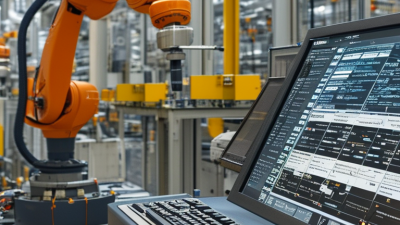
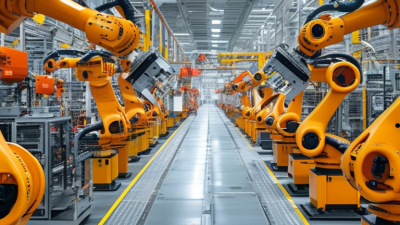
Choosing industrial automation technology in 2026 is not simply a software purchase. It is a production decision with long-term consequences. A robotic cell may look impressive on a factory floor, yet still create maintenance delays, integration costs, or operator frustration. The right choice must fit your processes, workforce, data systems, safety needs, and growth plans.
Joseph Engelberger, widely regarded as the father of industrial robotics, once said, “I can’t define a robot, but I know one when I see one.” His remark remains useful today. Automation is not defined by shiny hardware. It is defined by measurable performance. Can the system reduce cycle time? Can technicians repair it quickly? Can it connect with existing PLCs, MES platforms, and quality tools? These questions deserve evidence, not sales language.
Look closely at the details. A vision camera may miss reflective metal. A cloud platform may struggle with unstable connectivity. A collaborative robot may need better workspace planning than expected. Small weaknesses become expensive at scale. However, not every factory needs the most advanced solution. Sometimes, a reliable sensor upgrade delivers more value than a complete digital overhaul.
This guide examines how to compare industrial automation technology across capability, compatibility, cybersecurity, workforce readiness, total cost, and supplier support. It also considers lessons from real deployment conditions, where dust, heat, legacy equipment, and limited training can change the original plan. No selection method is perfect. That is worth admitting. Careful evaluation still offers a stronger path than choosing technology because it appears modern.
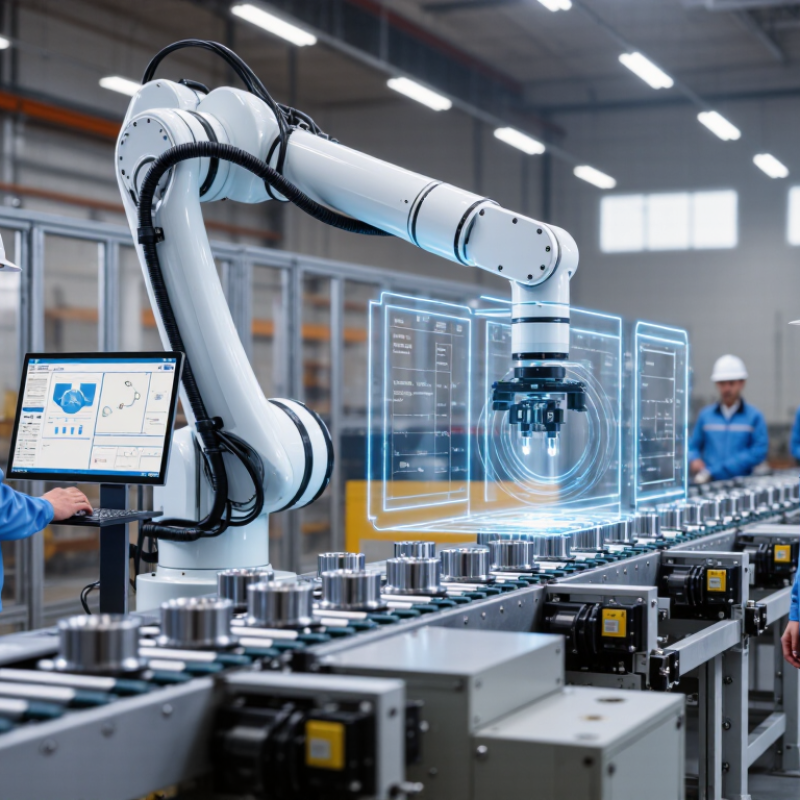
Before choosing industrial automation technology in 2026, define the operating problem in measurable terms. Record cycle time, changeover duration, defect rate, labor availability, and expected uptime. A machine that saves 0.5 seconds per cycle may add complexity during product changes. That trade-off is easy to miss.
The International Federation of Robotics reported 541,302 industrial robots installed worldwide in 2023. This figure shows strong adoption, but it does not prove that every process needs robotics. A packaging line may need vision inspection, while a harsh casting area may require sealed controls and remote monitoring.
Specify temperature, dust, vibration, cleaning methods, and operator access before comparing technical options. Define safety requirements early, including emergency stops, guarding, and safe maintenance procedures.
Data requirements also deserve clear boundaries. Decide which measurements support decisions, such as torque, energy use, downtime, or reject causes. Deloitte’s 2024 Smart Manufacturing survey found that 86% of manufacturers view smart manufacturing as a major competitiveness driver within three years.
Yet many projects still begin with vague goals. That is a weakness worth admitting. Start with one process, establish a baseline, and test whether the proposed system improves throughput without reducing reliability. Incomplete data can produce confident but wrong conclusions. Track results for several production cycles, including weekends, changeovers, and minor failures.
Choosing industrial automation technology in 2026 means comparing architectures, not chasing fashionable hardware. The International Federation of Robotics reported 541,302 industrial robot installations in 2023, despite a 4% annual decline. That volume suggests a practical lesson: compatibility and maintainability often matter more than novelty. A PLC-based architecture suits deterministic motion, fast interlocks, and dusty production cells. A PAC can combine control, motion, and data handling with fewer separate components. An industrial PC offers stronger analytics and vision processing, but it usually demands better cybersecurity and thermal management.
Architecture changes the decision. Centralized control simplifies commissioning and gives operators one clear diagnostic view. Distributed control reduces cable runs and limits failures to smaller zones. Edge computing keeps inspection data near the machine, reducing latency and dependence on external networks. Cloud platforms support fleet analysis, yet they should not carry emergency-stop logic. The boundary must remain deliberate.
The Deloitte 2024 Smart Manufacturing and Operations Survey found that 92% of manufacturers expect smart manufacturing to drive competitiveness within three years. Expectations can become expensive assumptions. A mixed architecture is often safer: deterministic control at the machine, edge processing for local decisions, and governed data services above it. In field projects, engineers should test recovery after network loss, sensor drift, and power interruption. These tests expose weaknesses that glossy demonstrations hide. I would not select one controller family for every line. Standardization helps, but excessive uniformity can create one large failure pattern.
Compatibility comes first. A modern controller must communicate with existing sensors, drives, robots, and safety systems. Check industrial network support, protocol conversion, voltage ranges, and cabinet space before comparing features. A two-hour site walk can reveal more than a polished demonstration. Measure the gap.
This growth raises integration pressure. New equipment should exchange data through documented interfaces, support time-stamped events, and fit current maintenance practices. Test one production cell first. Then inspect cycle time, alarm quality, data accuracy, and operator response. A system that runs fast but produces confusing alarms is not truly compatible.
Scalability requires more than adding machines. Define how the architecture will handle extra lines, users, data points, and remote diagnostics. Deloitte’s 2024 Smart Manufacturing and Operations Survey found that 86% of manufacturers view smart manufacturing as important for competitiveness during the next five years. That expectation can encourage rushed investment. Resist it.
Select modular software, expandable controllers, and open data structures. Review cybersecurity controls against NIST SP 800-82 Rev. 3, especially for segmented operational networks. My practical concern is simple: integration plans often ignore older assets. Those assets rarely disappear on schedule. Keep fallback procedures, spare interfaces, and human oversight, because real factories remain imperfect.
Safety should be assessed before productivity gains. In plant assessments, the most dangerous weaknesses are often simple: exposed guards, unclear stop controls, and poor maintenance access.
The International Labour Organization estimates 2.93 million workers die from work-related causes annually. Select systems with documented risk assessments, functional safety evidence, and clear emergency procedures.
Test the system under fault conditions, not only during demonstrations.
Cybersecurity must cover controllers, sensors, remote access, and suppliers. The 2025 Data Breach Investigations Report recorded more than 12,000 confirmed breaches.
Exploited vulnerabilities increased sharply, while third-party involvement reached about 30%. Segment operational networks, remove unused accounts, and require multi-factor authentication for remote connections.
A checklist is not enough. Configuration drift can quietly reopen old weaknesses.
Cost calculations should include training, spare parts, downtime, updates, and incident recovery. The 2024 Cost of a Data Breach Report placed the global average breach cost at 4.88 million dollars, although industrial losses can differ widely.
Workforce planning matters equally. The World Economic Forum’s Future of Jobs Report 2025 estimates that 59% of workers will need reskilling or upskilling by 2030.
Build practical training around alarms, manual fallback, and safe isolation.
My own preference is conservative: a cheaper system may become expensive when operators cannot confidently control it.
Select a solution against real production needs, not impressive demonstrations. Define the target cycle time, product variation, operator involvement, and maintenance limits. Include safety requirements and applicable regulations before contacting suppliers. A clear scorecard prevents attractive features from hiding practical weaknesses. It should measure output, changeover time, energy use, fault recovery, and total operating cost.
Pilot small. Use one production cell or a controlled line segment. Run representative materials, including difficult parts and normal defects. Record cycle times at different shifts, not only during supervised trials. Ask operators to adjust settings and clear routine faults. Their feedback often reveals awkward interfaces, poor access, or training gaps. Our first pilot failed because we tested perfect components. That mistake exposed a weak inspection step. The revised trial used mixed-quality parts and produced more useful evidence.
Validate the system with documented test criteria and repeatable results. Check accuracy after extended operation, not just during the first hour. Review alarm logs, maintenance records, spare-part access, and recovery procedures. Confirm that workers can understand the controls without constant engineering support. An independent safety review can identify risks missed by the project team. Do not approve deployment until performance, safety, cybersecurity, and integration responsibilities are clearly assigned.
Measure reality. Keep the evidence.
+1 (619) 661-5985
sale@roboticemotion.com
10030 Via de la Amistad San Diego CA 92154, United States
We can supply pre-cut pipes and roller tracks, with the appropriate number of joints and accessories; delivered in kit form as per your specifications.