Why Choose Collaborative Robot Systems for Global Sourcing?

Global sourcing is entering a more demanding phase. Buyers now balance labor availability, delivery risk, quality consistency, and total landed cost. The International Federation of Robotics reported 541,302 industrial robot installations worldwide in 2023. The global operational stock reached approximately 4.28 million units. These figures show a broader manufacturing shift toward automation, but they do not make every investment sensible.

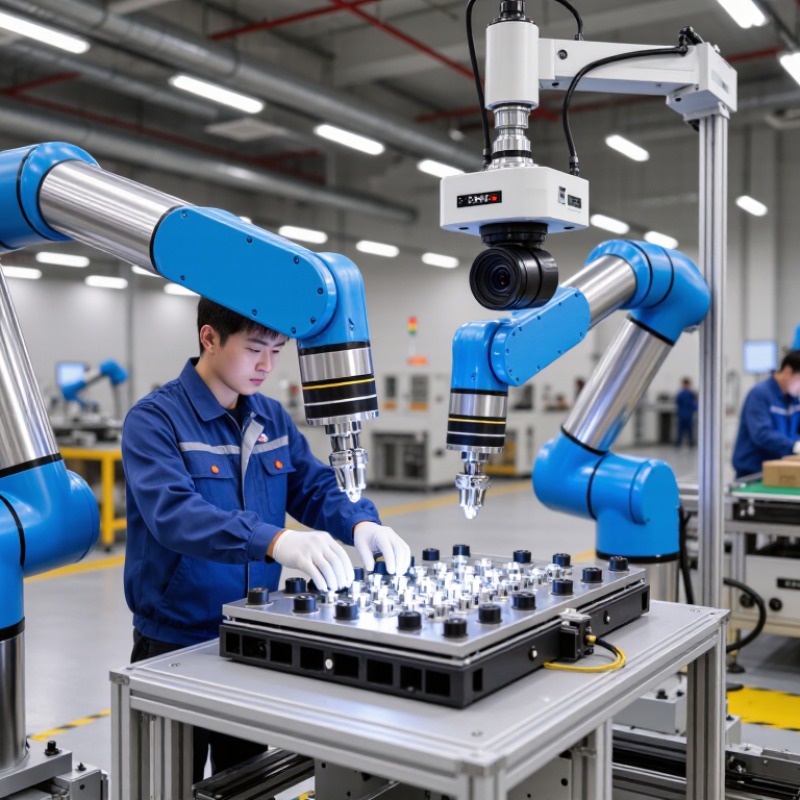
This is where collaborative robot systems deserve closer attention. Designed to work near trained employees, cobots can support machine tending, inspection, packing, and material handling. A worker loads small components. The cobot transfers them to a fixture. A vision camera checks alignment before packaging. This practical workflow can improve repeatability without requiring a fully rebuilt production line. For global sourcing teams, that flexibility matters when suppliers serve changing orders, mixed product sizes, or regional demand.

The World Bank’s Logistics Performance Index 2023 highlights continuing differences in shipment reliability, customs efficiency, and supply-chain resilience across economies. Automation cannot solve every logistics problem. It can, however, reduce dependence on repetitive manual tasks inside supplier facilities. The case is strong, but not automatic. Integration skills, safety validation, training, maintenance, and local service coverage still influence results. A cobot is not magic. Buyers should request measured cycle times, documented uptime, payback assumptions, and evidence from comparable factories. IFR data provides global context, while supplier-level production records provide better investment evidence. That distinction is easy to miss. It may determine whether collaborative robot systems create durable sourcing value or simply add another underused machine.
Why Choose Collaborative Robot Systems for Global Sourcing?

What Are Collaborative Robot Systems in Global Sourcing?

Collaborative robot systems are not simply small robots placed beside workers. In global sourcing, they combine a robotic arm, sensors, end effectors, software, and documented safety controls. These elements support loading, inspection, screwdriving, and packaging. People still manage judgment-heavy decisions. ISO/TS 15066 addresses force limits, speed, workspace, and task-based risk assessment. That distinction matters. A low quotation can hide tooling, integration, training, and local compliance costs.

The International Federation of Robotics reported more than 541,000 industrial robots installed worldwide in 2023.

This figure includes conventional and collaborative units, so it is not a cobot count. However, it confirms strong automation demand across manufacturing markets.

Deloitte’s 2024 smart manufacturing survey reported that 92% of manufacturers viewed smart manufacturing as a primary competitiveness driver within three years. For sourcing teams, standardized robot systems can improve repeatability between factories. They can also reduce dependence on hard-to-recruit manual labor. Yet the term “collaborative” can mislead. A robot may work near people, but the complete cell still requires careful validation.

Tips: Define the task before comparing suppliers. Request cycle-time evidence, safety documents, spare-parts plans, and operator training records. Check performance using your actual materials. A polished demonstration is not enough. Include maintenance access and software support in the total-cost review. Small omissions become expensive.

How Collaborative Robots Support International Procurement Operations

Global sourcing depends on steady movement between suppliers, ports, warehouses, and production lines. Collaborative robot systems help procurement teams control this movement without isolating every task behind cages. The International Federation of Robotics reported 542,076 industrial robot installations in 2023, with 4.28 million robots operating worldwide. These figures show mature infrastructure, not a promise that every warehouse needs automation. People still matter.

The MHI 2024 Annual Industry Report found that 43% of respondents already used robotics and automation in supply chains. For international procurement, a collaborative robot can move cartons, scan labels, build sample kits, or place components into inspection trays. A worker can change the task through a simple interface, even when purchase volumes shift across regions. Sensors record quantities and handling times, creating clearer receiving evidence for supplier discussions. Small details count. A damaged corner may explain a lost shipment.

The technology also supports multilingual operations through visual instructions and standardized workflows. It does not replace supplier evaluation, customs judgment, or contract decisions. Teams still need maintenance plans, safe work zones, and reliable connectivity across time zones. A pilot may expose inconsistent packaging that automation cannot handle smoothly. That is useful friction. Procurement leaders should measure error rates, changeover time, worker acceptance, and total operating cost before expanding. Collaborative robots can improve coordination, but only when the surrounding process is disciplined.

Why Choose Collaborative Robot Systems for Global Sourcing?

Estimated labor hours saved per 100 standardized procurement-related handling cycles after deploying collaborative robots.

Collaborative robots can support international procurement operations by automating repetitive receiving, kitting, inspection, machine-tending, and export-packaging activities. The results can help sourcing teams improve throughput, standardize processes across locations, and reduce dependence on manual handling capacity.

Which Sourcing Tasks Can Collaborative Robots Improve?

Why Choose Collaborative Robot Systems for Global Sourcing?

Collaborative robot systems can improve repetitive sourcing tasks without removing skilled workers from the process. In receiving areas, they can unload small cartons, scan labels, and place components into defined inspection zones. This creates more consistent handling when shipments arrive at different times or from distant suppliers. Human staff can then focus on damaged goods, unclear markings, and supplier communication.

They also support sorting, counting, kitting, and basic quality checks. A robot can pick fasteners from divided bins, verify quantities with cameras, and prepare a kit for assembly. In a busy warehouse, this may reduce misplaced parts and shorten preparation time. It helps here. For global sourcing teams, recorded scan data can connect physical goods with purchase orders, batch details, and inspection records. That makes discrepancies easier to investigate.

Packing is another practical area. Robots can place products into cartons, apply labels, and separate fragile items under clear handling rules. However, automation is not automatically reliable. Poor packaging data, changing product shapes, or irregular supplier labels can confuse the system. A pilot project should measure error rates, changeover time, worker feedback, and maintenance needs. I have seen efficient workflows weaken when teams ignore these details. Human review remains important for unusual shipments, quality disputes, and final release decisions. Improvements should be tested on the warehouse floor, not assumed from a specification sheet.

What Benefits Do Collaborative Robot Systems Provide to Global Suppliers?

Global suppliers need production systems that adapt to changing orders, labor conditions, and product designs. Collaborative robot systems can support this flexibility without requiring a fully isolated robotic cell. A trained operator may guide a robot through a new pick-and-place sequence, then test it with sample parts. This shortens setup time for small batches. It also helps suppliers respond to regional demand without rebuilding an entire line.

The benefits become clearer during repetitive tasks. A collaborative robot can load components, apply controlled pressure, or move cartons at a steady pace. Workers can focus on inspection, material planning, and process improvement. Consistent handling may reduce damaged parts and simplify production records. Sensors can also help identify unusual force or positioning, creating useful evidence during supplier reviews. In practice, these systems work best beside people, not apart from them.

They are not plug-and-play miracles. A poorly chosen gripper may slow the line. A narrow workspace can create awkward movement. Operators also need practical training, clear stop procedures, and time to question the setup. Suppliers should measure cycle time, error rates, maintenance needs, and worker acceptance before expanding deployment. Different facilities may require different risk assessments and operating controls. That extra evaluation can feel inconvenient, but it prevents attractive automation plans from becoming expensive, underused equipment.

Why Choose Collaborative Robot Systems for Global Sourcing? - What Benefits Do Collaborative Robot Systems Provide to Global Suppliers?

Benefit Area Measurable Dimension Indicative Data or Industry Range Value for Global Suppliers Important Consideration
Faster Deployment Implementation time Simple pick-and-place, machine-tending, and inspection applications can often be deployed in days or weeks rather than several months. Helps suppliers respond quickly to new customer programs, seasonal demand, and short production runs. Actual deployment time depends on tooling, programming, guarding, validation, and line integration.
Flexible Production Changeover capability Digital recipes, reusable programs, and quick-change end effectors can support multiple products or manufacturing steps. Improves the ability to serve multiple international customers without dedicating a separate fixed cell to every product. Changeover efficiency depends on standardized fixturing, product variation, and software configuration.
Lower Space Requirement Production footprint Collaborative systems are commonly designed for compact work areas and may be installed on benches, carts, or mobile platforms. Allows suppliers to increase automation capacity where factory space, especially in urban or high-cost locations, is limited. The required footprint still includes conveyors, fixtures, material presentation, maintenance access, and risk-control equipment.
Human–Robot Collaboration Operator interaction Cobots can be designed for monitored collaborative operation, subject to application-specific safety assessment and operating limits. Workers can focus on quality checks, complex handling, replenishment, and problem solving while the robot performs repetitive movements. Collaborative operation is not automatically safe; speed, force, tooling, payload, layout, and foreseeable contact risks must be assessed.
Accessible Automation Programming and training requirements Graphical interfaces, guided teaching, and reusable task templates can reduce the programming barrier for routine applications. Supports suppliers that have limited access to specialist automation engineers in different production regions. Staff still require training in robot operation, safeguarding, maintenance, troubleshooting, and process validation.
Workforce Stability Repetitive manual work reduction Cobots are well suited to repetitive, ergonomically demanding, or consistency-critical tasks. Reduces dependence on hard-to-fill roles and helps retain employees by shifting them toward higher-value activities. Automation should complement workforce planning and training rather than be treated as a substitute for all skilled labor.
Consistent Quality Repeatability and process control Many industrial collaborative arms offer repeatability in the approximate ±0.02 to ±0.10 mm range, depending on model and operating conditions. Helps global suppliers maintain repeatable handling, loading, dispensing, inspection, and assembly processes across shifts. System repeatability does not guarantee finished-product accuracy; fixtures, sensors, calibration, material variation, and process design also matter.
Broad Application Coverage Payload and reach suitability Common collaborative-arm configurations cover approximately 3–20 kg payloads and about 500–1,800 mm reach, with wider ranges available for specialized applications. Provides options for packaging, machine tending, assembly, palletizing, welding, material handling, and inspection. The correct selection must account for gripper weight, center of gravity, acceleration, cycle time, reach, and required safety limits.
Scalable Investment Capital and operating cost drivers A typical solution cost is influenced by the robot arm, end effector, vision, fixtures, safety equipment, integration, training, maintenance, and downtime. Suppliers can begin with one bottleneck or labor-intensive process and expand after measurable results are achieved. Return on investment should be calculated using utilization, labor availability, quality losses, maintenance, energy, and expected production life.
Global Standardization Process portability Standardized work instructions, program backups, risk assessments, and maintenance records can be replicated across sites. Makes it easier to transfer validated production methods between factories and support consistent customer audits. Local electrical, machinery-safety, labor, import, and cybersecurity requirements must be verified before deployment.
Supply-Chain Resilience Capacity responsiveness Programmable automation can be reassigned between compatible tasks when demand, staffing, or product mix changes. Improves responsiveness to order fluctuations, reshoring requirements, labor shortages, and supplier diversification programs. Resilience also depends on spare parts, local technical support, software availability, component lead times, and preventive maintenance.
Data note: The ranges and statements above are indicative industry guidance rather than guaranteed performance. Final results depend on the specific robot system, tooling, application cycle, factory layout, workforce capability, and applicable safety requirements. Collaborative applications should be evaluated in accordance with relevant machinery-safety standards, including ISO 10218 and ISO/TS 15066 where applicable.

How Can Businesses Evaluate and Implement These Systems?

Choosing a collaborative robot system for global sourcing begins with a practical evaluation, not a catalog comparison. Start with the task. Map the workstation, operator movements, cycle time, payload, reach, and production volume. A system may look suitable on paper but fail beside a crowded assembly line. Measure twice.

Review safety functions, training requirements, maintenance access, and integration with existing equipment. Ask suppliers for documented performance data, service response times, spare-parts availability, and total cost estimates. Confirm that the proposed installation can meet the relevant requirements in each operating region. Local technical and compliance reviews remain essential.

Run a limited pilot before making a broad purchasing decision. Use real materials, actual shift patterns, and trained operators. Track output, quality variation, unplanned stops, ergonomic improvements, and programming time. In sourcing projects, hidden costs often appear during integration rather than purchase. Expect friction. Workers may need more training than expected, and manual processes may still perform better for irregular tasks. That is not failure; it is useful evidence.

Implementation should include a responsible project owner, clear acceptance criteria, and a support plan covering software updates, inspections, troubleshooting, and cybersecurity controls. Compare results against the original baseline after several weeks. A successful system should improve measurable work, not simply add automation. Reassess the design when operators report discomfort, delays, or confusing controls.

×
img

    Contact Info

    PHONE NUMBER

    +1 (619) 661-5985

    EMAIL ADDRESS

    sale@roboticemotion.com

    ADDRESS INFO

    10030 Via de la Amistad San Diego CA 92154, United States