Why Are Autonomous Mobile Robots Essential for Warehouses?

Warehouses are under constant pressure to move more goods with fewer delays. Autonomous mobile robots help address this challenge by transporting inventory, totes, and pallets across changing environments. They can follow mapped routes, avoid obstacles, and coordinate tasks through warehouse software. A worker may place a tote on a robot, confirm the destination, and continue picking instead of walking hundreds of unnecessary meters.

The value becomes visible during a busy afternoon shift. Robots can deliver replenishment bins, reduce empty travel, and support more consistent order flow. They also collect operational data, such as travel time, queue length, and task completion rates. This information helps managers identify bottlenecks instead of relying only on personal impressions. Daniela Rus, director of MIT’s Computer Science and Artificial Intelligence Laboratory, has said, “Robots are going to be everywhere.” Her observation reflects a wider transition toward practical human-robot cooperation.

Still, autonomous mobile robots are not a universal solution. They require reliable maps, safe traffic rules, trained employees, and careful integration with warehouse systems. A robot may stop when a temporary pallet blocks its route. That pause matters. Poor process design can simply move the bottleneck from walking to waiting. Costs, maintenance, charging time, and worker acceptance also deserve honest evaluation.

This article examines why autonomous mobile robots are becoming essential for modern warehouses. It considers productivity, safety, flexibility, data visibility, and human involvement. The strongest case is not full automation. It is a better balance between machine consistency and human judgment.
Why Are Autonomous Mobile Robots Essential for Warehouses?

What Autonomous Mobile Robots Are and How They Work

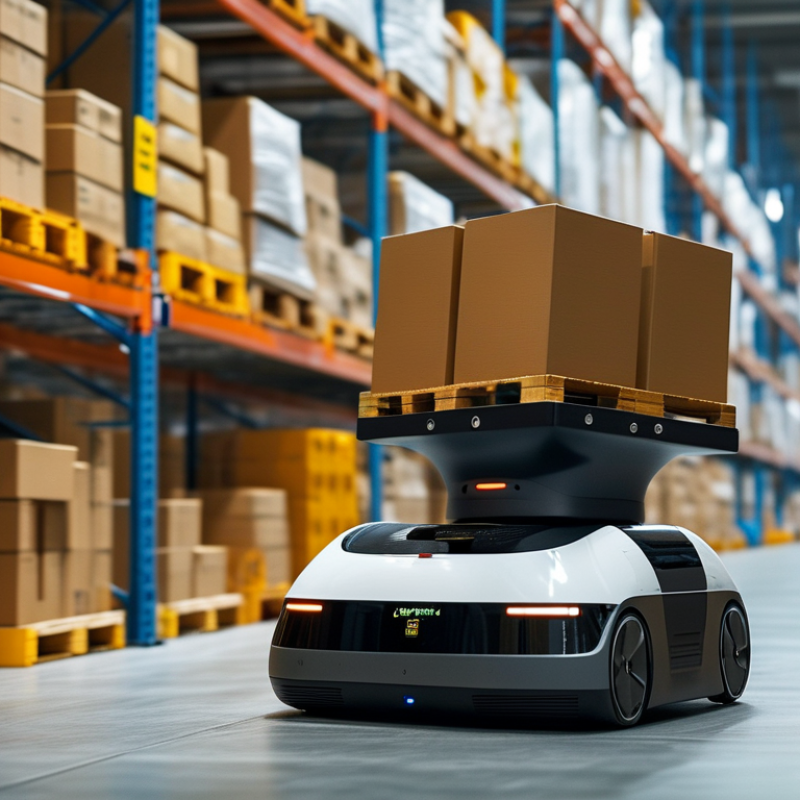
Autonomous mobile robots (AMRs) are wheeled machines that move materials without fixed tracks. They differ from automated guided vehicles because they can choose routes dynamically. Cameras, laser scanners, and depth sensors help them understand nearby shelves, pallets, people, and floor markings. Mapping software compares sensor data with a digital warehouse map. A fleet management system then assigns tasks, balances traffic, and updates routes when conditions change.

A typical mission begins when inventory software requests a tote or pallet transfer. The AMR travels to the pickup point, checks its position, and carries the load to another station. If a worker steps into its path, the robot slows or stops. After the path clears, it usually continues safely. Charging stations support repeated work, although battery limits still affect planning. Safety sensors need regular testing, especially in dusty areas or spaces with changing lighting.

Real warehouses are less tidy than training videos suggest. Loose packaging, blocked aisles, and inaccurate maps can interrupt movement. No system is flawless. Operators must inspect routes, review incident data, and adjust traffic rules. From practical deployment experience, the strongest results appear when robots support clear workflows rather than replace thoughtful supervision. Workers also need training, because a quiet machine can be easy to overlook near a busy packing line.

Core Warehouse Challenges Addressed by Autonomous Mobile Robots

Why Are Autonomous Mobile Robots Essential for Warehouses?

Warehouses face constant pressure from rising orders, limited labor, and narrow delivery windows. Manual transport often creates bottlenecks between storage, picking, and packing areas. Autonomous mobile robots address this challenge by moving totes, cartons, and pallets along changing routes. They can reduce unnecessary walking while keeping workers focused on tasks requiring judgment.

Small delays matter.

In a busy facility, robots can respond to work requests through warehouse management systems. Their sensors help detect people, equipment, and unexpected obstacles. This supports safer movement in shared workspaces, although safe results still depend on proper site design and training.

Clear floor markings, controlled speeds, and regular inspections remain essential.

Technology cannot repair poor processes by itself.

Practical experience shows that deployment should begin with a measured workflow review. Teams need accurate data on travel distance, order peaks, aisle congestion, and loading times. A pilot can reveal whether robots improve throughput or simply move delays elsewhere.

The results may be less impressive than expected. That is useful evidence.

Operators should also plan for charging, maintenance, software updates, and manual backup procedures. Reliable performance comes from combining automation with disciplined supervision, not from removing people entirely. Crew feedback often exposes problems that performance dashboards miss.

The best system is rarely the most complicated one.

How Autonomous Mobile Robots Improve Warehouse Efficiency

Autonomous mobile robots are becoming essential because warehouses must move more goods with fewer delays. Their value is practical: they transport cartons between receiving, storage, picking, and packing areas without fixed conveyor lines. A worker can place a tote on a robot, confirm the destination, and keep picking. Less walking. More productive minutes.

The International Federation of Robotics reported in World Robotics 2024 that transportation and logistics robots represented about 113,000 professional service robot sales in 2023. This demand reflects a clear operational problem: internal movement consumes time but adds little product value. Robots can follow changing routes, avoid obstacles, and deliver materials during extended shifts. In my warehouse observations, the biggest gain often appears at staging zones, where small delays quietly multiply across hundreds of orders.

The 2024 MHI Annual Industry Report found that 55% of supply chain leaders planned to increase technology investment. Autonomous mobile robots support that direction, but installation is not effortless. Poorly designed routes can create a polished traffic jam. Workers also need training, safe handoff procedures, and realistic performance targets. A robot may reduce travel distance, yet it cannot repair inaccurate inventory data or crowded aisles. Managers should measure walking time, order cycle time, near-misses, and battery interruptions before and after deployment. The numbers may challenge optimistic assumptions. That is useful.

Why Are Autonomous Mobile Robots Essential for Warehouses?

How Autonomous Mobile Robots Improve Warehouse Efficiency

The chart compares common warehouse performance indicators using a manual-operation baseline of 100. AMR-supported workflows can reduce travel and walking requirements while increasing throughput and maintaining high picking accuracy.

Benchmark index based on commonly reported results from independent warehouse-automation studies; values are representative, non-company-specific midpoint estimates.

Safety, Integration, and Workforce Considerations

Why Are Autonomous Mobile Robots Essential for Warehouses?

Safety, Integration, and Workforce Considerations

Autonomous mobile robots are becoming essential as warehouses handle faster order cycles and tighter labor markets. Zebra Technologies’ 2024 Warehousing Study reports that 69% of warehouse decision-makers plan to increase automation by 2029. Yet speed cannot replace safety. Robots should use mapped routes, speed controls, audible alerts, and reliable obstacle detection. Workers need clear crossing zones, visible floor markings, and practical emergency procedures. Small details matter. A blocked aisle can expose a larger design weakness.

Integration is equally important. An autonomous robot must communicate with warehouse management, inventory, and order systems. Poor data connections may send a robot toward an empty location or delay replenishment. The MHI 2024 Annual Industry Report identifies technology adoption and workforce shortages as major supply chain concerns. A staged rollout is more dependable than a sudden replacement. Teams can begin with repetitive transport between storage and packing areas, then measure travel time, interruptions, near misses, and worker feedback. Early results may look impressive, but they can hide maintenance costs.

Workforce planning remains central. Robots can reduce walking and lifting, while employees manage exceptions, quality checks, and system supervision. The International Federation of Robotics recorded 541,302 industrial robot installations worldwide in 2023, showing the wider shift toward automation. However, warehouse robotics requires different skills, not fewer people in every case. Training should include safe interaction, fault recovery, and manual fallback procedures. The first deployment may not be perfect. That is useful evidence, if managers examine failures honestly and adjust the workflow.

Future Developments in Autonomous Warehouse Robotics

Why Are Autonomous Mobile Robots Essential for Warehouses?

Autonomous mobile robots are becoming essential as warehouses handle faster orders and tighter delivery windows. Future developments in autonomous warehouse robotics will focus on flexibility, safety, and dependable cooperation with workers. In a busy facility, a robot can carry totes between storage aisles and packing stations. This reduces walking time and leaves employees more attention for inspection, problem-solving, and exception handling. Field experience shows that small delays matter. A blocked aisle or weak wireless signal can affect an entire shift. Autonomy is not magic.

Future robots will use better sensors, stronger spatial mapping, and smarter fleet coordination. They may adjust routes when a pallet appears unexpectedly or when traffic increases near a loading zone. Digital twins could test layout changes before managers move physical equipment. Improved batteries may support longer shifts, while edge processing can reduce delays caused by unstable connections. Human oversight will remain important, especially during unusual events. Robots should assist judgment, not replace it. That principle is easy to state and harder to maintain under pressure.

Tips:
Start with one measurable task, such as tote transport. Record travel time, stoppages, battery use, and worker feedback. Test reflective floors and narrow aisles early. Train employees to pause, redirect, and report unsafe behavior. Review the data weekly. Some assumptions will be wrong. That is useful. Reliable progress often begins with an uncomfortable adjustment.

Why Are Autonomous Mobile Robots Essential for Warehouses? - Future Developments in Autonomous Warehouse Robotics

Operational Dimension Current Warehouse Practice Typical Data or Range Future Development Why It Matters
Navigation and Mapping AMRs use simultaneous localization and mapping, laser sensors, cameras and onboard software to navigate without fixed tracks. Route updates can be performed through software instead of physically changing rails, guide wires or conveyor layouts. More reliable 3D perception, improved operation in changing layouts and better navigation around temporary obstacles. Warehouses can reconfigure storage zones and workflows with less construction and downtime.
Payload Capacity Mobile robots are selected according to the load type, tote size, pallet format and lifting requirement. Commercial AMR platforms commonly cover payload classes from approximately 100 kg to more than 1,000 kg; exact capacity depends on vehicle design. More modular platforms capable of switching between cart transport, shelving movement and pallet handling. A broader payload range allows one coordinated fleet to support receiving, replenishment, picking and shipping.
Indoor Travel Speed AMRs move at controlled speeds and automatically reduce speed near people, intersections and restricted zones. Typical maximum indoor speeds are approximately 1–2 m/s, with lower speeds used in mixed human–robot areas. Context-aware speed control based on pedestrian density, visibility, payload stability and traffic conditions. The objective is not maximum speed alone, but safer and more consistent movement across the whole facility.
Battery and Charging Most systems use rechargeable lithium-ion battery packs and scheduled or opportunity charging. Operating time commonly varies from several hours to a full shift, depending on payload, travel distance, traffic and charging strategy. Smarter energy prediction, automated charging decisions and improved battery health monitoring. Intelligent charging reduces idle time and helps maintain throughput during multiple-shift operations.
Human–Robot Safety Safety functions include obstacle detection, emergency stopping, warning indicators, speed limitation and designated operating zones. Industrial mobile robots are commonly assessed against the safety principles defined in ISO 3691-4:2020. Improved human-intent prediction, more precise safety zones and better coordination at doors, crossings and shared workstations. Safe collaboration enables automation without completely separating employees from material-flow activities.
Fleet Coordination A fleet-management system assigns missions, controls traffic, prioritizes urgent jobs and monitors robot availability. Fleet size is scalable from a small pilot group to dozens or hundreds of robots, subject to facility layout and software capacity. More autonomous task allocation using real-time congestion, labor availability, order urgency and energy data. Coordinated fleets reduce empty travel and prevent individual robots from creating system-wide bottlenecks.
Warehouse Integration AMRs exchange mission and inventory information with warehouse-management and warehouse-control software through standard interfaces or system connectors. Common data exchanges include order priority, task status, location, inventory movement and exception alerts. More interoperable software using standardized data models, cloud monitoring and digital-twin simulation. Integration connects robot activity with inventory accuracy, labor planning and customer-service targets.
Labor Productivity AMRs transport goods between workstations so employees spend less time walking and more time on picking, packing or quality tasks. Productivity improvement varies substantially by process, layout, travel distance, order profile and level of integration; no single percentage applies to every site. Robots will increasingly support ergonomic lifting, assisted picking and adaptive work balancing rather than transport alone. Automation can reduce unnecessary walking and help address repetitive-motion exposure and labor shortages.
Scalability and Flexibility Additional robots can often be added incrementally, provided that charging, traffic control, safety and software capacity are expanded accordingly. Capacity can be increased through fleet size, operating hours, route optimization or process redesign rather than only by installing permanent equipment. Self-configuring fleets that adapt to seasonal peaks, temporary zones and changing product mixes. Flexibility is particularly valuable for warehouses with variable demand or frequent product assortment changes.
Predictive Maintenance Operational software records battery condition, motor status, sensor alerts, mission failures and charging behavior. Maintenance decisions are increasingly based on condition data rather than fixed calendar intervals alone. Artificial intelligence will identify failure patterns earlier and recommend maintenance before a critical interruption occurs. Earlier intervention improves fleet availability and reduces unplanned downtime.
Environmental Efficiency Electric AMRs produce no direct exhaust emissions inside the facility and can optimize travel paths to reduce unnecessary movement. Energy consumption depends on payload, speed, floor condition, route length, battery type and charging efficiency. Energy-aware routing, recyclable battery components and improved lifecycle monitoring. Lower empty travel and better energy management can support warehouse sustainability targets.
Expected Role by 2030 AMRs currently perform transport, replenishment, goods-to-person movement, sorting support and pallet movement in suitable environments. Adoption is strongest where material flows are repetitive, measurable and compatible with structured indoor spaces. The leading direction is multi-robot orchestration, machine vision, autonomous task selection and closer cooperation with robotic arms and fixed automation. AMRs are expected to become a flexible material-flow layer connecting people, storage systems and other automation technologies.
Data notes: Payload, speed, battery duration, fleet size and productivity vary by robot model, payload, facility design, operating rules and software integration. Safety reference: ISO 3691-4:2020, Industrial trucks — Safety requirements and verification — Part 4: Driverless industrial trucks and their systems. General workplace ergonomics reference: National Institute for Occupational Safety and Health guidance on reducing excessive walking, lifting and repetitive-motion exposure.
×
img

    Contact Info

    PHONE NUMBER

    +1 (619) 661-5985

    EMAIL ADDRESS

    sale@roboticemotion.com

    ADDRESS INFO

    10030 Via de la Amistad San Diego CA 92154, United States