How to Choose the Right Conveyor Automation System?

Choosing the right conveyor automation system begins with the work, not the equipment catalogue. A line moving 800 small cartons per hour has different needs from one carrying irregular totes, heavy parts, or fragile packages. Map each product’s size, weight, route, and handling requirements. Note where operators scan labels, pack orders, or clear jams. Small details matter. A tight turn near a packing bench can create a daily bottleneck, even when the main conveyor has spare capacity.

W. Edwards Deming, a quality expert whose systems thinking has influenced industrial operations, warned, “A bad system will beat a good person every time.” That principle is useful when evaluating conveyor automation systems: design around the full process, not an isolated machine or a hopeful throughput estimate. Compare belt, roller, and sortation options against measured demand, available floor space, integration needs, maintenance access, and future growth. Ask suppliers how they calculate capacity and handle peak loads. Check whether sensors, controls, and safety features suit the actual operating environment. Then test assumptions with real product samples. The choice may still be imperfect; forecasts change, and a neat drawing cannot reveal every shift-level problem. That is a reason to plan for adjustment, not to overbuy. The sections ahead explain how to assess requirements, compare system types, estimate costs, and spot trade-offs before committing.
How to Choose the Right Conveyor Automation System?

Define the Material Flow and Operational Requirements

Before selecting a conveyor, trace each product’s path from receiving to dispatch. Start at the dock. Record item dimensions, weight, packaging, daily volume, and peak hourly demand. Note where cartons merge, queue, divert, or require manual handling. A line designed around average volume may stall during a sharp afternoon peak. Measure the peak, not just the average.

Define operating conditions too: shifts per day, available floor space, cleaning needs, staffing, and planned growth.

MHI’s 2024 Annual Industry Report found that 88% of respondents expected robotics and automation to be adopted within five years.

That signals strong industry interest, not a guarantee that automation suits every facility. Set measurable targets, such as cartons per hour, acceptable downtime, and recovery time after a jam. Include awkward loads and slow periods in the assessment. They are easy to overlook.

A spreadsheet may miss how a handoff works when two operators share a tight aisle. Walk the route with warehouse staff, observe real peaks, and record exceptions before choosing a conveyor configuration.

Assess Load Characteristics, Facility Layout, and Throughput Needs

A conveyor should fit the load, the building, and the real production rhythm—not an idealized average. Record each item’s weight, dimensions, center of gravity, and packaging condition. A tall, shifting carton behaves differently from a rigid tote, even when both weigh the same. Measure awkward loads too. Note the smallest items, damaged packaging, and occasional oversized pieces; these often reveal transfer-point and jam risks. MHI’s 2024 Annual Industry Report found that 55% of surveyed supply-chain professionals planned to increase technology investment. That trend supports careful automation planning, but it does not prove a conveyor is right for every operation.

Map the route against columns, doors, workstations, and available floor space. Include turning points, maintenance access, and places where people or forklifts cross the line. A layout that fits on a drawing may feel cramped beside a real packing bench. Then calculate throughput using peak periods, not just the daily average. Peak matters. Compare required units per minute with actual upstream release rates, downstream capacity, and time needed to clear a jam. Include buffer space for short stops. One imperfect assumption can distort the whole design, so verify measurements on the floor and review them with operators. The best system balances steady flow with practical access, rather than chasing the highest advertised speed.

Compare Conveyor Types and Automation Capabilities

A belt conveyor suits cartons, bags, and items with uneven bases because its continuous surface supports them. Roller conveyors work well with rigid boxes, especially where gravity or powered rollers can move loads between stations. But small cartons may catch in the gaps. Measure the smallest item, not just the average one.

Chain conveyors handle heavy pallets and harsh environments, while overhead systems free floor space for hanging products. Each type changes what automation can do. Sensors can detect gaps or full accumulation zones; variable-speed drives can adjust flow; and sorters can route parcels to different lanes.

The control system matters too.

A fast conveyor with poorly placed sensors can create jams rather than efficiency. Start with actual package dimensions, weights, and hourly volume, then test a representative mix. Include awkward loads. They reveal surprises.

Automation should match the work, not the most impressive specification. A basic powered roller line may be enough for steady pallet movement, while high-volume parcel handling may need scanning and automated sortation. Check how operators clear a jam, reach controls, and handle exceptions.

Small details count.

A layout can look excellent on screen and still leave no room for a maintenance cart. Pilot testing helps, though it rarely captures every seasonal change. Teams should revisit assumptions after real operating data arrives.

Evaluate Controls, Safety, Integration, and Maintenance Requirements

A conveyor system should fit the work as it happens, not just the layout on a drawing. Map product sizes, peak throughput, stops, and handoffs between stations. Then check whether the controls can manage speed changes, accumulation, and jam alerts without confusing operators. Clear status lights and readable messages help people respond quickly. Keep it practical.

Safety features need to match real tasks, including clearing jams and cleaning around moving belts. Review guarding, emergency stops, and access points with the people who will use them. A stop button is useful only if it is reachable and its purpose is clear. This detail is easy to underestimate.

Integration deserves a close look before equipment is selected. Confirm how sensors, scanners, and upstream or downstream machines will exchange signals. Test likely disruptions, such as a full discharge area or a brief network loss. No checklist catches every awkward handoff, so leave time for on-site trials. Maintenance requirements matter just as much. Ask how technicians will reach motors, rollers, and sensors, and whether common parts are easy to inspect. Review service intervals and fault diagnostics against the team’s skills and staffing. A system that runs well but takes hours to troubleshoot may not be the right fit. Record baseline noise, belt tracking, and motor temperature after installation; those simple observations can reveal changes later.

How to Choose the Right Conveyor Automation System

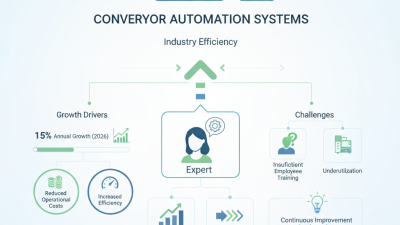
Compare controls, safety, integration, and maintenance requirements during system selection.

Example planning-priority ratings on a 1–5 scale, not universal benchmarks. Safety, applicable standards, throughput, existing equipment, and maintenance capabilities should be assessed for each facility.

Select a System Based on Lifecycle Cost and Performance Fit

How to Choose the Right Conveyor Automation System?
Select a System Based on Lifecycle Cost and Performance Fit

Compare lifecycle cost, not purchase price alone. Include controls, installation, energy, maintenance labor, spare parts, downtime, and replacement. Map demand by shift: cartons per hour, peak bursts, package sizes, route changes, and floor space. A line sized for average volume may jam when Monday’s backlog hits. Expect surprises.

MHI and Deloitte’s 2024 Annual Industry Report found that 55% of surveyed supply-chain leaders planned to increase technology investment within two years. The report also found that 88% expected to adopt robotics and automation within five years. That signals momentum, not a reason to automate every transfer. Compare options by cost per handled unit and throughput during peak demand. Test assumptions about lower volumes, wage changes, and maintenance delays. Payback is not enough.

Tips: Trial the system with your own cartons and scan data. Log jams, reset time, and staffing needs across a full shift. Ask for service intervals and spare-part lead times. A compact curve may save floor space but create a recurring bottleneck. Recheck your assumptions after commissioning; real operating patterns may differ from the spreadsheet.

How to Choose the Right Conveyor Automation System? — Select a System Based on Lifecycle Cost and Performance Fit

Planning comparison only. Operating ranges and the relative 10-year cost index are indicative, not product specifications or supplier quotations. Cost index assumes similar duty, operating hours, and facility conditions; 1.0 represents the lowest estimated lifecycle cost among the options shown. Validate loads, speeds, safety requirements, and total cost with an application-specific assessment.
System type Best-fit application Typical load and operating profile Lifecycle cost drivers Relative 10-year cost index Performance fit and main trade-off
Belt conveyor Continuous movement of cartons, parcels, bags, or bulk materials along a fixed route. Works with varied shapes and smaller items; typical belt speeds are roughly 0.3–2.5 m/s, depending on the application. Initial frame and drive cost; electricity; belt inspection, tracking, cleaning, and replacement. 1.0–1.5 A versatile choice for steady flow and items that need continuous support. Belt wear and cleaning needs can increase maintenance.
Gravity roller conveyor Short-distance transfer, accumulation, or manual handling of rigid, flat-bottomed loads. Usually suited to cartons, totes, and trays with a stable base; movement depends on slope or manual push rather than a powered speed setting. Low equipment and energy costs; ongoing checks for roller condition, alignment, and safe flow control. 0.7–1.0 Often economical for simple, low-throughput routes. Not suitable for every load base, elevation change, or controlled accumulation task.
Motor-driven roller conveyor Conveying and accumulation of cartons or totes where zones need independent control. Best for unit loads with a sufficiently rigid, flat base; speed and zone behavior are configured to suit the flow and controls. Higher controls and component cost than gravity; energy use can be reduced by running only active zones; sensors and drive rollers need maintenance. 1.0–1.7 A strong fit for variable flow and accumulation without continuous line pressure. Performance depends on load dimensions, zone design, and controls integration.
Chain conveyor Heavy or rugged loads, pallets, fixtures, and applications requiring a positive mechanical drive. Designed around the load and chain configuration; commonly operates at lower speeds than light-duty package conveyors. Robust structure and drive; lubrication, chain tension, wear, and higher moving mass can affect maintenance and energy use. 1.4–2.2 Suitable where loads exceed the practical range of light-duty systems. Often excessive in cost and complexity for ordinary cartons.
Overhead conveyor Suspended parts, garments, or assemblies moving through work areas or process stages. Load capacity and speed depend on the carrier, track, and process; frees floor space but requires suitable structure and clearances. Track, supports, installation, and safety provisions can raise initial cost; inspection and maintenance access must be planned. 1.5–2.5 Can improve floor-space use and route products above work areas. Less suitable where overhead structure, access, or future layout changes are constraints.
Vertical reciprocating lift Moving pallets, totes, or other unit loads between fixed floor levels. Capacity, platform size, travel height, and cycle time are engineered for the load and required transfer rate. Lift structure, controls, guarding, and safety systems; periodic inspection and maintenance of mechanical and electrical components. 1.3–2.3 A practical option for transferring loads between levels where a sloped route is unsuitable. Cycle time and access points can limit throughput.
×
img

    Contact Info

    PHONE NUMBER

    +1 (619) 661-5985

    EMAIL ADDRESS

    sale@roboticemotion.com

    ADDRESS INFO

    10030 Via de la Amistad San Diego CA 92154, United States