
What Are the Best Industrial Control Systems in China?
China’s industrial control systems market is broad, competitive, and difficult to judge through brand names alone. A refinery may need a high-availability DCS, while a smart factory may prioritize flexible PLCs, motion control, and edge connectivity. Water plants often value stable SCADA performance, simple maintenance, and dependable remote monitoring. The “best” system depends on process risk, production scale, engineering support, and long-term integration.
Joseph M. Weiss, a respected control-system cybersecurity expert, has stated, “The control system cyber security problem is not a technology problem; it is a business problem.” That warning remains practical in China’s fast-changing industrial environment. A strong platform should support secure network segmentation, role-based access, detailed event logging, and controlled firmware updates. It should also provide local service teams, clear documentation, spare-parts access, and tested recovery procedures. A control room cannot wait weeks for a critical module.
Domestic providers such as SUPCON, HollySys, and Inovance are often considered alongside international vendors. Their suitability varies by sector, plant age, budget, and export requirements. Certifications matter, but certificates do not replace site experience. Nor does a glossy dashboard prove resilience. This overview compares industrial control systems through architecture, safety, cybersecurity, interoperability, lifecycle cost, and field support. Some conclusions will remain imperfect, because vendor performance can differ between projects. Real commissioning records, operator feedback, and independent testing deserve more weight than marketing claims. Reliability is demonstrated on the factory floor.
Definition and Role of Industrial Control Systems in China
What Are the Best Industrial Control Systems in China?
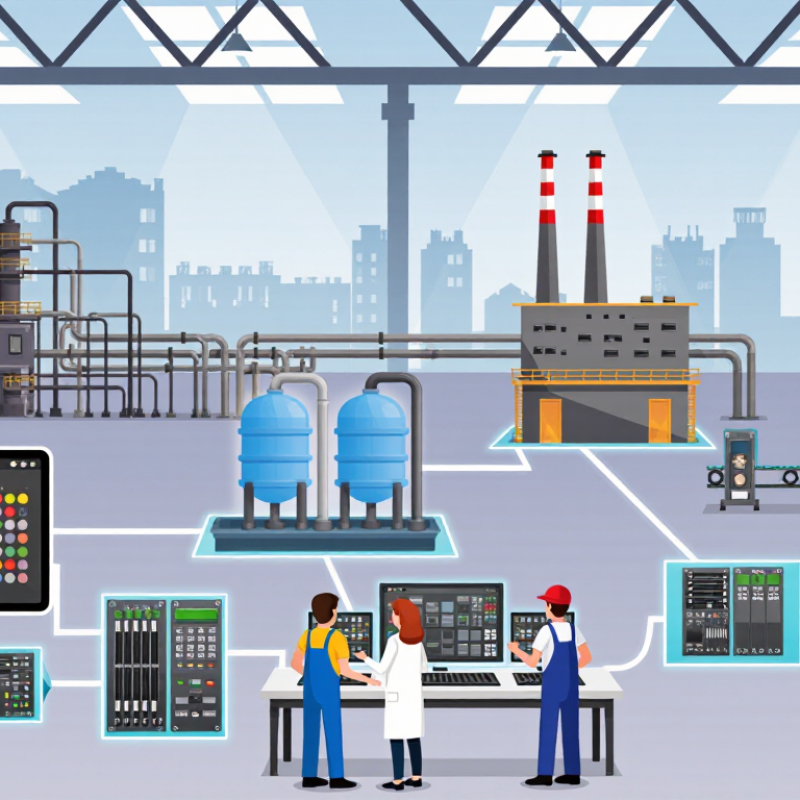
Industrial control systems are the operational nervous system of modern Chinese factories. They connect sensors, controllers, networks, and operator interfaces. Programmable logic controllers manage machine sequences. Supervisory systems display alarms and production conditions. Distributed control systems coordinate continuous processes, such as chemical heating or water treatment. Together, they convert physical signals into controlled action.
Their role extends beyond automation. A temperature sensor can prevent material waste before a batch fails. An alarm can help technicians respond before pressure becomes dangerous. In a packaging plant, operators may track motor speed, vibration, and downtime from one control room. The China Academy of Information and Communications Technology reported that China’s industrial internet industry reached approximately 1.35 trillion yuan in added value in 2023. This growth shows how control systems increasingly support connected production, energy monitoring, and predictive maintenance.
Reliable systems require more than fast hardware. They need clear operating procedures, trained engineers, segmented networks, and tested backup plans. The International Society of Automation stresses lifecycle management and functional safety in industrial environments. Yet a connected dashboard is not automatically intelligent. Poor sensor calibration can produce confident but false decisions. That weakness is easy to overlook. In practice, the best system is the one technicians can understand, maintain, and safely override when field conditions change.
| Industrial Control System Type | Definition and Primary Role | Typical Chinese Industrial Applications | Control Characteristics | Common Field Devices and Data Sources | Typical Communication Technologies | Operational Value |
|---|---|---|---|---|---|---|
| Distributed Control System (DCS) | A process-control architecture that distributes controllers across an industrial plant while coordinating operations through centralized supervisory functions. | Petrochemicals Power generation Steel Cement Chemical production | Continuous control, regulatory loops, alarm management, sequence control, and plant-wide process monitoring. | Transmitters, control valves, analyzers, motor-control centers, programmable controllers, and operator stations. | Industrial Ethernet, Modbus TCP, PROFIBUS, HART, OPC UA, and industry-specific process networks. | Improves process stability, centralized supervision, production consistency, and operator response. |
| Supervisory Control and Data Acquisition (SCADA) | A supervisory platform that collects remote operational data, presents it to operators, and supports monitoring and control over geographically distributed assets. | Electricity grids Water supply Wastewater Oil and gas pipelines Rail infrastructure | Remote monitoring, event handling, trend analysis, telecontrol, reporting, and centralized dispatch. | Remote terminal units, intelligent electronic devices, flow meters, pressure sensors, circuit breakers, and telemetry equipment. | Industrial Ethernet, cellular networks, microwave links, optical fiber, serial communications, IEC 60870-5-101/104, and DNP3. | Provides visibility across dispersed facilities and supports faster fault detection and coordinated dispatch. |
| Programmable Logic Controller (PLC) System | A programmable digital controller designed to execute logic, sequencing, motion, and discrete or hybrid control tasks in real time. | Manufacturing Automotive production Machinery Packaging Material handling | Fast scan cycles, deterministic logic execution, interlocking, counting, sequencing, and machine-level automation. | Proximity sensors, photoelectric sensors, encoders, actuators, drives, robots, valves, and safety input/output modules. | Industrial Ethernet, EtherNet/IP, PROFINET, Modbus RTU/TCP, CANopen, and real-time fieldbus technologies. | Reduces manual operations, increases production repeatability, and supports modular machine automation. |
| Safety Instrumented System (SIS) | An independent protection system that detects hazardous conditions and moves a process to a defined safe state. | Chemical plants Refineries Gas processing LNG facilities High-risk manufacturing | Independent safety functions, emergency shutdown, burner management, trip logic, redundancy, diagnostics, and proof testing. | Pressure, temperature, level, and gas detectors; emergency valves; shutdown switches; and fire-and-gas devices. | Hardwired safety circuits, safety fieldbus, redundant industrial networks, and secure interfaces with process-control systems. | Reduces the likelihood and consequences of hazardous events and supports functional-safety compliance. |
| Energy Management and Power Management System | A control and monitoring system that measures, analyzes, and optimizes electrical generation, distribution, consumption, and demand. | Industrial parks Factories Data centers Renewable energy sites Large buildings | Load monitoring, demand management, power-quality analysis, generation coordination, and energy optimization. | Smart meters, power-quality meters, protection relays, inverters, batteries, transformers, and environmental sensors. | IEC 61850, Modbus, IEC 60870-5-104, industrial Ethernet, and supervisory energy data interfaces. | Supports energy efficiency, power reliability, renewable integration, and lower operational energy waste. |
| Manufacturing Execution System (MES) | A production-management layer that connects business planning with shop-floor operations and records the execution of manufacturing activities. | Electronics Automotive Food processing Pharmaceuticals Equipment manufacturing | Production scheduling, work-in-process tracking, quality records, genealogy, maintenance coordination, and performance analysis. | PLC data, machine states, barcode and RFID readers, laboratory systems, quality instruments, and operator terminals. | OPC UA, MQTT, REST APIs, SQL interfaces, industrial Ethernet, and manufacturing data-exchange standards. | Improves traceability, production transparency, quality control, and coordination between operations and management. |
| Building and Facility Control System | An automation system that monitors and controls building services and facility infrastructure to maintain safe, efficient, and comfortable conditions. | Industrial campuses Warehouses Hospitals Commercial facilities Data centers | Heating, ventilation, air conditioning, lighting, access coordination, environmental monitoring, and equipment scheduling. | Temperature, humidity, air-quality, occupancy, flow, pressure, lighting, and equipment-status sensors. | BACnet, Modbus, KNX, LonWorks, Ethernet, and wireless sensor networks. | Enhances energy efficiency, equipment availability, indoor environmental quality, and facility safety. |
| Industrial Internet and Edge Control Platform | A connected control architecture that combines local edge processing, industrial connectivity, analytics, and centralized data services. | Smart factories Remote assets Predictive maintenance Connected equipment Industrial parks | Low-latency local decisions, protocol conversion, condition monitoring, data aggregation, analytics, and remote service support. | Existing controllers, vibration sensors, cameras, meters, gateways, robots, and equipment health-monitoring devices. | OPC UA, MQTT, industrial Ethernet, 5G, private wireless networks, time-sensitive networking, and secure cloud interfaces. | Enables data-driven maintenance, flexible production, asset visibility, and integration of legacy equipment. |
| Cybersecurity and Industrial Network Monitoring System | A protection and monitoring layer that identifies abnormal activity, manages access, and helps secure operational technology environments. | Power infrastructure Water utilities Process industries Manufacturing plants Transport systems | Asset discovery, network segmentation, access control, vulnerability monitoring, security logging, anomaly detection, and incident response. | Network switches, firewalls, industrial gateways, controllers, engineering workstations, servers, and security sensors. | Industrial Ethernet, secure remote access, VLANs, firewalls, VPNs, syslog, encrypted protocols, and one-way security gateways. | Protects availability, integrity, and confidentiality while reducing operational disruption and cyber-related risk. |
Related Posts
-
How to Choose the Right Industrial Control Systems?
-
What Are the Top Types of Automation Engineering Systems?
-
China Best Industrial Control Systems Innovations and Trends?
-
What Is Industrial Process Automation and How Does It Work?
-
2026 Best Industrial Automation Systems for Enhanced Productivity?
-
How to Choose Automation Engineering Systems?


