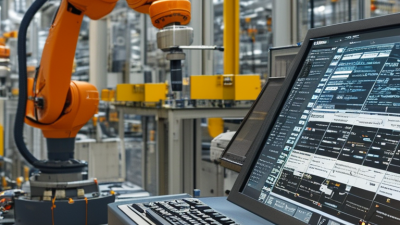
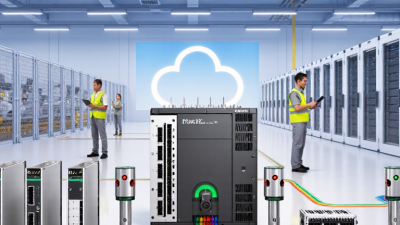
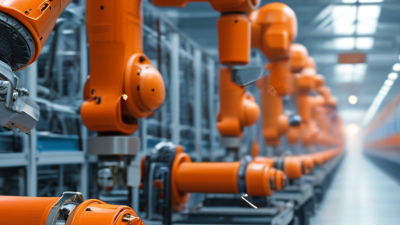
Automation engineering systems are becoming the connective tissue of modern production. They link sensors, programmable logic controllers, robots, software, and human decisions. On a factory floor, this may mean a robotic arm placing components within millimeters, while a dashboard tracks temperature and cycle time.
The scale is substantial. The International Federation of Robotics reported 541,302 industrial robots installed worldwide in 2023. Its World Robotics 2024 report also recorded more than 4.2 million robots operating globally. These figures show strong adoption, but they do not prove that every automated process is efficient. Integration quality still matters. So does maintenance.
Deloitte’s 2024 Smart Manufacturing and Operations Survey found that 86% of surveyed leaders expected smart manufacturing to be a major competitiveness driver within five years. That expectation supports investment in connected and intelligent systems. However, manufacturers face practical limits, including legacy equipment, cybersecurity exposure, inconsistent data, and skills shortages. A perfect system rarely exists.
This guide examines the top types of automation engineering systems, from industrial control systems and robotic automation to manufacturing execution systems and digital twins. Each category solves different problems. Some reduce repetitive motion. Others improve traceability, energy management, or production planning. The right choice depends on measurable goals, workplace conditions, product variation, and lifecycle costs.
Industry reports provide useful direction. Real factory experience adds necessary caution. A system can look impressive in a demonstration and still fail during shift changes, sensor fouling, or software updates. Careful design remains essential.
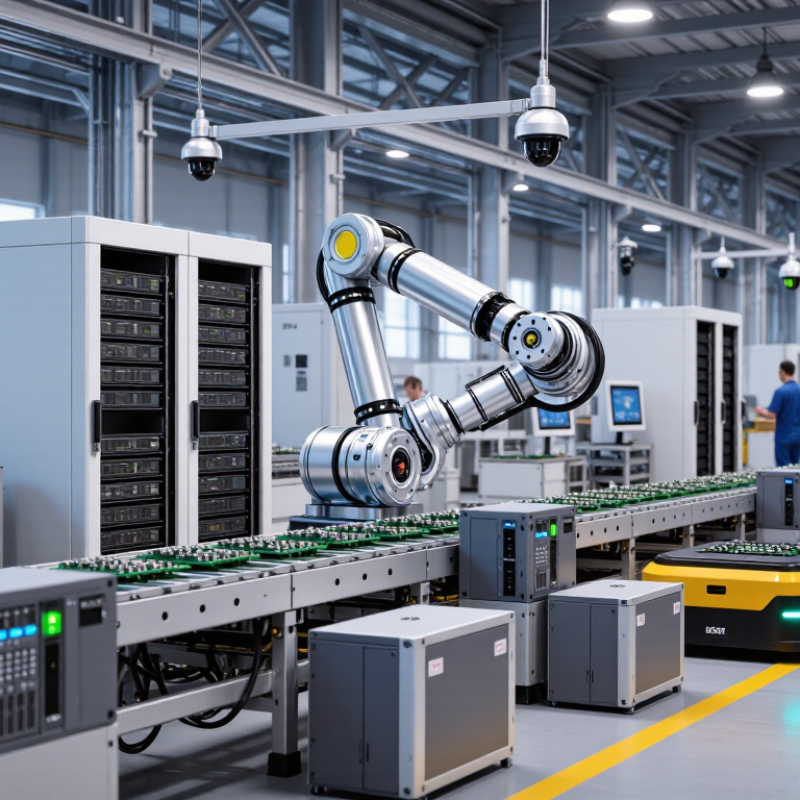
Automation engineering systems combine sensors, control software, machines, and human decisions. They make industrial processes safer, faster, and more consistent. In practice, engineers use them to measure temperature, adjust flow, control motion, and record production data. The core functions are sensing, processing, actuation, communication, and feedback. A feedback loop compares actual performance with the required target, then corrects errors.
The top types include programmable logic control systems, supervisory control systems, distributed control systems, motion-control platforms, and manufacturing execution systems. Each type serves a different operational layer. Programmable systems manage repeatable machine sequences. Supervisory systems display alarms, trends, and process conditions. Distributed systems coordinate continuous operations across several areas. Motion systems control speed, position, and robotic movement. Manufacturing execution systems connect shop-floor activity with planning data. I have found that real sites rarely fit one category perfectly. Integration gaps still create delays, even when individual systems perform well.
Tips: Define the process before choosing the system. List critical inputs, outputs, alarms, and response times. Test sensor accuracy under real operating conditions. Keep manual override procedures clear. Do not ignore maintenance access. A technically elegant design may fail when technicians cannot reach a faulty sensor. Review cybersecurity, training, and data ownership early. Small pilot tests often reveal assumptions that drawings conceal.
Industrial control systems form the operating core of modern manufacturing. They connect sensors, machines, operators, and production data.
Programmable logic controllers manage fast, repeatable machine actions.
Distributed control systems coordinate continuous processes, such as chemical dosing or temperature control.
Supervisory control and data acquisition systems provide plant-wide visibility through alarms, trends, and operator screens.
Manufacturing execution systems add production scheduling, quality records, and traceability.
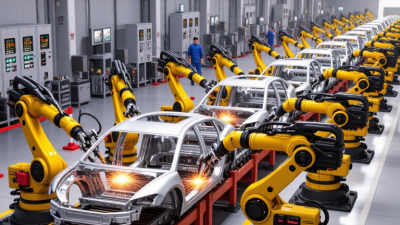
Robotic cells support precise handling, welding, packaging, and inspection tasks.
The International Federation of Robotics reported 541,302 industrial robots installed globally in 2023.
Its World Robotics 2024 report also recorded more than four million robots operating worldwide.
These figures show growing automation adoption, but equipment alone does not guarantee reliable output. Poor sensor placement can create false alarms. Weak data structures can hide recurring faults. A technically impressive system may still frustrate operators.
Tips: Start with a clear production problem. Define response times, safety requirements, and maintenance access before selecting controls. Use layered architecture, with local control remaining functional during network interruptions. Test alarm priorities with operators on the factory floor. Their feedback often reveals practical failures that design documents miss. Review cybersecurity and backup procedures regularly, because connected control systems increase operational exposure. Deloitte’s 2024 smart manufacturing research found that many manufacturers view digital capability as essential for competitiveness, yet implementation gaps remain. That gap deserves honest measurement, not optimistic assumptions.
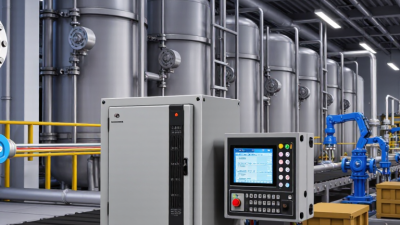
Process automation systems are designed for continuous production, where equipment runs for hours, days, or even months. They regulate temperature, pressure, flow, level, and chemical concentration in real time. Sensors collect field data, while controllers adjust valves, pumps, and heaters. Small delays matter. A slight temperature drift can affect an entire production batch.
A reliable system connects control loops with operator displays, alarm management, data historians, and safety controls. Operators can see a rising pressure trend before it becomes a serious process problem. Redundant controllers and network paths help maintain production during equipment faults. However, redundancy increases cost and maintenance demands. It is not automatically the best choice for every plant.
During commissioning, engineers should test real operating conditions, not only ideal scenarios. They can simulate sensor failure, communication loss, power interruptions, and unexpected process changes. Clear alarm priorities reduce confusion in control rooms. Poorly tuned alarms create constant noise, and operators may ignore important warnings. Maintenance teams also need accurate documentation, spare sensors, and practical training. A system may look efficient on paper but feel difficult during a night shift. Continuous improvement often begins with these uncomfortable observations.
What Are the Top Types of Automation Engineering Systems?
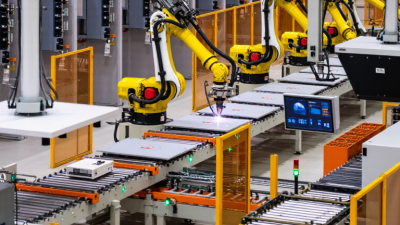
Robotic and motion control systems handle repetitive tasks with consistent timing. They move parts, tools, or materials through carefully defined work zones. A robotic cell may pick components from a tray and place them into a fixture. Motion controllers coordinate speed, position, acceleration, and stopping distance. Small timing errors can create large production problems. Precision matters.
Good engineering begins with the task, not the machine. Engineers study cycle time, payload, reach, product variation, and operator access. They also assess pinch points, unexpected movement, and maintenance procedures. Guards, interlocks, emergency stops, and controlled restart functions support safer operation. Clear documentation makes troubleshooting faster. It also helps future technicians understand why each setting exists.
Real production rarely matches a perfect simulation. Dust may affect sensors. A slightly bent part can change the robot’s grip. I have seen systems pass initial tests but struggle after several shifts. That experience encourages regular inspection, fault logging, and practical validation with real materials. Software limits should support physical safeguards, not replace them. Simple interfaces help operators respond correctly under pressure. Leave room for improvement.
| Automation System Type | Primary Function | Typical Repetitive Tasks | Main Components | Typical Accuracy or Repeatability | Typical Payload Range | Best-Fit Applications |
|---|---|---|---|---|---|---|
| Articulated Robotic Systems | Performs multi-axis movement around a work envelope with flexible orientation control. | Welding, assembly, machine tending, material handling, painting, and palletizing. | Multi-joint robot arm, servo motors, gear reducers, controller, end-of-arm tooling, and safety system. | Typically ±0.02 to ±0.10 mm, depending on robot size and operating conditions. | Approximately 3–500 kg | Complex three-dimensional handling and operations requiring several axes of movement. |
| Collaborative Robotic Systems | Supports people in shared workspaces using force, speed, and separation monitoring. | Part presentation, screwdriving, inspection, light assembly, packaging, and machine loading. | Lightweight robot arm, torque or force sensing, vision, programmable controller, and monitored safety functions. | Typically ±0.02 to ±0.10 mm | Approximately 0.5–30 kg | Low-volume or frequently changing production where human–robot cooperation is useful. |
| SCARA Robotic Systems | Provides fast horizontal motion with selective vertical compliance for assembly work. | Pick-and-place, insertion, dispensing, screwdriving, testing, and small-part assembly. | Four-axis arm, servo drives, vertical slide, controller, gripper, and optional vision system. | Typically ±0.01 to ±0.03 mm | Approximately 1–20 kg | High-speed assembly and repetitive handling on a fixed work surface. |
| Delta Robotic Systems | Moves lightweight products rapidly through a parallel-link mechanism mounted above the work area. | Sorting, counting, pick-and-place, inspection, and primary packaging. | Parallel-link arms, high-speed servo motors, vision system, conveyor tracking, and controller. | Typically ±0.05 to ±0.20 mm | Approximately 0.1–6 kg | Very high-speed handling of small, lightweight products on conveyors. |
| Cartesian and Gantry Systems | Controls linear movement along two or more orthogonal axes. | Dispensing, cutting, loading, palletizing, 3D printing, and machine movement. | Linear rails, ball screws or belts, linear motors or servo motors, drives, PLC, and tooling. | Typically ±0.01 to ±0.10 mm | From less than 1 kg to several tonnes | Large work envelopes, straight-line motion, and applications requiring predictable access. |
| Servo Motion Control Systems | Provides closed-loop control of position, speed, and torque for precise machine motion. | Indexing, synchronized axes, electronic camming, cutting, winding, and coordinated positioning. | Servo motor, encoder, servo drive, motion controller, PLC, gearbox, and mechanical transmission. | Often capable of micron-level command resolution; machine accuracy depends on mechanics and calibration. | Application-dependent; commonly from small mechanisms to high-load machinery. | Machines requiring synchronized, repeatable, and dynamically adjustable movement. |
| Pneumatic Automation Systems | Uses compressed air to create fast, simple linear or rotary actuation. | Clamping, gripping, ejecting, pressing, sorting, and short-stroke transfer operations. | Air compressor, valves, cylinders, regulators, sensors, tubing, and pneumatic grippers. | Generally lower than servo systems; repeatability depends on pressure, load, and cushioning. | Typically suited to light and medium loads | Cost-sensitive, high-cycle operations with simple end-to-end movements. |
| Conveyor and Indexing Systems | Transfers and positions products through continuous or step-by-step material flow. | Transport, accumulation, inspection, labeling, filling, packaging, and production-line sequencing. | Conveyor, motor or servo drive, sensors, gearbox, belts or chains, PLC, and indexing mechanism. | Typically millimeter-level positioning; precision improves with servo indexing and registration sensors. | From small components to heavy pallets | Continuous production lines with repeated transport and controlled workstation timing. |
| Automated Guided and Autonomous Mobile Systems | Moves materials between workstations using guided or sensor-based navigation. | Line-side delivery, warehouse transport, kitting, pallet movement, and work-in-process transfer. | Mobile platform, battery system, drive motors, navigation sensors, fleet software, and safety scanners. | Commonly centimeter-level stopping accuracy; exact performance depends on navigation method and floor conditions. | From small containers to several tonnes | Flexible internal logistics where routes or material requirements change regularly. |
| Machine Vision Inspection Systems | Detects, measures, identifies, and verifies products without direct physical contact. | Defect detection, dimensional checks, barcode reading, orientation, presence verification, and sorting. | Camera, lens, lighting, image-processing software, trigger sensor, controller, and reject mechanism. | Resolution can reach sub-millimeter levels; practical accuracy depends on optics, lighting, and calibration. | Not normally rated by payload; handles products through integrated equipment. | Quality control and robotic guidance for repeatable visual decisions. |
Note: Performance ranges are typical engineering reference values. Actual speed, payload, accuracy, and repeatability vary with system configuration, tooling, product characteristics, environmental conditions, safety requirements, and commissioning quality.
Building automation systems turn ordinary facilities into responsive, measurable environments. They connect heating, ventilation, air conditioning, lighting, safety devices, and energy meters through a coordinated control layer. In practice, this means a meeting room can adjust airflow when occupancy changes. Corridor lights can dim after working hours. The building reacts instead of waiting for complaints.
A reliable system starts with accurate field data. Temperature sensors, CO₂ meters, humidity probes, and occupancy detectors should be positioned carefully. Poor placement creates false readings. I have seen a single sensor near a supply vent trigger unnecessary cooling across an entire zone. Engineers also need clear control sequences, open communication protocols, and secure network separation.
These details help operators diagnose faults without visiting every mechanical room. Dashboards should show useful information, not merely attractive graphics. Maintenance teams need alarms with context, timestamps, and practical priorities.
Smart facilities require continuous commissioning after installation. Equipment changes, tenant layouts, and seasonal weather can weaken an original strategy. A building may save energy during winter but overheat rooms during spring. That is not failure alone; it is evidence for refinement. Regular trend reviews can reveal short cycling, unusual nighttime consumption, or ventilation gaps. Human judgment still matters. Automation supports it, but cannot replace thoughtful engineering, clear documentation, and staff training. Small oversights remain possible. Testing them early is wiser than hiding them.
+1 (619) 661-5985
sale@roboticemotion.com
10030 Via de la Amistad San Diego CA 92154, United States
We can supply pre-cut pipes and roller tracks, with the appropriate number of joints and accessories; delivered in kit form as per your specifications.