Why Invest in a Glass Manufacturing Machine?

A Glass Manufacturing Machine is more than a production-line purchase. It shapes how consistently a factory melts, forms, anneals, and inspects glass. The right equipment can help reduce defects, control energy use, and meet changing order volumes. But results depend on more than the machine. Raw-material quality, operator training, maintenance, and process settings all matter. Small details count: a temperature drift, a worn roller, or an uneven conveyor can affect a whole batch.

Glass scientist John C. Mauro’s research at Penn State offers a useful perspective on how glass structure and processing influence performance. A fair paraphrase of that principle is: “Reliable glass begins with controlled processes, not equipment alone.” Buyers should treat that as a reminder, not a guarantee. A new Glass Manufacturing Machine cannot solve every production problem.

Investment decisions deserve careful questions. Can the system handle the required glass types and thicknesses? Are spare parts and technical support available? What do energy use, expected output, and planned downtime look like under real operating conditions? Ask suppliers for documented specifications, reference installations, and a clear commissioning plan. Then compare those details with your own production needs.

Numbers help. So does observation. Watch the line run. Speak with the operators who will use it. A machine may look impressive in a showroom and still be a poor fit for a specific plant. That risk is easy to overlook. A sound investment balances capacity, reliability, service, and room for future change.
Why Invest in a Glass Manufacturing Machine?

What a Glass Manufacturing Machine Does

What a Glass Manufacturing Machine Does

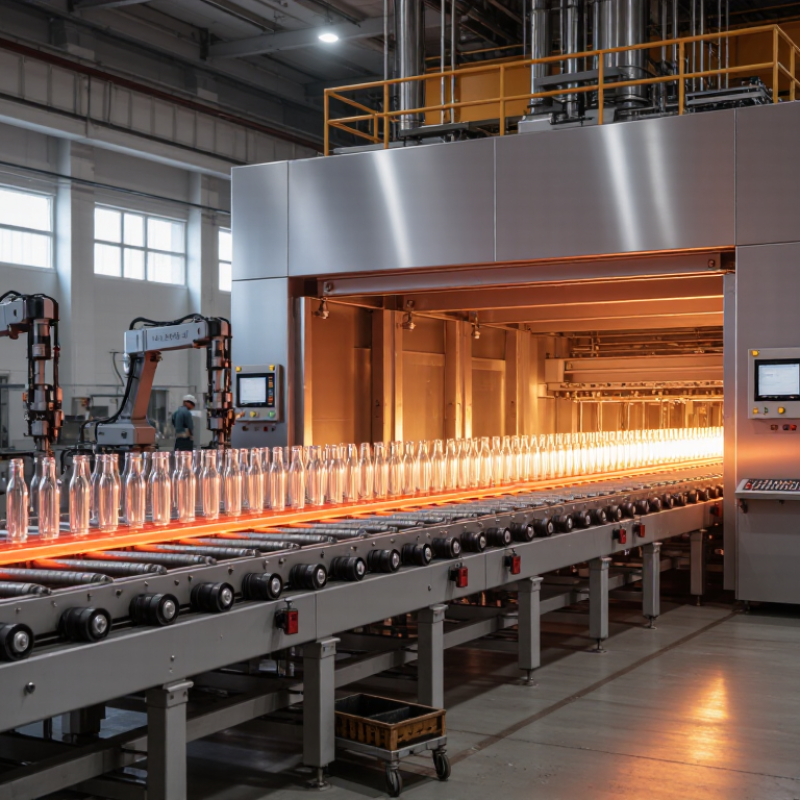
A glass manufacturing machine converts prepared raw materials into usable glass products through controlled heating, shaping, and cooling. In a typical production line, a furnace melts the batch, then a feeder delivers measured amounts of molten glass to forming equipment. The equipment may press, blow, or draw glass into containers, sheets, or other shapes. Not every machine handles every stage.

After shaping, products pass through an annealing lehr, where gradual cooling helps reduce internal stress. Inspection equipment can detect flaws such as bubbles, uneven edges, or cracks. Operators monitor temperatures, timing, and material flow because small changes can affect clarity and strength. Some adjustments take trial and error. A setting that works for one product may not suit another.

Tips: Match the machine’s forming method to your product and expected output. Ask how routine cleaning, mold changes, and maintenance are handled. Watch a production run if possible; the process can look precise, yet occasional defects still need careful review.

Why Invest in a Glass Manufacturing Machine?

Glass manufacturing machines melt, condition, and shape raw materials into finished products. The chart shows indicative operating temperature ranges for key stages of container-glass production.

Temperatures are approximate and vary with glass composition, product requirements, and equipment design.

How Glass Manufacturing Machines Improve Production Efficiency

Why Invest in a Glass Manufacturing Machine?

How Glass Manufacturing Machines Improve Production Efficiency

A modern glass manufacturing machine can coordinate forming, cutting, and handling in a controlled sequence. Stable settings help reduce time spent correcting inconsistent dimensions or surface defects. For example, a sensor-guided cutter can follow a programmed line more consistently than repeated manual measurements. Inspection still matters. It becomes more focused.

Automated material movement can reduce waiting between production stages. A conveyor that feeds sheets at a steady pace helps keep the furnace and cutting station working without unnecessary pauses. Operators can also monitor temperature, cycle time, and rejected pieces from one control area. Small gains matter. Over a full shift, fewer stoppages may improve usable output without increasing the pace unsafely.

Efficiency depends on the whole line, not just the machine. Poorly matched equipment, frequent product changes, or inconsistent raw glass can create bottlenecks. Regular calibration and operator training help maintain reliable results, though they take time and planning. A new system may need adjustments before it runs smoothly. That part is easy to underestimate. Production teams should compare actual cycle times, defect rates, and downtime before and after installation.

Which Products and Materials These Machines Can Process

A glass manufacturing machine is not one universal tool; its capabilities depend on the process installed. Cutting tables shape annealed float glass into panes for windows, shelves, doors, and shower screens. Edge grinders smooth exposed sides, while drilling machines create holes for fittings and hardware. Small details matter.

Tempering furnaces heat and cool glass to produce stronger safety glazing. Laminating lines bond glass sheets with interlayers such as PVB or EVA, creating panels used in skylights, partitions, and vehicle windows. These machines may process clear, tinted, patterned, or reflective glass, but coated surfaces need careful handling. Not every line suits every coating or thickness.

For buyers, the product range should guide machine selection. A shop making cabinet doors may need precise cutting and polishing, while an architectural supplier may also require tempering and laminating capacity. Ask about sheet dimensions, thickness limits, edge quality, and expected output. In practice, production is not always neat: glass can chip, and setup changes take time. A realistic trial with the intended material can reveal limitations that a specification sheet may not show.

How to Evaluate Costs, Output, and Long-Term Returns

Before investing in a glass manufacturing machine, map the full cost, not just the purchase price. Include installation, molds, power upgrades, cooling, operator training, maintenance, and expected downtime. Ask suppliers for a written estimate of usable output, not only maximum speed. A machine rated at 1,000 items hourly may produce less after changeovers and quality checks.

Compare output with actual orders and calculate costs across realistic shifts. Track cycle time, defect rates, scrap, labor use, and planned downtime. Estimate unit cost at several utilization levels; a machine can look profitable at full capacity but disappoint at half load. Model payback using expected monthly sales and operating expenses, then include financing and installation. Use conservative assumptions: slower ramp-up, rejected pieces, and uneven demand. Test a stronger sales scenario too. The gap matters. Even careful estimates can miss repair timing or energy changes.

Tips: Request sample runs using your glass mix and target dimensions. Record output after quality checks, not just at the machine. Ask how quickly common parts can be serviced. Leave room for uncertainty in the budget.

Key Factors in Selecting and Operating a Glass Manufacturing Machine

Choosing a glass manufacturing machine starts with the product, not the sales brochure. Define the glass type, thickness range, daily volume, and acceptable defect rate before comparing equipment. A line for thin containers may need different forming controls than one producing flat panels. Check furnace capacity, temperature consistency, forming speed, cooling length, and available floor space. Ask for energy use per unit and realistic output during changeovers, not only peak figures. Peak numbers can mislead. Small details count. A spreadsheet rarely captures every awkward adjustment during a real production shift.

During operation, stable results depend on trained operators and repeatable checks. Record furnace zones, cycle times, scrap causes, and maintenance intervals in a simple shift log. Inspect seals, rollers, molds, and temperature sensors before wear shows up in finished glass. Calibration matters. Plan access for cleaning and repairs; a compact machine can become awkward beside hot equipment. Confirm that spare parts, technical support, and operator instruction fit your production schedule. Automation can reduce handling, but it cannot correct inconsistent raw material or unclear process settings. Energy savings may come with slower output, so test the machine using your actual materials and settings. Keep sample pieces from each trial.

Why Invest in a Glass Manufacturing Machine? - Key Factors in Selecting and Operating a Glass Manufacturing Machine
Decision Area What to Evaluate Useful Data or Measure Practical Selection and Operating Guidance
Product and process fit Glass composition, product dimensions, shape, thickness, and required finish Approved product specifications; range of sizes and shapes; required tolerances Match the equipment to the actual product mix. A line designed for containers, flat glass, or glassware may not be suitable for another product category without substantial changes.
Production capacity Rated output versus saleable output under the planned production schedule Saleable output = good units produced ÷ operating time; record units per hour or tonnes per day, as appropriate Request capacity assumptions for the intended product, changeover frequency, planned maintenance, and expected reject rate. Do not treat a nameplate rating as guaranteed saleable production.
Process equipment Required stages, such as batch preparation, melting, forming, annealing, inspection, and packing Process-flow diagram; equipment list; cycle time or line speed for each stage Check that upstream and downstream equipment can keep pace with the main machine. A bottleneck at forming, annealing, inspection, or packing can limit total line output.
Temperature capability Heating range, temperature uniformity, control method, and suitability for the glass composition Operating-temperature range; temperature records by zone; alarm and control accuracy Glass melting and heat-treatment requirements depend on composition, product, and process. Confirm the required operating profile with process engineers and equipment specifications rather than relying on a single generic temperature.
Energy consumption Electricity and fuel use across the complete production process kWh per tonne or per saleable unit; fuel use per tonne; energy use during idle and production periods Ask for measurement boundaries and test conditions when comparing figures. Track energy alongside output and reject rates so that apparent savings do not come at the expense of product quality.
Yield and quality Rejects, breakage, dimensional consistency, surface defects, and process stability First-pass yield = good units without rework ÷ total units produced; defect rate by defect category Define acceptance criteria before commissioning. Record defects by production stage to identify whether losses originate in raw materials, forming, annealing, handling, or inspection.
Automation and controls Recipe management, process monitoring, alarms, data logging, and integration with existing systems Available sensors; stored process parameters; alarm history; data-export capability Verify that operators can access useful production and fault data. Ensure recipes, user permissions, backups, and control-system support are covered in the project plan.
Workforce and training Operator skills, staffing needs, maintenance capability, and safe work procedures Training plan; required operators per shift; documented operating and maintenance procedures Include hands-on training for normal operation, changeovers, start-up, shutdown, and fault recovery. Plan for heat, moving equipment, and material-handling hazards.
Maintenance and availability Inspection intervals, wear parts, repair access, and technical support requirements Planned maintenance hours; downtime by cause; spare-parts lead time; availability Confirm which parts are consumables, which require specialist service, and how quickly critical spares can be obtained. Include planned maintenance when estimating annual production capacity.
Factory layout and utilities Machine footprint, access, foundations, ventilation, electrical supply, fuel, cooling, and compressed air General-arrangement drawing; utility loads; service clearances; floor-loading requirements Review the site layout and utility capacity before purchase. Provide safe access for operation and maintenance, and account for material flow, heat management, and finished-product storage.
Environmental and safety controls Heat exposure, moving machinery, emissions, noise, dust, and waste handling Risk assessment; guarding and interlocks; ventilation design; applicable permit and monitoring requirements Determine applicable local occupational-safety and environmental requirements during project design. Specify appropriate guarding, emergency stops, ventilation, and operator protection.
Total cost of ownership Purchase, installation, utilities, labor, maintenance, tooling, training, and end-of-life costs Lifecycle cost by year; cost per saleable unit; expected service life and major overhaul schedule Compare complete operating costs rather than purchase price alone. State the production volume, energy price, labor assumptions, and maintenance scope used in each estimate.
Investment return Expected incremental cash flow from added capacity, improved yield, or reduced operating cost Simple payback period = initial investment ÷ annual net cash benefit Use a documented baseline and test conservative, expected, and optimistic scenarios. Include commissioning ramp-up, downtime, financing, and demand assumptions; simple payback does not replace a full financial analysis.
Acceptance and commissioning Performance testing against agreed product, output, quality, and utility criteria Written acceptance-test protocol; agreed test duration; recorded output, rejects, and energy use Agree on test conditions and measurement methods before installation. Keep commissioning records and address training, documentation, and unresolved issues before final handover.

Note: Actual capacity, energy use, temperatures, staffing, and maintenance needs vary with glass composition, product design, equipment configuration, operating schedule, and site conditions. Confirm project-specific figures through engineering review and documented supplier data.

×
img

    Contact Info

    PHONE NUMBER

    +1 (619) 661-5985

    EMAIL ADDRESS

    sale@roboticemotion.com

    ADDRESS INFO

    10030 Via de la Amistad San Diego CA 92154, United States