Why Choose a High Temp Heat Pump for Your Business?
Industrial heat is under pressure to become cleaner, more efficient, and less dependent on volatile fuel prices. The International Energy Agency reports that industrial heat pumps can supply temperatures up to 160°C, depending on the technology and application. Its Future of Heat Pumps report also estimates that heat pumps could reduce global carbon dioxide emissions by at least 500 million tonnes in 2030 under supportive policies. These figures matter for food processing, laundries, chemicals, and district heating systems. A High Temp Heat Pump can recover waste heat from warm wastewater, refrigeration systems, or exhaust air. That energy can then produce useful hot water or process heat.
The choice is not automatic. A factory must check flow temperatures, operating hours, refrigerant requirements, electricity capacity, and backup arrangements. Small details matter. A 10°C return-temperature mistake can affect performance. The European Heat Pump Association has repeatedly highlighted the importance of correct system design, installation, and monitoring. Fatih Birol, Executive Director of the IEA, stated, “Heat pumps are an indispensable part of any plan to cut emissions and gas use.” His observation supports the wider business case, but it does not remove technical risks. High-temperature operation may reduce the coefficient of performance, especially during cold weather or poor load matching. That deserves honest attention. When engineers compare lifecycle costs instead of purchase price alone, a High Temp Heat Pump may offer lower fuel consumption, steadier operating costs, and measurable emissions reductions. The strongest projects begin with real site data, not optimistic assumptions.
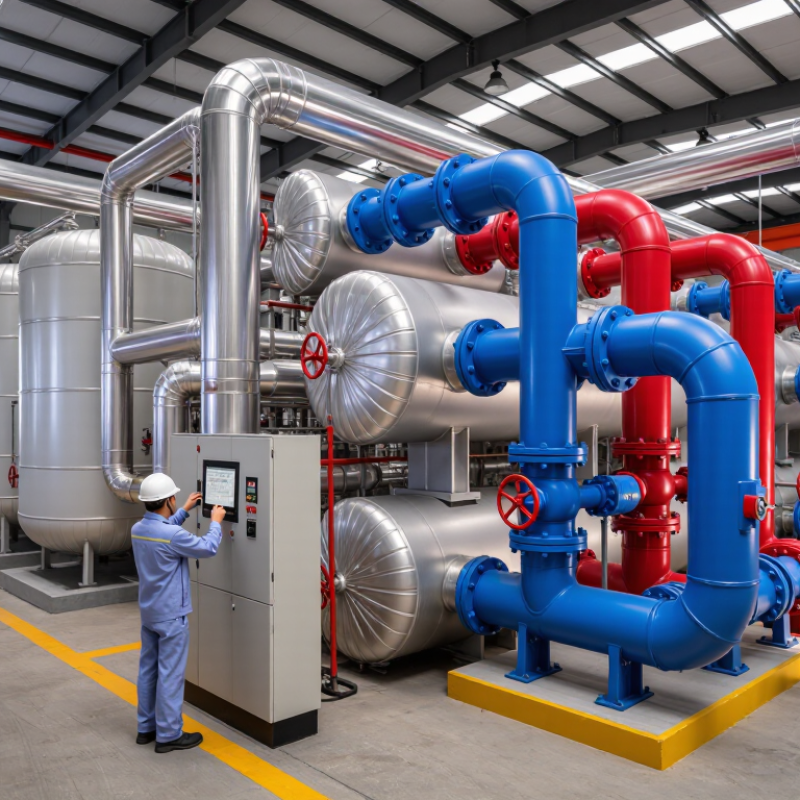
High-temperature heat pumps can provide supply water between 70°C and 90°C under EN 14511 test conditions. This range suits many commercial heating systems, including older radiators, washdown areas, and selected process applications. EN 14511 creates a consistent basis for comparing performance. It does not guarantee identical output at every site.
In practical assessments, the real advantage is reduced dependence on combustion-based heating. A heat pump can recover useful heat from air, water, or industrial exhaust streams. That recovered energy may serve hot water storage, space heating, or low-volume process demand.
Pipe insulation matters. Poor insulation can waste heat before it reaches the end user. Small details become expensive at high temperatures.
Performance still depends on the temperature lift. Higher supply temperatures usually reduce efficiency and increase electrical demand. This point is often overlooked. A 90°C target may be unnecessary for every circuit.
Separating high-temperature and low-temperature loads can improve operating stability. Engineers should review flow rates, peak demand, defrost conditions, controls, and backup heating before installation. Existing radiators may work well, but only after checking their output at the intended water temperature.
There is no universal solution. A well-designed system needs measured site data, realistic seasonal calculations, and careful commissioning.
The first estimate may be wrong. Regular monitoring can reveal that. Temperature sensors, energy meters, and maintenance records help confirm whether the system performs as expected.
Why Choose a High Temp Heat Pump for Your Business?
The International Energy Agency reports that heat pumps can deliver three to five units of heat for each unit of electricity consumed. This finding appears in The Future of Heat Pumps, published in 2022. A seasonal coefficient of performance, or SCOP, of 4 means 1 kWh of electricity can provide about 4 kWh of useful heat. That ratio can reduce energy demand in offices, hotels, warehouses, and manufacturing facilities.
High temperature systems can supply water above 70°C, depending on the equipment and site design. This makes them suitable for older buildings with existing radiators or process heating requirements. The European Heat Pump Association also highlights efficiency as a key factor in reducing building emissions and operating costs. Actual performance varies.
Small details matter. Dirty filters, poor pipe insulation, and oversized heating schedules can lower the seasonal result. Outdoor temperatures also affect output. The IEA’s figures describe typical performance, not a guaranteed bill reduction for every building. A site survey should examine heat loss, return-water temperature, operating hours, and electricity tariffs. I have seen attractive efficiency projections weaken when maintenance was treated as an afterthought. The technology is strong, but the installation still needs careful engineering.
Industrial facilities often need process heat below 100°C. Typical examples include wash water, pasteurization, food drying, cleaning, and low-temperature steam preparation. A high-temperature heat pump can recover waste heat from compressors, cooling systems, or warm exhaust air. It then upgrades that energy for practical process use.
The International Energy Agency reports that process heat represents about 70% of industrial energy demand. This makes moderate-temperature applications a valuable starting point for decarbonization. The IEA’s The Future of Heat Pumps report also notes that heat pumps can reduce emissions significantly, especially when powered by low-carbon electricity.
In real operations, output temperatures around 70–95°C may suit many hot-water loops. However, performance depends on source temperature, return-water conditions, and operating hours. COP can decline as the temperature lift increases. That detail is easy to overlook.
Tips: Measure heat demand hourly, not annually. Check the existing boiler’s flow and return temperatures. Recover available waste heat before selecting equipment. Leave space for backup heating during maintenance or unusually cold periods. Pilot testing helps, but small pilots may not represent full production. Review the result carefully.
The European Heat Pump Association identifies industrial heat pumps as suitable for applications reaching well above 100°C. Yet a lower target often improves efficiency and project economics. A factory requiring 85°C process water may gain more value than one chasing extreme temperatures without a clear need. Industry surveys and site measurements should guide the final design.
Why Choose a High Temp Heat Pump for Your Business?
Refrigerants and EU F-Gas Rules for High-Temperature Systems
High-temperature heat pumps can supply process heat above 80°C. They may reduce gas use in laundries, food plants, and commercial buildings. The refrigerant choice now matters as much as the heating capacity.
The EU F-Gas Regulation (EU) 2024/573 strengthens HFC controls and expands product restrictions. It also accelerates the market shift toward lower-global-warming-potential refrigerants. The European Commission identifies equipment bans and tighter quota controls as key measures. Some new split systems using refrigerants with GWP of 150 or more face restrictions from 2027, depending on capacity and system type. Always check the exact Annex IV category. Rules are detailed, and assumptions can become expensive.
The IEA reported that global heat pump sales grew by about 11% in 2022. European sales rose by nearly 40% that year, showing rapid market pressure. For high-temperature projects, natural refrigerants and newer low-GWP options can support compliance. Yet efficiency, pressure levels, flammability, servicing skills, and local safety rules must be assessed together. A low-GWP refrigerant is not automatically the best business decision.
Tips: Request the refrigerant’s GWP, charge size, safety classification, and future service plan. Compare seasonal efficiency at your actual supply temperature, not only the catalogue rating. Keep the paperwork clear. Poor documentation can undermine an otherwise strong installation.
A high-temperature heat pump can support businesses that need hot water, process heat, or space heating. Its financial value depends heavily on COP, electricity prices, and operating hours.
COP means delivered heat divided by electricity consumed. For example, a 120 kW heat load at COP 3.0 requires about 40 kW of electricity. Running 2,500 hours annually uses roughly 100,000 kWh. At $0.15 per kWh, the energy cost reaches $15,000 before demand charges, controls, and maintenance. High outlet temperatures usually reduce COP, especially during cold weather. Real performance matters more than a brochure rating.
Use hourly meter data when possible. A qualified installer should check supply temperature, return temperature, weather patterns, and peak tariffs. A facility operating mainly during expensive afternoon periods may face a disappointing payback. Defrost cycles can also increase consumption.
The calculation is rarely perfect. A spreadsheet may ignore standby losses or backup heating. It may also assume full-load operation throughout the year. That is often wrong. Compare measured fuel use with estimated heat demand, then test several electricity-price scenarios. Include filter changes, servicing, circulation pumps, and future tariff increases. A longer payback may still be acceptable when the equipment improves temperature control or reduces exposure to fuel-price volatility. Conditions change. Recheck the numbers annually.
+1 (619) 661-5985
sale@roboticemotion.com
10030 Via de la Amistad San Diego CA 92154, United States
We can supply pre-cut pipes and roller tracks, with the appropriate number of joints and accessories; delivered in kit form as per your specifications.