In today’s digital world, efficient connectivity is crucial. A Usb Extender is a practical solution for extending USB signal distances beyond standard limits. This device allows users to connect peripherals over longer distances without losing performance. It is particularly useful in various settings, such as offices, homes, and industrial environments.
Working on the principle of signal amplification, a Usb Extender enables seamless data transfer. Users place the extender between the USB port and their devices. This setup can significantly improve accessibility, especially in large spaces. However, users should be mindful of potential complications. Poor-quality extenders may lead to latency issues or signal degradation. Choosing a reputable brand is essential for reliable performance.
Understanding how a Usb Extender operates promotes smarter technology choices. Whether for a simple home office or complex industrial use, the right extender can transform usability. Yet, not every solution fits every scenario. Users must evaluate their specific needs and environments before making a purchase. Considering these factors can ensure optimal performance and longevity.
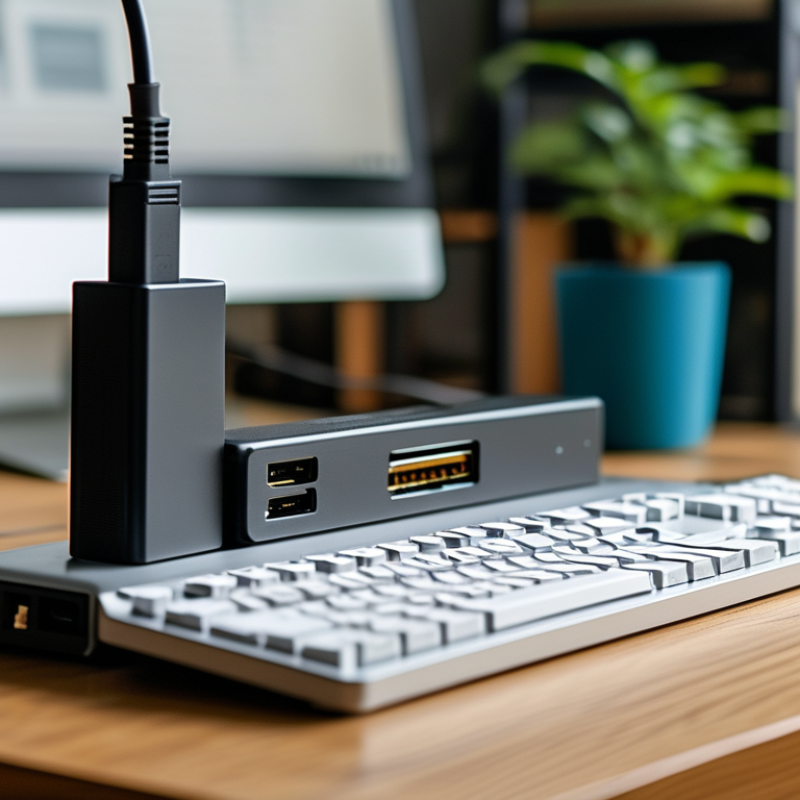
A USB extender is a crucial tool for data transmission over long distances. It amplifies the USB signal, preventing loss in quality. According to industry reports, standard USB connections typically have a reliable range of about 5 meters. Beyond this length, data integrity can diminish significantly. This is where a USB extender becomes essential.
The primary purpose of a USB extender is to maintain signal strength and ensure data accuracy. They can support distances of up to 50 meters using specialized cables or wireless technology. Experts indicate that in settings like factories and large offices, maintaining data flow without interruption is critical. USB extenders help achieve that goal.
However, not all extenders are created equal. Some may compromise speed for range, impacting performance. Users must consider their specific needs. Problems may arise from environmental factors like interference. It's vital to evaluate the extender's specifications and compatibility with devices. Balancing distance and data rate is sometimes challenging. Understanding these aspects can lead to better decision-making when choosing a USB extender.
This chart represents the usage statistics of USB extenders in various applications, demonstrating how they are deployed across different environments. The data reflects the percentage of users utilizing USB extenders for specific purposes.
USB extenders play a crucial role in the modern tech landscape. They allow users to connect USB devices over longer distances than standard cables permit. Two primary types exist: active and passive extenders. Understanding these can enhance your tech setup.
Active USB extenders boost the signal. They use powered devices to maintain signal integrity over longer cables. This makes them ideal for connecting cameras or printers far from a computer. They often support high data rates and can reach distances of up to 100 meters. Despite their efficiency, they can sometimes be more expensive and require power sources.
Passive USB extenders are simpler and don’t amplify the signal. They work well for shorter distances, typically up to 5 meters. These are ideal for basic uses, like connecting keyboards or mice in close proximity. Their limitation lies in signal degradation over longer distances. This can lead to connectivity issues, which may require users to rethink their wiring setup. Balancing distance and functionality is essential when choosing between the two types.
| Type of USB Extender | Transmission Range | Signal Type | Power Source | Common Applications |
|---|---|---|---|---|
| Active USB Extender | Up to 50 meters | Digital Signal | Powered | Use in complex setups, multimedia devices, and long-distance connections |
| Passive USB Extender | Up to 5 meters | Analog Signal | Not Powered | Basic connectivity needs, short-range applications |
| USB over Ethernet Extender | Up to 100 meters | Digital Signal | Powered | Remote device access, data centers, extensive installations |
| USB Fiber Optic Extender | Up to 300 meters | Digital Signal | Powered | High-speed data transmission, industrial environments, and secure links |
USB extenders play a vital role in enhancing signal range and quality for various applications. According to a report by the International USB Implementers Forum, USB connections can typically transmit data up to 5 meters without signal degradation. Beyond this distance, users often experience data loss or interruptions. USB extenders address this limitation by amplifying the signal, allowing connections to reach up to 100 meters or more. This is crucial for industries that require connections across larger office spaces, factories, or classrooms.
When it comes to signal quality, extenders utilize advanced technologies like active circuitry and signal regeneration. A recent study showed that systems using USB extenders could maintain over 95% of original signal quality, compared to significant drops in traditional methods. Users can connect multiple devices with minimal loss. This improvement is particularly relevant for high-bandwidth applications such as HD video streaming and real-time data transfer.
However, achieving optimal performance can depend on several factors, including cable quality and environmental interference. Outdoor settings and areas with many wireless devices may introduce challenges. Users need to consider these variables to ensure reliable performance with extenders. Tracking performance metrics can help in adjusting setups for better efficiency. Understanding these nuances allows for more informed decisions in technology deployments.
USB extenders play a crucial role in modern connectivity solutions. They are designed to extend USB connections beyond the typical range of five meters. This is especially important in applications like industrial automation or multimedia setups. The technology is based on various industry standards and protocols that ensure compatibility and performance.
Key protocols include USB 2.0, USB 3.0, and USB 3.1. Each protocol differs in speed and data handling capabilities. USB 2.0 can reach up to 480 Mbps, while USB 3.0 can handle up to 5 Gbps. For demanding applications, USB 3.1 offers enhanced speeds of up to 10 Gbps. Understanding these specifications is essential for selecting the right extender for specific needs.
The growing demand for USB extenders is evident in various sectors. According to industry reports, the global USB extender market is projected to grow at a compound annual growth rate (CAGR) of 10.8% from 2023 to 2030. This growth is fueled by an increasing need for reliable connectivity in both commercial and personal settings.
Healthcare facilities, for instance, require extended USB connections to integrate medical devices and technology efficiently. Offices are adapting to hybrid work models, leading to a need for increased connectivity options. For instance, a survey revealed that 55% of businesses plan to enhance their tech infrastructure, highlighting the relevance of USB extenders in modern workspaces.
Yet, challenges still exist. Users may experience signal degradation if distances exceed recommended limits. Additionally, compatibility issues between devices can arise. This calls for careful selection of extenders based on specific needs and environments. As the technology evolves, understanding its applications will be crucial for maximizing benefits.
+1 (619) 661-5985
sale@roboticemotion.com
10030 Via de la Amistad San Diego CA 92154, United States
We can supply pre-cut pipes and roller tracks, with the appropriate number of joints and accessories; delivered in kit form as per your specifications.