Choosing the right Waterproof Switchgear supplier is a technical decision, not merely a price comparison. Outdoor substations, coastal factories, tunnels, and utility sites face rain, humidity, dust, salt spray, and sudden temperature changes. Each condition can weaken insulation, seals, terminals, and enclosure materials.
Electrical safety educator Mike Holt states, “Electricity and water do not mix.” This simple warning remains highly relevant when evaluating switchgear for demanding environments. A reliable supplier should explain IP ratings clearly, provide test documentation, and identify the enclosure’s limits. IP66 protection, for example, does not automatically guarantee resistance to corrosion, condensation, or long-term ultraviolet exposure.
Details matter.
The best suppliers usually provide more than a catalog. They discuss rated voltage, short-circuit withstand, gasket quality, cable entry design, grounding arrangements, and maintenance access. They may also recommend stainless steel, coated steel, or engineered polymer enclosures for specific locations. Global buyers should examine factory audits, type-test reports, quality systems, delivery records, and after-sales support.
This guide reviews 10 Best Waterproof Switchgear Suppliers for Global Buyers. It considers product performance, customization, certifications, manufacturing experience, and practical support. The comparison is useful, but it cannot replace a site-specific engineering assessment. A product that performs well in a dry warehouse may fail earlier beside a saltwater port.
That is an uncomfortable possibility.
Buyers should verify every claim independently, especially when suppliers use broad terms such as “waterproof” or “all-weather.” Proper selection depends on installation conditions, local standards, inspection routines, and realistic maintenance planning. A strong supplier does not promise perfection. It explains risks honestly and helps customers control them.
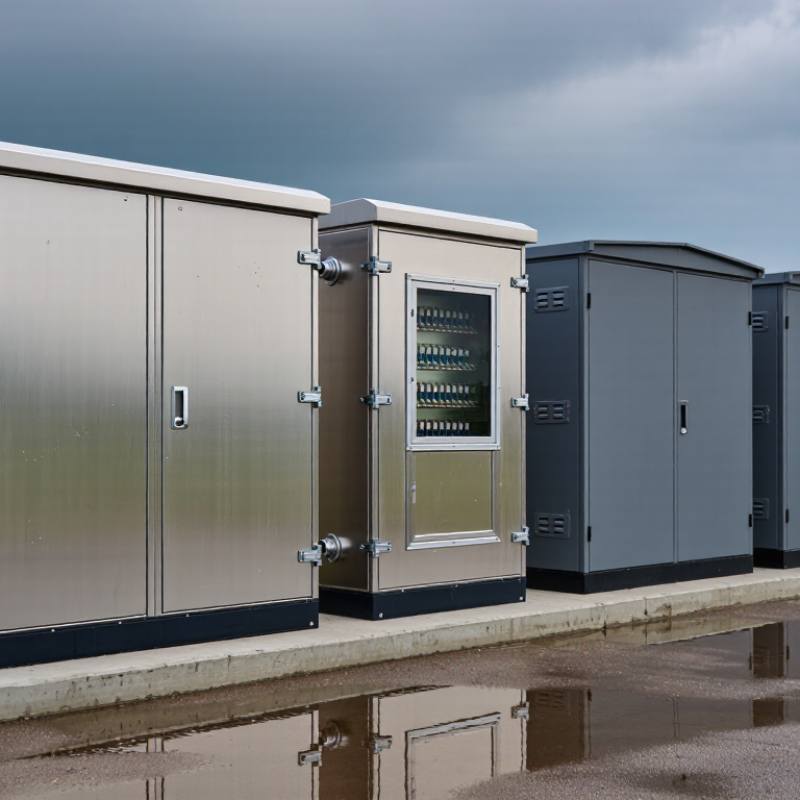
Waterproof switchgear is electrical equipment designed to control, protect, and isolate circuits in wet or exposed environments. Its enclosure limits water and dust entry around breakers, busbars, terminals, and control components. However, “waterproof” is not a universal guarantee. Buyers should examine the exact ingress protection rating, testing method, and installation conditions.
Rain, condensation, coastal salt, flooding, and washdown operations can damage electrical connections quickly. A suitable enclosure reduces short-circuit risks, corrosion, unexpected shutdowns, and maintenance costs. In global projects, these protections matter because equipment may face tropical humidity, desert dust, freezing temperatures, or poor drainage. The local environment changes everything.
Check the rating carefully.
Professional buyers should request test reports, material specifications, gasket details, and temperature-rise data. Stainless steel, coated metal, and reinforced polymer enclosures offer different strengths. Cable glands and door seals deserve equal attention. One weak entry point can defeat an otherwise strong enclosure. I have seen installations fail because drainage was ignored, even when the switchgear had a high rating.
Thermal management also matters. A sealed cabinet can trap heat during continuous operation. Ask about ventilation, derating, maintenance access, and replacement parts. Confirm compatibility with local electrical standards and project requirements before ordering. Remote sites may need stronger corrosion resistance and simpler servicing. A higher rating may help, but it cannot correct poor installation or neglected inspections. That part is easy to underestimate.
Anonymous supplier capability benchmark for comparing waterproof and weather-resistant switchgear solutions.
| Profile | Typical Buyer Segment | Common Product Scope | Typical Voltage Range | Typical Enclosure Protection | Relevant Standards | Key Waterproofing Features | Global Buyer Checkpoints |
|---|---|---|---|---|---|---|---|
| Supplier Profile 01 | Utility distribution projects | Outdoor medium-voltage switchboards, ring main units, and feeder panels | Up to 36 kV | IP54–IP65; NEMA 3R or 4 where specified | IEC 62271 series; IEC 60529 | Gasketed doors, sloped roof, screened ventilation, anti-condensation heater | Utility approval, short-circuit rating, altitude, seismic, and local grid code |
| Supplier Profile 02 | Commercial and industrial facilities | Low-voltage main distribution boards and motor control centers | Up to 1,000 V AC | IP55–IP66; NEMA 4 or 4X options | IEC 61439 series; IEC 60529 | Continuous gaskets, cable-entry sealing, segregated compartments, drainage control | Form of separation, temperature rise, busbar rating, and service access |
| Supplier Profile 03 | Solar farms and renewable-energy plants | AC collection panels, DC combiner equipment, and transformer-interface switchgear | Up to 36 kV AC; DC ratings vary by design | IP65–IP66; UV-resistant outdoor coating | IEC 61439, IEC 62271, IEC 60529 | UV-stable seals, filtered ventilation, corrosion-resistant hardware, rapid-drain roof design | Solar DC isolation, ambient temperature, UV exposure, wind loading, and remote monitoring |
| Supplier Profile 04 | Coastal, port, and marine installations | Salt-mist-resistant distribution panels and compact outdoor controlgear | Up to 1,000 V AC; medium-voltage options available | IP66; NEMA 4X commonly requested | IEC 60529; IEC 61439 or IEC 62271 as applicable | Marine-grade coating, stainless hardware, sealed cable glands, condensation management | Salt-spray performance, galvanic corrosion control, ingress-test evidence, and enclosure material |
| Supplier Profile 05 | Mining and heavy industrial operations | Ruggedized motor control centers, feeder units, and hazardous-area interfaces | Up to 36 kV | IP65–IP66; NEMA 4X options | IEC 61439, IEC 62271, IEC 60529; hazardous-area rules where applicable | Impact-resistant enclosure, reinforced hinges, dust exclusion, sealed gland plates | Impact rating, dust classification, hazardous-area certification, and maintainability |
| Supplier Profile 06 | Water treatment and wastewater plants | Pump control panels, process distribution boards, and outdoor MCCs | Up to 1,000 V AC | IP65–IP66; corrosion-resistant finish | IEC 61439; IEC 60529 | Sealed operator interfaces, stainless or coated steel, anti-condensation heating | Chemical exposure, humidity, washdown conditions, control voltage, and spare capacity |
| Supplier Profile 07 | Data centers and critical infrastructure | Main switchboards, automatic transfer assemblies, and bypass distribution units | Up to 1,000 V AC | IP54–IP55 indoors; IP65 for outdoor sections | IEC 61439; IEC 60529; project-specific continuity requirements | Sealed busbar compartments, redundant control circuits, monitored environmental protection | Availability requirements, arc-flash mitigation, selectivity, heat dissipation, and FAT documentation |
| Supplier Profile 08 | Transport, road, and rail infrastructure | Outdoor feeder pillars, signaling power panels, and compact substations | Up to 36 kV | IP55–IP66; vandal-resistant options | IEC 60529; IEC 61439 or IEC 62271 as applicable | Lockable doors, anti-vandal construction, drainage channels, cable trench sealing | Public-access safety, vibration, impact, temperature cycling, and maintenance logistics |
| Supplier Profile 09 | Food, beverage, and hygienic manufacturing | Washdown-rated control panels and stainless-steel distribution enclosures | Up to 1,000 V AC | IP66–IP69 where certified for the application | IEC 61439; IEC 60529 | Hygienic sloped surfaces, smooth welds, stainless enclosure, high-pressure washdown compatibility | Cleaning chemicals, washdown pressure, hygienic design, cable-entry placement, and certification scope |
| Supplier Profile 10 | Remote and rural electrification projects | Compact outdoor distribution boards, pole-mounted controls, and packaged feeder units | Up to 24 kV | IP54–IP65; outdoor UV and corrosion protection | IEC 60529; IEC 61439 or IEC 62271 as applicable | Low-maintenance construction, passive ventilation, sealed cable entries, surge protection provisions | Transportability, local spare parts, installation skills, lightning exposure, and ambient temperature |
For global buyers, waterproof switchgear selection should begin with evidence, not attractive catalog language. Look beyond brochures. Verify enclosure ratings, test conditions, and certification scope. An IP rating describes water and dust resistance, but it does not guarantee performance after years outdoors. Ask for test reports from independent laboratories, production dates, and clear references to the tested model.
Material and construction reveal practical supplier experience. Check stainless steel or coated metal specifications, UV resistance, drainage design, gasket quality, and cable-gland compatibility. Open the enclosure and inspect hinge strength, locking points, terminal spacing, and corrosion protection. Details matter. A supplier may claim waterproof performance while overlooking condensation inside the cabinet. Request samples when possible, then examine sealing after repeated opening and closing.
Reliable suppliers provide traceable quality records, documented factory inspections, and consistent batch controls. Ask how they manage design changes, failed tests, replacement parts, and technical questions across time zones. Their installation manuals should show torque values, cable-entry methods, and maintenance intervals. Field references are useful, but verify whether those projects face similar rainfall, salt exposure, temperature swings, and electrical loads. Even careful evaluations can miss a weak assumption. A small pilot order can expose packaging damage, unclear labeling, or poor support before a larger purchase.
Supplier One focuses on stainless steel enclosures for coastal substations. Its cabinets use welded seams, gasketed doors, and corrosion-resistant hinges. Supplier Two serves utility contractors with compact outdoor switchgear. Field feedback highlights simple cable access, though spare-part labeling could improve. Supplier Three builds modular units for industrial plants. Its documented ingress-protection tests support dependable performance during heavy rain. Supplier Four offers customized layouts for renewable-energy projects. Engineers can review drawings before production, reducing costly installation changes.
Supplier Five specializes in low-voltage assemblies for commercial buildings. Clear terminal markings help technicians work inside narrow cabinets. Supplier Six supplies powder-coated steel housings for agricultural facilities. The finish handles dust well, but buyers should verify coating thickness independently. Supplier Seven produces polymer enclosures for transport infrastructure. These units are lightweight and resist salt exposure. Supplier Eight provides project-based engineering for water-treatment sites. Its strongest feature is detailed thermal analysis. Delivery estimates may need careful confirmation.
Supplier Nine manufactures standardized switchgear for distributors. Consistent dimensions simplify replacement planning. However, its customization range appears limited. Supplier Ten supports export projects with multilingual manuals and factory inspection records. This improves communication across purchasing teams. Still, paperwork alone cannot prove long-term durability. Buyers should request sample seals, test conditions, maintenance intervals, and real installation references. Small details matter. A cabinet may pass a laboratory test yet fail when doors warp, drains clog, or technicians overtighten fittings. Practical reviews should balance supplier claims with site experience.
Waterproof switchgear buyers should compare enclosure performance, not only catalog price. Products with IP65 protection resist dust and water jets, while IP66 offers stronger jet resistance under IEC 60529 testing. Outdoor units may also require corrosion-resistant steel, sealed cable glands, and tested insulation clearance. MarketsandMarkets’ 2024 switchgear research indicates steady market growth near 6% annually, driven by grid upgrades and renewable projects. This demand can increase lead times for custom enclosures.
Certifications should match the installation country and voltage class. Request IEC 61439 test evidence, short-circuit ratings, factory inspection records, and routine test reports. UL or CSA documentation may be necessary for North American projects. Pricing comparisons must include breakers, busbars, coatings, transport, spare parts, and commissioning. A low quotation can hide missing surge protection or expensive field modifications. I have seen “complete” offers exclude cable termination kits. That wording deserves scrutiny. Service quality matters too. Strong suppliers provide drawings within clear deadlines, remote troubleshooting, replacement-part support, and documented maintenance guidance.
Tips: Ask for a sample test report and an IP test date. Compare five-year ownership cost, not purchase price alone. Confirm whether the quoted rating applies to the complete assembly. A 2023 International Energy Agency grid report also highlights rising investment needs for resilient electricity networks. However, reports differ in market definitions. Treat forecasts as direction, not proof. A site-specific risk assessment remains essential.
Choosing the right waterproof switchgear supplier starts with the installation environment. Record voltage, current, fault level, operating temperature, humidity, and exposure to dust or salt spray. Specify the required enclosure protection rating, but do not treat an IP code as complete proof of performance. Ask for test reports, material details, routine inspection records, and relevant international compliance documents.
Compare suppliers through a detailed request for quotation. Include drawings, cable entry positions, busbar requirements, control voltage, delivery location, and expected annual quantity. Review the supplier’s engineering team, production capacity, quality controls, and experience with similar outdoor projects. Request reference projects or anonymized inspection evidence. A video factory tour helps, though it cannot replace an independent audit.
Check a sample or prototype before placing a large order. Examine door seals, hinges, coating thickness, drainage design, labeling, and cable access. Confirm testing procedures for insulation, temperature rise, mechanical operation, and enclosure protection. Discuss spare parts, warranty response, installation guidance, and service availability in writing. Compare the full landed cost, including packaging, testing, transport, duties, and possible redesigns. Cheap offers can become expensive.
Leave room for uncertainty. Supplier claims may sound precise but remain incomplete without records. Use staged payments linked to approved drawings and inspection milestones. A final pre-shipment inspection is worthwhile, especially for customized equipment. Keep every revision documented, because one overlooked dimension can delay an entire installation.
+1 (619) 661-5985
sale@roboticemotion.com
10030 Via de la Amistad San Diego CA 92154, United States
We can supply pre-cut pipes and roller tracks, with the appropriate number of joints and accessories; delivered in kit form as per your specifications.