China Top 10 Industrial Automation Technology Manufacturers

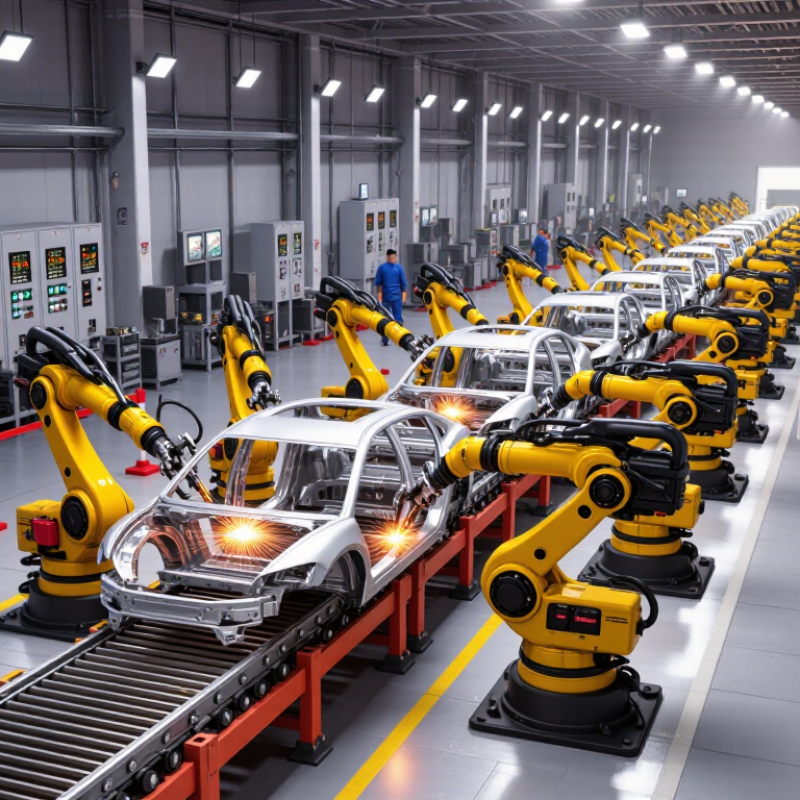
China has become a central force in the global industrial automation technology market. On a factory floor, this shift appears in robotic arms welding vehicle frames, machine-vision cameras checking tiny defects, and automated guided vehicles moving parts between workstations.

The International Federation of Robotics reported 541,302 industrial robots installed worldwide in 2023. China accounted for 276,288 installations, representing more than half of global demand. Its operational robot stock also exceeded 1.7 million units. These figures reveal the scale behind China’s manufacturing transformation, not merely its export ambitions. The IFR’s World Robotics 2024 report also placed China’s manufacturing robot density at 470 robots per 10,000 employees in 2023. That figure reflects substantial progress, although adoption remains uneven across industries and regions.

This China Top 10 Industrial Automation Technology Manufacturers overview examines companies shaping that development. The evaluation considers automation portfolios, control systems, robotics, software integration, industry coverage, research investment, and practical deployment experience. Public company disclosures, IFR data, official Chinese industrial policy documents, and established market research provide the evidence base. A ranking is never flawless. Revenue figures may include unrelated businesses, while private-company data can be limited. Buyers should therefore compare certification, lifecycle support, cybersecurity, interoperability, and local service capability before making decisions. In real facilities, a reliable controller and responsive technician can matter more than a polished product brochure. That practical detail is easy to overlook.
China Top 10 Industrial Automation Technology Manufacturers

China’s Industrial Automation Market: 2023 Scale and 2024 Growth Indicators

China’s industrial automation market reached an estimated RMB 290–310 billion in 2023, according to industry estimates. The range varies because research firms define automation differently. Some include industrial software, while others count only control hardware and robotics. Demand remained strong in automotive, electronics, batteries, logistics, and food processing. Factory upgrades increasingly combined PLC systems, servo drives, machine vision, sensors, and production data platforms.

In 2024, market growth was expected to remain steady at roughly 6%–8%. Investment focused on labor efficiency, energy monitoring, predictive maintenance, and flexible production lines. The top 10 industrial automation technology manufacturers compete across these areas, but market leadership is not measured by sales alone. Local service teams, integration experience, delivery stability, and cybersecurity support matter greatly. Some forecasts may appear optimistic. Equipment orders can also weaken when manufacturers delay capital spending.

Tips: Compare suppliers through a real production trial, not a brochure. Check response times for replacement parts and software support. Ask for proven results from factories with similar cycle times and environmental conditions. Measure downtime before and after installation. A simple dashboard showing alarms, output, energy use, and maintenance hours can reveal more than a large technology package. Also, leave room for operator training. Even advanced systems underperform when workers receive rushed instruction.

Ranking the Top 10 by Revenue, R&D Spending, Patents, and Market Share

China Top 10 Industrial Automation Technology Manufacturers

Ranking the Top 10 by Revenue, R&D Spending, Patents, and Market Share

China’s top industrial automation manufacturers should be ranked by more than annual sales. A reliable Top 10 list compares automation revenue, R&D spending, active patent families, and domestic market share. Public financial reports, patent databases, customs records, and factory interviews provide stronger evidence than advertising claims. Revenue measures commercial scale. R&D shows long-term technical commitment.

A practical ranking model could assign 35% to revenue, 25% to R&D investment, 20% to market share, and 20% to patents. The highest-ranked companies usually offer several product categories, including programmable controllers, servo systems, industrial drives, robotics, sensors, and control software. A manufacturer holding strong share in automotive plants may still rank below a broader competitor with higher revenue and deeper software capabilities. This distinction matters.

The data is not perfect. Some companies report group-wide revenue, making automation sales difficult to isolate. Patent totals can also mislead because one valuable invention may outperform hundreds of minor filings. Market share estimates often vary between research firms. They should be checked carefully. Field experience adds another layer: engineers notice installation time, system stability, maintenance access, and local service response. A ranking that ignores these details may look precise but remain incomplete. The strongest manufacturers combine measurable financial strength with dependable performance on factory floors.

Top 10 Manufacturers Across PLC, DCS, Servo, HMI, and Industrial Robots

China’s top ten industrial automation manufacturers serve different layers of modern production. Their portfolios commonly include PLCs, DCS platforms, servo systems, HMIs, and industrial robots. A strong PLC should handle fast scan cycles, stable communication, and demanding cabinet temperatures. DCS solutions need dependable redundancy, clear alarm management, and disciplined process control. These details matter on a factory floor, not only in a product brochure.

Servo manufacturers are judged by positioning accuracy, motor response, and tuning software. In a packaging line, a small timing error can damage film or misalign labels. HMI suppliers focus on readable screens, multilingual controls, and quick fault diagnosis. Industrial robot makers are evaluated through payload, repeatability, safety integration, and offline programming. Practical testing remains essential. A polished demonstration is not enough.

Reliable manufacturers usually provide application engineers, spare-parts planning, training, and traceable technical documents. Factory audits should examine testing records, cybersecurity practices, and after-sales response times. Independent certification can support trust, but it cannot replace field evidence. No ranking is perfect. A supplier may excel in servo control yet struggle with complex DCS integration. Buyers should compare actual cycle data, maintenance access, and local support before selecting equipment for a production line.

Comparing Product Portfolios, Connectivity Standards, and System Accuracy

China Top 10 Industrial Automation Technology Manufacturers

Comparing product portfolios requires more than counting catalog items. The strongest manufacturers usually cover PLCs, motion controllers, servo drives, sensors, industrial robots, and SCADA software. A factory engineer should check whether these products share configuration tools and diagnostic methods. In practice, one unified engineering environment can reduce commissioning time by several days. However, broad portfolios may hide uneven performance between product families. A supplier can excel in motion control but offer weaker safety modules.

Connectivity standards often decide whether equipment remains useful after installation. Ethernet-based protocols support fast data exchange between controllers, drives, and supervisory systems. OPC UA can improve communication with manufacturing platforms and cloud gateways. MQTT is useful for lightweight machine data, especially on remote lines. Still, protocol support alone proves little. Engineers should test cycle times, network recovery, cybersecurity controls, and data consistency under heavy traffic. A five-minute power interruption reveals more than a brochure.

System accuracy needs practical measurement. For a servo axis, engineers can compare commanded distance with actual movement using calibrated instruments. Repeatability should be tested at different speeds, loads, and temperatures. Sensor resolution is important, but mechanical backlash may create larger errors. I have seen impressive specifications lose value during dusty, high-vibration production. The comparison is not perfect. Test conditions, firmware versions, and operator skills can change results. A reliable review should record those limits, not hide them.

Evaluating 2023 Performance Through Clients, Exports, and Industry Coverage

China Top 10 Industrial Automation Technology Manufacturers

Evaluating 2023 Performance Through Clients, Exports, and Industry Coverage

The 2023 assessment focuses on evidence, not advertising claims. Client diversity provides a useful starting point. Strong manufacturers served automotive plants, food processors, warehouses, energy projects, and public infrastructure. Their systems often combined controllers, motion devices, sensors, industrial software, and remote monitoring. Factory-floor reliability mattered more than product variety.

Export performance added another layer. Manufacturers with installations across Southeast Asia, Europe, the Middle East, and Latin America showed stronger international readiness. Shipping records, overseas service teams, local certifications, and distributor networks offered practical evidence. A product sold abroad is not automatically successful. Support after installation matters. Downtime exposes weak planning quickly.

Industry coverage also shaped the ranking. Companies serving several sectors appeared less vulnerable to one market cycle. However, coverage figures were not always comparable. Some manufacturers counted small pilot projects as major clients. Others disclosed very little. That limits certainty.

The review used public financial filings, project references, technical documents, and customer case evidence where available. It also considered engineering depth, integration capability, and documented 2023 delivery experience.

The ranking is not flawless. Export data can lag, while private contracts remain difficult to verify. Some capable manufacturers received lower positions because their evidence was less visible. That is an uncomfortable gap. A better review would include more independent user interviews, verified uptime data, and regional service-response records. Those details often reveal performance better than a polished catalogue.

×
img

    Contact Info

    PHONE NUMBER

    +1 (619) 661-5985

    EMAIL ADDRESS

    sale@roboticemotion.com

    ADDRESS INFO

    10030 Via de la Amistad San Diego CA 92154, United States