
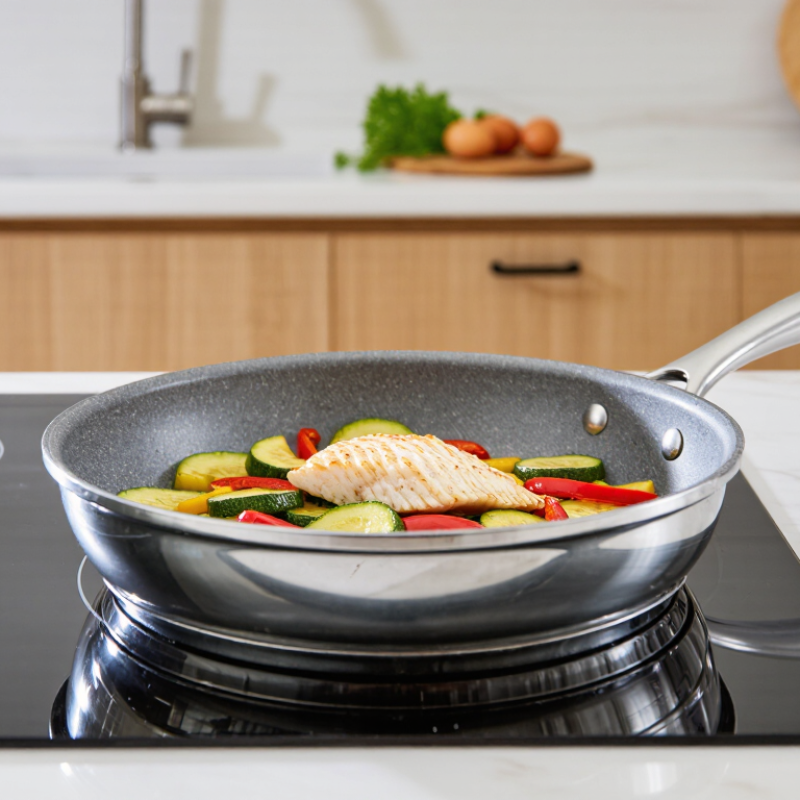
When choosing an aluminum frying pan, study its construction before its appearance.
Spun aluminum is lightweight and heats quickly, but thin walls may warp over high heat.
Cast aluminum usually feels heavier and offers better rigidity.
Hard-anodized aluminum has a treated surface that improves scratch resistance, although coating quality still varies.
Look at the cooking base.
A thicker base spreads heat more consistently. Multilayer or clad designs may add stainless steel for durability and induction compatibility. However, extra layers can make the pan slower to respond. Your burner size still matters.
ASM Handbook data places pure aluminum’s thermal conductivity near 237 W/m·K, far above common stainless steel.
That explains aluminum’s fast heating, not perfect cooking control.
Check the handle attachment and interior finish closely. Riveted handles often feel secure, but exposed rivets collect residue. A coated interior should appear even, without bubbles or thin patches.
The International Aluminium Institute reports that recycling aluminum uses about 5% of the energy required for primary production.
A durable pan can therefore support a lower-impact purchase, especially when its body remains usable after surface wear.
I once preferred the lightest pan, but it heated unevenly on a wide burner. Weight alone misled me. Choose the thickest practical base, then match the pan to your stove and cooking habits.


