Top Well Drilling Equipment Suppliers Worldwide?

Choosing among the top Well Drilling Equipment suppliers worldwide requires more than comparing catalog prices. A reliable supplier must support the entire drilling cycle, from site preparation to casing, mud circulation, and equipment maintenance. Field experience matters.

William C. Lyons, a respected drilling author and engineer, described drilling as “an art, a science, and a business.” That observation remains relevant. A powerful rotary rig can still fail when the pump is poorly matched, spare parts arrive late, or operators lack practical training. Small details matter. Hose quality, mast stability, torque control, and filtration performance can affect every meter drilled.

This guide examines leading global suppliers through practical criteria, including product range, manufacturing capability, safety systems, after-sales service, and performance in demanding environments. It considers equipment used for water wells, geothermal projects, mining exploration, construction, and energy production. Supplier reputation is important, but it should not replace technical verification. Buyers should review certifications, service records, warranty terms, and local support before signing contracts.

Not every supplier fits every project. A compact crawler rig may suit a rural water program, while a deep geothermal site needs stronger hoisting capacity and continuous mud management. Some comparisons remain imperfect because public performance data can be limited. That limitation deserves attention. The strongest choice is not always the largest brand; it is the supplier that delivers dependable equipment, responsive service, and measurable value under real field conditions.
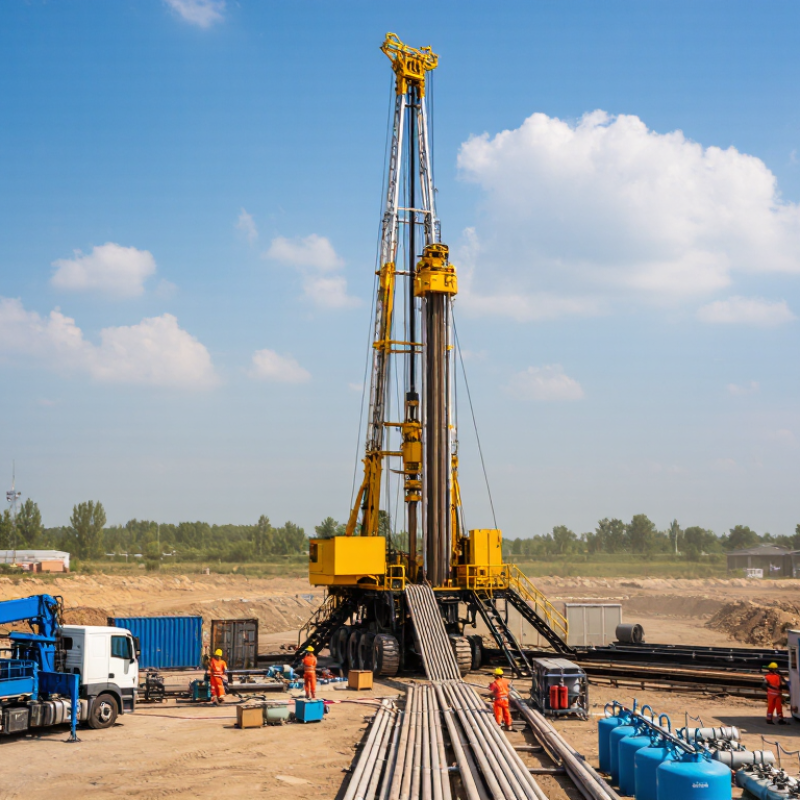
Top Well Drilling Equipment Suppliers Worldwide?

Well Drilling Equipment: Types, Functions, and Applications

Well Drilling Equipment: Types, Functions, and Applications

Well drilling equipment converts surface power into controlled subsurface access. Rotary rigs use a rotating drill string, while percussion rigs break rock through repeated impacts. A mud pump circulates drilling fluid, cooling the bit and carrying cuttings upward. Air compressors serve hard, fractured formations where dry drilling improves sample recovery. The choice depends on depth, geology, hole diameter, and water quality requirements.

According to the UNESCO World Water Development Report 2024, agriculture represents about 70% of global freshwater withdrawals. This demand keeps water-well drilling technically important, especially in dry regions. Truck-mounted rigs suit remote projects, while crawler rigs provide better stability on uneven ground. Downhole hammers work effectively in hard rock, although excessive vibration can damage casings or reduce borehole accuracy.

Energy projects use larger rotary systems, steel casing, blowout-control equipment, and automated monitoring. The International Energy Agency’s World Energy Investment 2024 report projected roughly 570 billion dollars in upstream oil and gas investment during 2024. That figure signals continuing demand for reliable drilling systems, but it does not guarantee equal growth across equipment categories. Geothermal drilling also requires high-temperature tools; IRENA reported global geothermal power capacity near 15 gigawatts in 2023. Field experience shows that specifications alone can mislead. A powerful rig may perform poorly when transport access, water supply, or operator training is overlooked. Small details matter.

Key Criteria for Evaluating Global Equipment Suppliers

Top Well Drilling Equipment Suppliers Worldwide?

Selecting a global drilling equipment supplier requires more than comparing prices. The IEA’s World Energy Investment 2024 report estimated upstream oil and gas investment at about $570 billion. That scale increases pressure on buyers to verify equipment quality, delivery capacity, and lifecycle costs. Request documented load ratings, operating temperature ranges, maintenance intervals, and spare-parts availability. A supplier’s field experience matters when equipment faces dust, vibration, freezing conditions, or unstable formations.

Compliance should be measurable. Check certification against relevant ISO standards, inspection records, factory acceptance tests, and traceable material certificates. The IEA’s Global Methane Tracker 2024 estimated that fossil fuel operations released around 120 million tonnes of methane in 2023. Suppliers should therefore explain sealing performance, leak detection, fluid handling, and emissions controls. Do not accept vague sustainability claims. Ask for test methods and recent service records. Some supplier evaluations still overvalue purchase price. That is a costly blind spot.

Tips: Build a weighted scorecard covering safety, uptime, training, logistics, warranty response, and total cost of ownership. Request two customer references from similar geological regions. Review failure data, not only success stories. A polished factory tour proves little without independent verification. If technical documents conflict, pause the purchase and seek a qualified third-party inspection. Mistakes happen. Good procurement leaves room to challenge its own assumptions.

Leading Well Drilling Equipment Suppliers by Product Range

Top Well Drilling Equipment Suppliers Worldwide

Leading well drilling equipment suppliers are often distinguished by product range, not advertising claims. Their catalogs may include rotary rigs, down-the-hole systems, augers, air compressors, mud pumps, drill rods, bits, casing, and grouting tools. A broad range helps contractors adapt to clay, sand, fractured rock, and changing water tables.

Product matching requires practical engineering knowledge. Check drilling depth, hole diameter, torque, feed force, engine output, and transport limits. A compact rig may suit narrow rural sites, while deeper formations demand stronger masts and higher air capacity. Suppliers should provide operating manuals, inspection records, spare-part lists, and operator training. Service response matters, especially when a broken pump stops the entire crew.

Reliability also depends on traceable materials, clear warranty terms, and documented quality inspections. Ask whether rods, threads, seals, and casing are compatible across the proposed system. Field experience can reveal problems that brochures miss. Downtime is expensive. A low purchase price may hide difficult maintenance access or limited replacement parts. I would still question any supplier offering an impressive product range without application data. Specifications can look complete, yet performance changes sharply with geology, water depth, and operator skill. A careful supplier explains those limits instead of promising perfect results.

Top Well Drilling Equipment Suppliers Worldwide? - Leading Well Drilling Equipment Suppliers by Product Range

Product Range Typical Drilling Method Common Hole Diameter Typical Drilling Depth Primary Power Configuration Mobility Options Typical Applications Key Selection Criteria
Light-Duty Water Well Rigs Rotary drilling, direct circulation, or limited down-the-hole drilling 100–300 mm 30–150 m Diesel engine or electric motor; commonly 20–75 kW Trailer-mounted Skid-mounted Household wells, farm irrigation, shallow groundwater investigations Transportability, low operating cost, compact footprint, ease of maintenance
Truck-Mounted Water Well Rigs Rotary mud drilling, air rotary, or down-the-hole hammer drilling 150–450 mm 150–600 m Truck engine with hydraulic or mechanical power transmission 2WD truck 4WD truck Municipal water wells, agricultural wells, emergency water supply projects Road mobility, mast capacity, compressor output, service accessibility
Crawler-Mounted Drilling Rigs Rotary, reverse circulation, or down-the-hole hammer drilling 150–600 mm 100–800 m Diesel-hydraulic system; commonly 75–250 kW Steel crawler Rubber crawler Uneven terrain, remote projects, industrial and community water wells Terrain access, tramming performance, stability, maximum pullback force
Deep Water Well Rigs Rotary mud, air rotary, casing advancement, or down-the-hole hammer drilling 200–800 mm 500–2,000 m High-power diesel-hydraulic or electric-hydraulic drive Truck-mounted Trailer-mounted Crawler-mounted Large-capacity municipal wells, industrial supply wells, geothermal exploration Hoisting capacity, rotary torque, mud circulation, rod handling and safety systems
Air Rotary and DTH Rigs Compressed-air rotary drilling with a down-the-hole hammer 100–350 mm 100–600 m Diesel engine with high-pressure air compressor Truck-mounted Crawler-mounted Hard-rock water wells, fractured-rock aquifers, high-penetration drilling Compressor pressure, air volume, hammer compatibility, dust-control provisions
Mud Rotary Drilling Systems Direct rotary drilling using drilling fluid to stabilize the borehole 150–600 mm 100–1,000 m Diesel-hydraulic or electric-hydraulic drive with mud pump Truck-mounted Trailer-mounted Skid-mounted Unconsolidated formations, sand and gravel aquifers, large-diameter wells Mud pump capacity, fluid control, cuttings removal, borehole stability
Reverse Circulation Rigs Reverse circulation with airlift or pump-assisted cuttings removal 300–1,200 mm 100–800 m High-capacity diesel-hydraulic system with air or slurry circulation Crawler-mounted Truck-mounted Large-diameter production wells, high-yield aquifers, geotechnical investigations Large borehole capacity, circulation efficiency, sample recovery, fluid handling
Geothermal Well Drilling Equipment Rotary mud, air rotary, casing drilling, or hybrid drilling methods 200–600 mm 500–3,000 m High-power diesel or electric drive with heavy-duty circulation equipment Truck-mounted Crawler-mounted Modular Ground-source heating, geothermal heat extraction, thermal-water wells Temperature rating, torque capacity, casing program, fluid and pressure control
Casing Advancement Systems Simultaneous drilling and casing, driven casing, or eccentric reaming 150–500 mm 50–400 m Hydraulic rotary drive with dedicated casing oscillator or hammer Crawler-mounted Truck-mounted Loose formations, collapsing ground, overburden drilling, contaminated sites Casing diameter range, pullback force, formation adaptability, seal integrity
Well Rehabilitation Equipment Airlifting, surging, brushing, jetting, and pump-assisted redevelopment 100–600 mm well casing Up to approximately 500 m Diesel or electric compressor, high-pressure pump, and service winch Trailer-mounted Skid-mounted Service truck Restoring well yield, removing sediment, biofouling treatment, screen cleaning Compressor output, pump compatibility, cable capacity, treatment access
Support and Auxiliary Equipment Material handling, fluid circulation, air compression, and borehole completion support Compatible with project-specific bore sizes Based on the associated drilling rig Diesel, electric, hydraulic, or pneumatic power Portable Trailer-mounted Containerized Air compressors, mud pumps, drill-pipe handlers, water tanks, generators, tooling Capacity matching, energy efficiency, spare-parts availability, site logistics

Regional Markets and Distribution Networks Worldwide

Choosing top well drilling equipment suppliers requires more than comparing product catalogs. Regional distribution networks often determine project success. In North America, suppliers commonly support deep-water wells with local warehouses and trained service crews. Latin American buyers may prioritize rugged rigs, flexible financing, and Spanish-language technical support. In Africa, reliable spare-parts access can matter more than advanced features. Asian markets often favor compact equipment, fast delivery, and systems adapted to dense work sites.

A dependable supplier should understand local geology, transport limits, and operating conditions. A rig designed for hard rock may underperform in loose alluvial soil. Ask for drilling data, maintenance schedules, operator training, and parts availability near the project site. Field experience matters here. A supplier with regional technicians can reduce downtime when a pump fails beside a remote access road. Still, distribution promises deserve careful checking. Some networks appear extensive online but have limited local inventory.

Tips: Request a regional stock list before signing. Confirm delivery times for pumps, rods, bits, and critical seals. Check whether manuals match local languages and safety requirements. Visit a nearby customer site when possible. Small details matter. A useful partnership should include honest limitations, not only impressive specifications. Forecast seasonal demand, because border delays and monsoon conditions can disrupt carefully planned schedules.

Safety, Standards, Service, and After-Sales Support

Top Well Drilling Equipment Suppliers Worldwide?

Safety should lead every supplier comparison. The International Labour Organization estimated 2.93 million work-related deaths globally each year, with 395 million nonfatal injuries. Well drilling involves suspended loads, rotating tools, high pressure, and unstable ground. Suppliers should provide guarding, emergency stops, lockout procedures, and clear maintenance instructions. Safety data sheets must match the supplied fluids and components. Small gaps become expensive.

Standards matter, but certificates alone are not enough. The ISO Survey 2023 reported more than 1.26 million ISO 9001 certificates worldwide and over 185,000 ISO 45001 certificates. Buyers should verify certificate scope, audit dates, and manufacturing locations. Ask for factory acceptance records, load-test results, and traceable material certificates. Service quality also needs evidence: trained technicians, response targets, spare-parts availability, and remote troubleshooting. After-sales support should continue after installation, not end with a delivery note.

This is where supplier reviews become difficult. A polished manual cannot replace field competence. Equipment may meet a standard yet perform poorly in dust, cold, or uneven terrain. Request references from comparable drilling conditions, not only large projects. Check repair times and recurring failure records. Perfect suppliers are unlikely; transparent suppliers are more valuable. Reliability is proven over time.

×
img

    Contact Info

    PHONE NUMBER

    +1 (619) 661-5985

    EMAIL ADDRESS

    sale@roboticemotion.com

    ADDRESS INFO

    10030 Via de la Amistad San Diego CA 92154, United States