How to Implement Automated Assembly Systems for Increased Efficiency?
In the rapidly evolving landscape of manufacturing, automated assembly systems stand at the forefront of innovation. Expert Dr. Emily Chen, a leading voice in industrial automation, once stated, "Embracing automated assembly systems is no longer an option; it's a necessity for staying competitive." Her insight underscores a fundamental truth: efficiency and precision are vital in modern production lines.
Implementing automated assembly systems can significantly enhance productivity. These systems streamline operations, reduce human error, and improve product quality. However, the transition to automation is not without challenges. Companies must grapple with the costs, employee training, and potential disruptions in workflow. Finding the right balance is essential.
Continuous improvement is crucial. Organizations must evaluate their automated assembly systems regularly. This reflection ensures that they adapt to changing demands and technologies. As the industry evolves, so too must the strategies behind automation. Implementing effective solutions can make a profound difference in overall efficiency and competitiveness.
Understanding Automated Assembly Systems and Their Benefits
Automated assembly systems revolutionize manufacturing by enhancing
efficiency and productivity. These systems integrate advanced robotics and AI.
They streamline processes and reduce human error. As businesses adopt these technologies,
several benefits emerge.
Increased speed is one major advantage. Tasks that once took
hours can now be completed in minutes. Labor costs also decrease, as fewer workers are needed to
perform manual tasks. Furthermore, consistency improves. Products
manufactured with automated systems maintain a higher quality standard. This reliability boosts
customer satisfaction and loyalty.
Tips: When implementing these systems, start small. Focus on one segment of the
assembly line. Gradual integration can reveal unforeseen challenges. Evaluate staff readiness too.
Training should be comprehensive but not overwhelming. Monitor performance metrics consistently to
ensure ongoing improvement. Remember, each automation journey is unique. Adapt strategies to fit
specific operational needs.
Assessing Requirements for Implementing Automated Systems
Assessing the requirements for implementing automated assembly systems is a critical step. Companies need to evaluate their current processes thoroughly. Begin by identifying bottlenecks that slow down production. Engage with employees to gather insights. Their hands-on experience can reveal hidden inefficiencies. Document these pain points, as they form the foundation for your automation strategy.
Next, consider the technology landscape. Research different automated solutions that match your needs. It’s tempting to aim for the latest tech, but this can lead to overspending. Focus instead on systems that integrate well with existing workflows. Training employees on new systems is equally important. They might resist change if not properly prepared.
Evaluate the space requirements too. Many companies underestimate the physical footprint of new equipment. This oversight can disrupt operations. Analyzing layout and flow can prevent adaptation headaches later on. Reflect on these crucial steps. Implementing automation is not an overnight task. It requires careful planning and adjustment along the way.
How to Implement Automated Assembly Systems for Increased Efficiency? - Assessing Requirements for Implementing Automated Systems
| Requirement Dimension |
Description |
Importance Level |
Feasibility Rating |
Estimated Cost ($) |
| Technology Assessment |
Evaluation of current technology capabilities and compatibility with automated systems. |
High |
Medium |
5000 |
| Workforce Training |
Training programs for employees to effectively operate automated systems. |
Medium |
High |
3000 |
| System Integration |
Integrating automated systems with existing manufacturing processes and infrastructure. |
High |
Low |
8000 |
| Maintenance Plan |
Establishing a routine maintenance schedule to ensure system reliability and uptime. |
Medium |
Medium |
2000 |
| Performance Metrics |
Setting KPIs to monitor the performance and efficiency of automated systems. |
High |
High |
1000 |
Selecting the Right Technology and Equipment for Automation
When selecting the right technology and equipment for automated assembly systems, several factors come into play. It’s essential to evaluate your specific production needs. Start by assessing the volume of products. If your production runs are small and varied, flexibility is key. On the other hand, high-volume production benefits from specialized equipment. Consider how the components will interact. Compatibility is vital for seamless operations.
Additionally, think about the future. Will your technology adapt to evolving demands? Choose equipment that allows for upgrades or modifications. Research current trends. Some technologies are emerging as game-changers. However, it’s crucial to be cautious. Not all new solutions will fit every production line. Avoid the shiny object syndrome that can lead to inefficient investments.
It's also important to reflect on workforce training. New systems can disrupt existing processes. Employees may require time to adjust. Ensure that the chosen technology includes user-friendly interfaces. This can reduce the learning curve and increase productivity. Invest in the right support and resources. Automation can transform efficiency, but it requires thoughtful implementation and ongoing evaluation.
Automated Assembly Systems Efficiency Comparison
This chart displays the efficiency improvement in assembly systems after implementing automation across various industries. The data highlights the percentage increase in production output before and after adopting automated assembly systems.
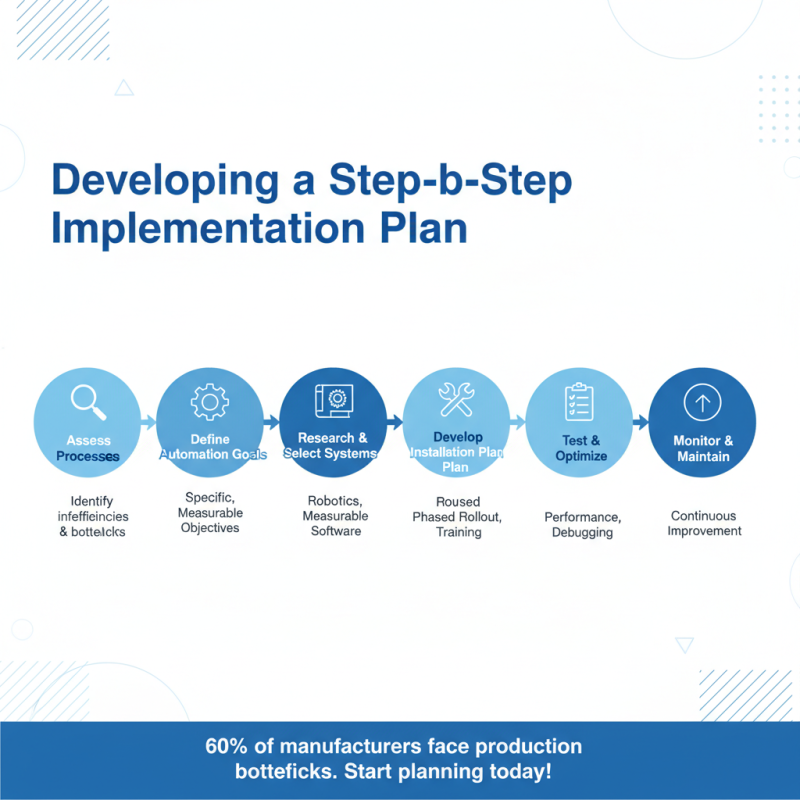
Developing a Step-by-Step Implementation Plan
Implementing automated assembly systems requires careful planning. A step-by-step implementation plan can guide your efforts. Start with a detailed assessment of your current processes. Identify inefficiencies such as bottlenecks in production. A recent industry report indicates that 60% of manufacturers face such issues. Understanding where your workflow falters is crucial.
Next, outline your automation goals. What tasks will automation address? Consider factors like cost reduction and increased throughput. A study by the International Federation of Robotics shows that automation can improve efficiency by up to 30%. Align these objectives with measurable outcomes, ensuring everyone understands the expected benefits.
Engage your team early. Gather input from engineers and operators. They understand the nuances and constraints of current systems. Be prepared for adjustments. Sometimes, initial plans may require reevaluation after real-world testing. This iterative approach helps in refining the automation strategy. Remember, not every step will be perfect, and flexibility is key.
Training and Supporting Staff for Successful Integration
Integrating automated assembly systems is a significant step toward enhancing operational efficiency. However, the success of such systems heavily relies on well-trained staff. Training is not only about technical skills; it also includes understanding the technology's purpose. Employees must grasp how automation can improve their daily tasks. This deeper comprehension fosters a sense of ownership and makes them more receptive to changes.
Support plays a crucial role during this transition. Providing ongoing assistance helps employees troubleshoot issues effectively. Regular check-ins can build confidence in their abilities. Encouraging feedback is essential, too. Staff may have insights into potential inefficiencies not immediately visible to management. This two-way communication nurtures a collaborative environment, where both staff and management can adapt and refine processes together.
It's important to address that not all staff will adapt equally. Some may struggle initially with new systems. This reality should prompt reflections on alternative training methods. Visual aids, hands-on workshops, and peer-to-peer learning can enhance understanding. Emphasizing continuous learning reinforces that adaptation is a journey, not a destination.