Finding China’s top Plastic Enclosures manufacturers requires more than comparing online catalogs or factory photographs. A reliable search begins with the enclosure’s actual purpose, dimensions, material, protection rating, and production volume. Consider ABS for cost-effective indoor products, polycarbonate for higher impact resistance, and aluminum when heat dissipation matters. Small details matter. Wall thickness, screw posts, sealing grooves, and cable-entry positions can affect assembly and durability.
Experienced buyers usually request technical drawings, material specifications, inspection records, and recent production samples. They also verify molding capabilities, surface finishing, tooling ownership, and quality-control procedures. Certifications such as ISO 9001, RoHS, REACH, UL, or IP test reports may be relevant, depending on the target market. However, a certificate alone does not prove consistent manufacturing quality. It should match the exact product, factory, and testing scope.
A practical supplier assessment includes a video audit or on-site visit when possible. Check whether production equipment is maintained, operators follow documented procedures, and inspectors record measurable results. Ask how the manufacturer handles warped covers, incomplete filling, color variation, and late tooling changes. These problems are common enough to discuss openly. Even capable manufacturers can miss a tolerance or misunderstand a drawing. Clear communication reduces that risk.
Price matters, but the lowest quotation can hide tooling fees, weak materials, or limited inspection. Compare total cost, lead time, sample approval, packaging, and after-sales support. Request a small trial order before committing to large volumes. There is no perfect supplier. The strongest choice is usually the manufacturer that communicates clearly, documents its process, and improves when problems appear.
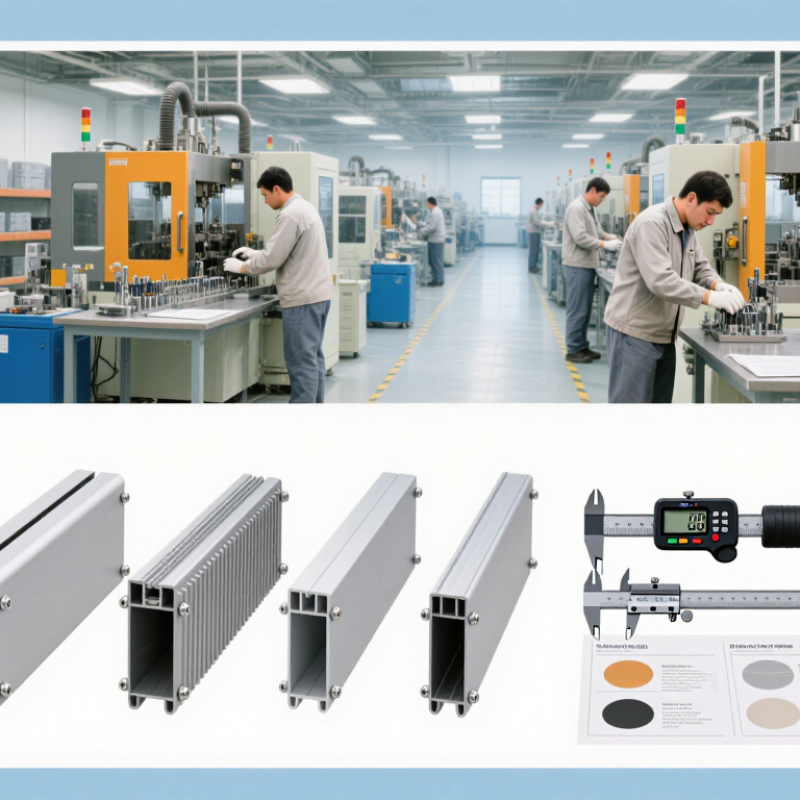
When comparing plastic enclosure manufacturers in China, define your requirements before requesting quotations. The right enclosure depends on its application, not only its appearance. Start with the device dimensions, mounting method, wall thickness, and expected production volume. Record length, width, height, and every critical tolerance. Include cable openings, ventilation slots, display windows, and screw locations.
Think about the working environment. Will the enclosure face sunlight, moisture, dust, vibration, or temperature changes? If outdoor use is expected, specify an appropriate ingress protection level and UV-resistant material. For electronic equipment, describe heat generation and grounding needs clearly. Choose materials based on strength, flame performance, chemical exposure, and surface finish. A rough sketch helps. Photos of similar products can prevent confusion.
I once underestimated the space required for connectors and wiring. The prototype looked acceptable, but assembly became slow and awkward. This mistake taught me to leave practical clearance around terminals and tools. Ask manufacturers for a 3D drawing, material data sheet, prototype process, and dimensional inspection method. Confirm whether inserts, gaskets, labels, or custom colors are included. Request samples before mass production. Check the fit, screw alignment, edge quality, and resistance to repeated opening. A reliable supplier should explain limitations, not promise everything. Your requirements may change after testing. Revise them carefully.
How to Find China Top Plastic Enclosures Manufacturers?
Research China’s Leading Plastic Enclosure Manufacturers
Finding a leading plastic enclosure manufacturer requires more than comparing online catalogs. Start with technical requirements, including material grade, wall thickness, dimensions, ventilation, and expected IP protection. A capable supplier should explain its molding process clearly. Ask for recent sample photos, inspection records, and material certificates. Ask for evidence.
During factory research, examine tooling control and production consistency. Request a video tour or arrange an independent audit when practical. Look for injection molding machines, calibrated measuring tools, clean storage areas, and labeled production batches. Small details matter. Workers should understand how defects are recorded and corrected. Their quality system should cover incoming materials, first-piece inspection, and final packaging.
Speak with several manufacturers before choosing one. Compare their engineering replies, sample accuracy, lead times, minimum order quantities, and communication habits. A serious supplier will discuss design risks, such as sink marks, weak screw bosses, or uneven wall thickness. It may recommend draft angles or stronger ribs before tooling begins. That technical honesty is valuable, even when it delays a quotation.
I once treated a low price as proof of efficiency. That assumption failed. The supplier later changed the resin without clear approval, creating color and strength differences. Now, I require written specifications, approved samples, change-control rules, and traceable inspection reports. Still, documents alone cannot prove factory performance. Review production samples from different batches, question unusual claims, and check whether the manufacturer can maintain quality after the first order.
Typical upper continuous-use temperatures of commonly specified plastic enclosure materials
Use material capability as an initial screening factor when researching manufacturers. The values shown are typical engineering ranges: exact performance depends on resin grade, additives, wall thickness, enclosure design, and testing conditions.
Finding China’s top plastic enclosure manufacturers requires more than comparing quotations. Evaluate how each factory turns drawings into repeatable parts. Ask for evidence, not promises. A capable supplier should explain resin selection, mold design, machine capacity, and dimensional control. Request samples from normal production, not specially polished prototypes. Inspect wall thickness, screw bosses, snap fits, ventilation openings, and surface texture under practical lighting. Small warping can cause assembly failures later.
Quality standards should match the enclosure’s actual use. Review the manufacturer’s quality system, inspection plans, calibration records, and nonconformance procedures. ISO 9001 certification can support confidence, but it does not replace your own verification. Check resin certificates and lot traceability. For outdoor or industrial housings, discuss ingress protection testing, UV exposure, impact resistance, and operating-temperature cycles. Electrical applications may also require material flammability and insulation testing. Ask which laboratory performed each test and whether the report covers your exact material and design.
Visit the molding area if possible. Observe housekeeping, drying controls, mold maintenance, and first-article approval. Measure critical dimensions with documented gauges. Review capability data, such as Cp and Cpk, for features that affect sealing or fit. Production capacity matters too. A factory may pass a sample audit yet struggle during peak orders. That risk deserves an honest conversation. No audit is perfect. Even experienced buyers can overvalue neat displays and overlook weak process records. Use a written scorecard, approve a pilot run, and keep retained samples for comparison. Reliable manufacturers welcome specific questions and explain limitations before production begins.
| Evaluation Dimension | Practical Benchmark | Evidence to Request | Why It Matters |
|---|---|---|---|
| Quality Management System | A documented quality system certified to ISO 9001:2015, with controlled procedures for production, inspection, nonconforming products, and corrective actions. | Valid certificate, certification scope, issuing body, audit date, and sample quality records. | Shows whether quality control is systematic rather than dependent only on individual operators. |
| Injection Molding Capacity | Equipment covering the required clamping force, shot volume, mold dimensions, and material requirements. Common enclosure projects may require machines from approximately 80 to 1,600 tons, depending on part size and design. | Machine list, clamping-force range, maximum mold size, shot capacity, machine condition, and production records for comparable parts. | Adequate equipment reduces molding defects, dimensional instability, and production bottlenecks. |
| Material Selection | Capability to process engineering plastics such as ABS, polycarbonate, PC/ABS, nylon, and flame-retardant grades when required by the application. | Approved material list, resin technical data sheets, lot traceability, certificates of analysis, and incoming-material inspection records. | Correct resin selection affects impact strength, heat resistance, chemical resistance, appearance, and fire performance. |
| Tool and Mold Engineering | In-house or controlled access to mold design, flow analysis, CNC machining, EDM, polishing, mold trials, and preventive maintenance. | Mold-flow report, DFM review, 2D/3D drawings, mold-maintenance plan, trial-shot report, and tool-ownership terms. | Well-designed tooling improves fit, wall uniformity, cycle time, surface finish, and long-term repeatability. |
| Dimensional Control | Inspection procedures based on approved drawings and tolerances; critical features should have defined measurement methods and acceptance limits. | Inspection standard, first-article report, coordinate-measuring-machine or optical-measurement records, and calibrated equipment list. | Consistent dimensions are essential for cover-to-base fit, gasket compression, screw alignment, and component installation. |
| Ingress Protection | Testing aligned with IEC 60529 for the required IP rating, such as IP54, IP65, or IP67. The rating must apply to the complete assembled enclosure and its cable-entry arrangement. | Independent or qualified laboratory test report, test configuration, gasket specification, and installation instructions. | An enclosure's real protection level depends on seals, fasteners, interfaces, and assembly—not only on the molded shell. |
| Flammability Performance | Use of a material grade tested to the required UL 94 classification, such as V-0, V-1, or HB, at the specified wall thickness. | Material flammability report, exact resin grade, colorant information, wall-thickness condition, and traceability records. | Flammability results can change with resin grade, color, additives, and enclosure-wall thickness. |
| Environmental Compliance | Materials and purchased components managed in accordance with applicable requirements such as RoHS and REACH for the target market. | Supplier declarations, restricted-substance test reports, material declarations, and change-notification procedures. | Supports legal market access and reduces the risk of restricted substances entering the supply chain. |
| Testing Laboratory | Access to calibrated equipment for dimensional, impact, environmental, sealing, torque, and visual inspections; specialized tests may be outsourced to competent laboratories. | Equipment calibration certificates, laboratory scope, test procedures, sample test records, and laboratory accreditation where applicable. | Reliable testing verifies whether the enclosure meets functional requirements before shipment. |
| Surface Finish and Appearance | Defined standards for color, gloss, texture, weld lines, sink marks, flow marks, flash, scratches, and gate locations using approved samples or visual limits. | Golden sample, approved color standard, cosmetic inspection checklist, lighting conditions, and defect limit samples. | Clear cosmetic criteria prevent disputes and ensure consistent appearance across production batches. |
| Secondary Operations | Capability for drilling, CNC machining, pad printing, laser marking, ultrasonic welding, insert molding, assembly, gasket installation, and hardware fitting as needed. | Process flow, workstation photos, control plans, sample assemblies, and records for critical operations. | Integrated processes reduce handling, coordination problems, and variation between suppliers. |
| Production Traceability | Traceability from resin lot and mold number through machine, production date, operator, inspection status, and shipment batch. | Lot labels, barcode records, production traveler, inspection reports, and retention policy. | Enables faster root-cause analysis, targeted recalls, and effective corrective action. |
| Quality Inspection Plan | Incoming, in-process, and final inspections with defined sampling levels, critical-to-quality characteristics, and documented release criteria. | Control plan, inspection checklist, sampling standard, defect classification, and final-release records. | A multi-stage plan identifies defects earlier and reduces the likelihood of customer complaints. |
| Prototype and Sampling Process | Formal DFM review, prototype or soft-tool sampling, first-article approval, and documented engineering-change control before mass production. | Prototype report, sample approval form, revised drawing history, and engineering-change notices. | Early validation reduces costly mold modifications and production delays. |
| Capacity and Delivery Control | Capacity planning based on machine availability, mold cycle time, staffing, material supply, inspection lead time, and contingency arrangements. | Capacity plan, recent on-time-delivery data, production schedule, maintenance plan, and backup-process information. | A technically capable supplier must also deliver repeat orders within the agreed schedule. |
| Supplier Audit and Final Selection | Shortlist suppliers using weighted scores for capability, quality, compliance, cost, communication, lead time, and after-sales response; verify claims through samples or an on-site audit. | Completed audit checklist, sample evaluation, corrective-action report, commercial quotation, and signed technical agreement. | Evidence-based comparison helps identify reliable manufacturers without relying only on price or marketing claims. |
Finding a capable China plastic enclosure manufacturer starts with a comparable request for quotation. Send the same drawings, resin grade, color standard, annual volume, and testing requirements to each supplier. Ask for separate prices for tooling, samples, unit production, surface treatment, packaging, and shipping. Otherwise, a cheap unit price may hide expensive mold work or weak quality control. Request a cost breakdown.
Review how each factory handles design changes. Experienced engineers should discuss wall thickness, draft angles, bosses, inserts, seals, and heat management. Ask whether prototypes use the final material and process. A sample that looks good can still warp during mass production. Check measurement reports, inspection frequency, and approval procedures before accepting a production schedule. Avoid vague promises. Verify quality certifications and test records directly, rather than trusting copied documents.
Compare production services beyond capacity. Confirm mold ownership, maintenance, minimum order quantities, lead times, backup equipment, and final inspection. Factory evidence is stronger than polished presentations. Request recent sample photos, anonymized inspection records, and a live production video or factory audit. Check communication during a trial order. Slow answers often predict slow problem solving. Pricing should reflect reliability, not only savings. Some suppliers outsource molding or painting, making responsibility unclear. Even careful comparisons can miss hidden costs. Recheck assumptions.
Finding China’s top plastic enclosure manufacturers starts with verification, not attractive photographs. Request the legal company profile, production address, equipment list, and recent quality records. Then compare these details through video calls or an independent factory audit. Ask to see injection machines, mold storage, assembly stations, and final inspection benches. Real evidence matters. Do not rely on promises alone. A sourcing partner may still help when communication or supplier access is difficult.
Send a detailed drawing before requesting a quotation. Specify resin grade, flame rating, color tolerance, wall thickness, screw bosses, gaskets, and surface finish. Request samples from the intended mold, not a similar product. Measure dimensions with calipers, test screw fit, and inspect corners for sink marks or flash. Review material certificates and inspection reports. A reliable manufacturer explains deviations clearly and suggests practical corrections. I once accepted a sample too quickly; later, a small tolerance issue delayed assembly.
Your final selection should include mold ownership, production capacity, quality controls, and response speed. Ask how defects are recorded and how corrective actions are verified. A pilot run can reveal problems that a perfect sample hides. Track warping, cosmetic defects, packing damage, and delivery consistency. Keep communication documented through drawings, approved samples, and change records. Price is only one variable. The lowest quotation may conceal weak tooling or unstable processes. Choose the partner that provides clear evidence, accepts reasonable scrutiny, and improves when something goes wrong.
+1 (619) 661-5985
sale@roboticemotion.com
10030 Via de la Amistad San Diego CA 92154, United States
We can supply pre-cut pipes and roller tracks, with the appropriate number of joints and accessories; delivered in kit form as per your specifications.