How to Choose the Best Dado Blade Set for Your Needs?

Choosing the right Dado Blade Set can change the quality, safety, and efficiency of your woodworking projects. A clean dado should have crisp shoulders, a consistent width, and a flat bottom. However, achieving that result depends on more than the blade’s advertised size. Your table saw’s arbor length, maximum dado capacity, throat plate, and manufacturer’s instructions all require careful checking. Fit comes first.

A reliable selection process begins with the work itself. Consider the common groove widths, the materials you cut, and how often the set will be used. A set with adjustable chippers may offer useful flexibility, while a fixed-width option can provide simpler setup and fewer variables. Examine the tooth geometry, carbide quality, included spacers, and storage case. Small errors matter. Even a premium set can produce poor results when the chippers are arranged incorrectly or the stack exceeds the saw’s limits.

Practical testing also deserves attention. Use scrap material before cutting an expensive cabinet panel. Measure the actual kerf with calipers, inspect the groove walls, and listen for unusual vibration. Dust buildup, blade alignment, and a worn insert can affect the result. That assumption can fail. Product specifications may not reflect every saw or material combination, so independent verification remains important. This guide will compare essential features, setup considerations, and real-world performance factors, helping you choose a Dado Blade Set with greater confidence and fewer costly surprises. Safety glasses, proper guarding, and the saw’s manual should remain part of every decision.
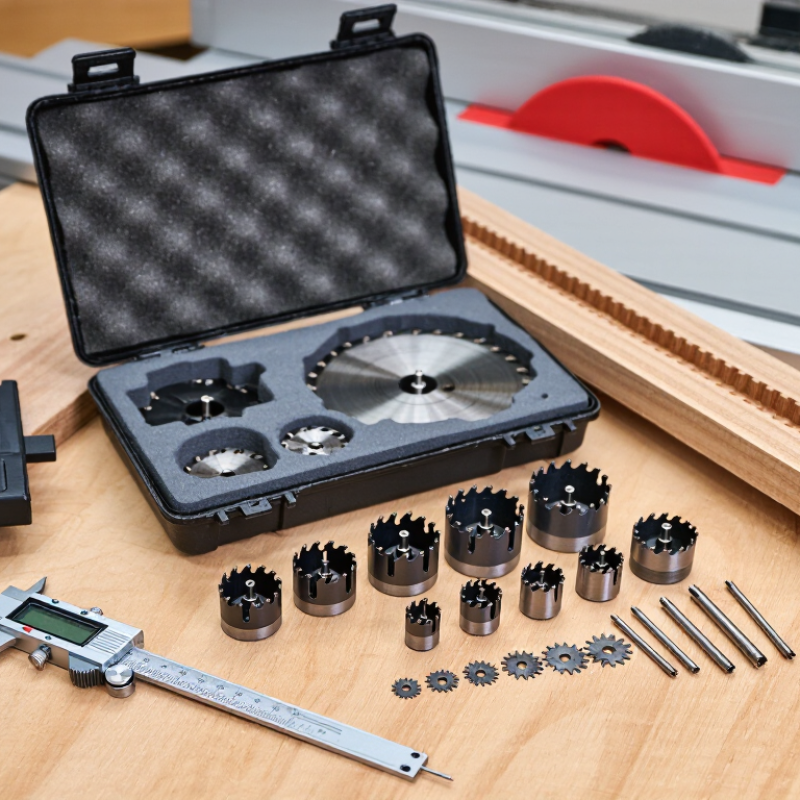
How to Choose the Best Dado Blade Set for Your Needs?

Define Your Dado Cutting Requirements and Project Goals

Before choosing a dado blade set, define the cuts your projects actually require. Measure the planned groove widths, depths, and lengths. A shelf dado may need a clean, shallow cut, while a cabinet joint may demand repeated, precise passes. Record the material too. Plywood, hardwood, and laminated panels can react differently during cutting.

Think about your table saw’s limits. Check the arbor length, maximum dado width, blade diameter, and rated speed. Confirm that the throat plate provides enough clearance. Your project goals matter as much as the equipment. If you build furniture occasionally, adjustable cutting flexibility may be more useful than a large set. For repeated cabinet work, consistent sizing and smooth shoulders deserve greater priority.

I once selected a set by width range alone. My estimate was wrong. The cut fit, but the plywood edge showed more tear-out than expected. Now I test the setup on scrap material first. I compare the groove against the mating piece, using a caliper when accuracy matters. A tight joint is not always better; seasonal movement and glue space can change the result. Leave room for adjustment. Small details often decide whether the finished panel sits square or needs rework.

How to Choose the Best Dado Blade Set for Your Needs? - Define Your Dado Cutting Requirements and Project Goals

Project Requirement Recommended Specification Typical Real-World Range Selection Considerations
Cutting solid wood for shelves or cabinet dados Adjustable stacked Dado Set with carbide-tipped cutters Approximately 6.35–20.64 mm cutting width Choose a set that can match the actual shelf or panel thickness. Use test cuts before machining the finished workpiece.
Working with plywood or sheet goods Fine-tooth configuration with anti-kickback design where specified Common plywood thicknesses: 6, 9, 12, 15, 18, and 19 mm Nominal sheet thickness can vary. Measure the actual material and set the dado width accordingly rather than relying only on the label.
Cutting narrow grooves Two outside blades with the minimum number of chippers needed Approximately 6.35–9.53 mm cutting width Confirm that the arbor, washers, and blade stack can be assembled safely at the required width.
Cutting wide dados or rabbets Full stacked configuration using multiple chippers Approximately 12.7–20.64 mm cutting width Check the maximum permitted stack width in the saw’s manual. Do not exceed the arbor capacity or remove required spacers.
Shallow grooves for backs or panels Blade diameter and cutting depth matched to the panel design Typical groove depth: 3–6 mm Use a fence, stop block, or guide system to control position and prevent overcutting at the ends.
Heavy-duty cabinet or furniture production Durable carbide cutters with a precision-ground plate Common blade diameter: 203–254 mm; common arbor: 30 mm Diameter and arbor size must match the saw. Larger blades generally require a compatible saw with adequate power and clearance.
Portable or compact table saw use A dado-compatible set within the saw’s approved diameter and width limits Common compact-saw blade diameter: about 152–203 mm Some compact saws do not support dado blades. Verify the manufacturer’s instructions before purchase or installation.
Clean cuts in hardwood Higher tooth-count outer blades with sharp, properly aligned chippers Outer blades commonly use approximately 24–40 teeth More teeth can improve edge quality but may require a slower feed rate. Keep the stack clean and correctly oriented.
Fast general-purpose cutting Balanced tooth count and a moderate cutting width Typical working width: approximately 9.53–15.88 mm Prioritize a versatile width range if project dimensions vary frequently. Always make a test cut in the same material.
Safe and accurate setup Compatible arbor, correct spacers, flat stack, and a rigid fence Arbor sizes vary by saw; 5/8 in and 30 mm are common standards Disconnect power during installation. Confirm rotation direction, maximum speed, guard requirements, and the saw’s dado-blade approval.

Key decision rule: Select the blade set based on the required groove width, depth, material, saw compatibility, and expected finish quality. The actual material thickness and the saw manufacturer’s specifications should always take priority over nominal dimensions.

Compare Dado Blade Types, Sizes, and Cutting Configurations

How to Choose the Best Dado Blade Set for Your Needs?

Dado blade sets differ in type, size, and cutting configuration. A stacked set uses outer blades, chippers, and shims to create adjustable grooves. A wobble blade tilts during rotation, but it can leave a slightly curved groove profile. For clean cabinet joints, a stacked set usually offers better control. Choose a 6-inch set for shallow cuts and smaller saws. An 8-inch set provides deeper capacity, but it needs enough arbor clearance and motor power.

Cutting width matters more than appearance. Many sets adjust from about 6.4 mm to 20.6 mm, covering common plywood and solid-wood joints. The USDA Forest Products Laboratory’s Wood Handbook, FPL-GTR-282, reports typical wood shrinkage of 3–6% radially and 6–12% tangentially. Therefore, measure the actual stock before setting the width. Plywood thickness can also differ from its label. I once trusted the package size and produced a loose shelf joint. That mistake was small, but expensive.

Tips: Check your saw’s manual, arbor length, maximum dado diameter, and guard requirements. Use full chippers beside the outer blades, then fine-tune with shims. Test on scrap material first. A dial caliper helps. Do not assume every blade set fits every saw; compatibility charts are not optional. ANSI B11.10 guidance emphasizes guarding and safe setup for woodworking machinery, so inspect the stack before powering on.

Check Saw Compatibility, Arbor Fit, and Safety Features

Choosing the best dado blade set starts with your saw, not the blade. Check the owner’s manual for approved dado width, diameter, and cutting depth. Some saws accept stacked sets, while others prohibit them because of arbor length or guard design. Do not guess. A 2023 CPSC NEISS data review found table-saw injuries remain in the tens of thousands annually, making compatibility a practical safety issue, not a minor detail.

Measure the arbor diameter and exposed length with a caliper. The blade must sit flat, without rocking or forced tightening. Confirm that the inner chippers and spacers fit completely on the arbor. I once assumed a washer was harmless, but its thickness reduced usable thread engagement. That was poor judgment.

Dry-assemble the set with the saw unplugged, then rotate it by hand and check clearance. The blade should never contact the throat plate, riving components, or housing.

Safety features deserve equal attention. Review the saw’s manual, braking system, guard requirements, and maximum dado width. OSHA’s woodworking machinery guidance, 29 CFR 1910.213, emphasizes guarding and safe operating clearances. Use sharp components, secure the workpiece, and keep hands away from the cutter path. Wear eye and hearing protection. A dust mask may also help, but it cannot replace extraction. Test on scrap first. Small errors become expensive quickly.

Evaluate Materials, Build Quality, and Adjustment Options

Choosing a dado blade set starts with material quality, not tooth count. Carbide-tipped teeth usually resist wear better than plain steel. This matters when cutting dense hardwood, plywood, or abrasive composite panels. The USDA Forest Service Wood Handbook, FPL-GTR-282, reports oven-dry specific gravity ranging from about 0.16 to above 0.80 across wood species. That difference can punish weak teeth and poorly supported plates.

Look closely at the blade body. It should appear flat, evenly ground, and free from visible burrs. A rigid steel plate reduces vibration and helps produce cleaner shoulders. I check the tooth tips under bright light. Uneven carbide height can create ridges inside the dado. It is a small defect, but your fingers will find it quickly. The same handbook notes that cutting behavior changes with wood density, moisture, and grain direction, so one set cannot perform identically in every project.

Adjustment options deserve equal attention. A useful set includes clearly sized chippers and thin shims, allowing fine width changes without forcing the cut. Measure the assembled stack with calipers, then test it on scrap material. Published width markings are helpful, but they are not always exact. This is where my own process remains imperfect. I sometimes trust the label too quickly. A reliable set should also seat securely, maintain consistent spacing, and follow the safety requirements outlined in ANSI O1.1 for woodworking machinery. Small adjustments matter.

Select the Best Set Based on Performance, Budget, and Maintenance

Choosing the best dado blade set starts with the work you regularly perform. A cabinetmaker cutting hardwood needs clean shoulders and stable width control. A homeowner making occasional grooves may value flexibility over maximum speed. Check your saw’s arbor size, maximum dado capacity, and manufacturer-approved setup before comparing sets. Compatibility matters more than an impressive tooth count.

Performance depends on tooth geometry, blade stiffness, and the quality of the chippers. A well-designed set should produce flat-bottomed grooves with minimal tear-out. Test it on scrap from the same material. That small step often reveals vibration, uneven cuts, or a poor fit. Do not judge performance from one quick pass. Dense wood can expose weaknesses that soft pine hides. I have found that slower feed rates sometimes improve results, although they can make production feel frustrating.

Budget decisions should include maintenance costs. A cheaper set may require more frequent sharpening or replacement. A higher-quality set can remain consistent through many projects when stored carefully. Remove resin with a suitable blade cleaner, dry every component, and protect the teeth from contact. Inspect spacers and chippers before each use. Small errors become visible in wide grooves. Keep records of sharpening dates. This habit is easy to neglect, but it helps prevent sudden quality changes. No set stays perfect forever. Even careful users occasionally choose the wrong combination for a particular board.

How to Choose the Best Dado Blade Set for Your Needs

Compare common dado blade categories by cutting performance, budget value, and maintenance ease. Scores use a 1–10 scale, with higher values indicating a stronger overall advantage.

Entry-level sets generally offer the lowest purchase cost, while mid-range and premium carbide sets typically provide cleaner cuts and longer usable life. Compact 6-inch sets are easier to store and maintain but may have lower cutting capacity.

Article Source:

×
img

    Contact Info

    PHONE NUMBER

    +1 (619) 661-5985

    EMAIL ADDRESS

    sale@roboticemotion.com

    ADDRESS INFO

    10030 Via de la Amistad San Diego CA 92154, United States