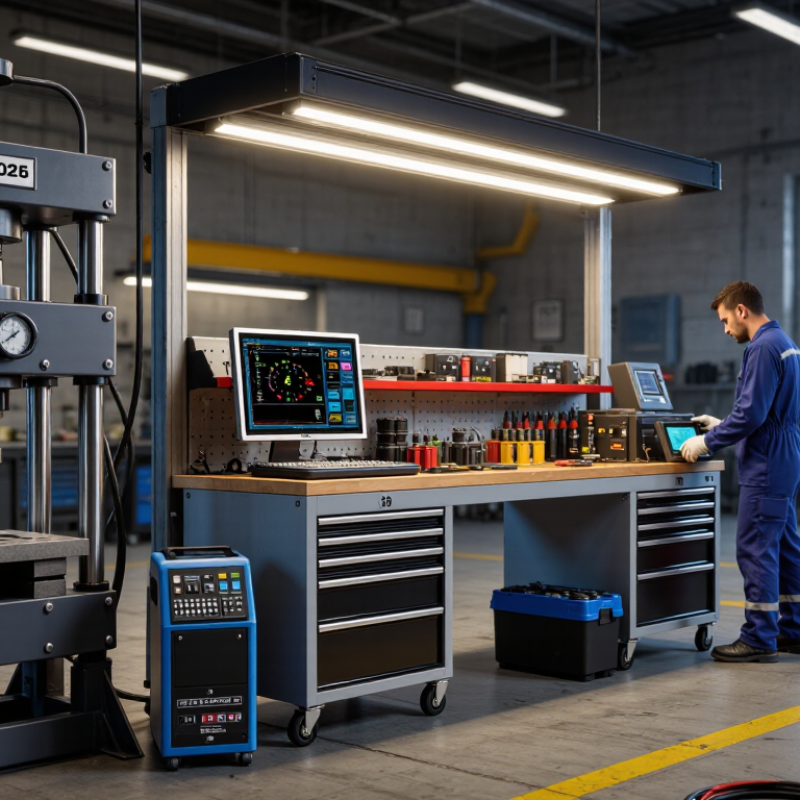
Diagnostic Scanner
Advanced electronic diagnostic platform | Vehicle fault-code reading, live-data analysis, actuator testing, service resets, and control-module diagnostics. | - 12 V and 24 V system support
- Wireless or wired vehicle connection
- High-resolution display
- Regular software update capability
| - Broad vehicle-system coverage
- Fast boot and data refresh
- Graphing of multiple live parameters
- Guided diagnostic tests
- Secure data backup and report export
| Electrical isolation, protected connectors, stable charging, and software security are important for reducing the risk of control-module damage. | Multi-bay repair shops, fleet service centers, and mobile technicians. | ★★★★★
Coverage and update policy |
Two-Post Lift
Asymmetric or symmetric vehicle lift | Wheel, brake, suspension, exhaust, underbody, and general mechanical repairs. | - Common lifting range: approximately 3.5–5.5 tonnes
- Adjustable lifting arms
- Low-profile or standard adapters
- Mechanical locking positions
| - Balanced load distribution
- Automatic arm restraints
- Adjustable height limits
- Accessible vehicle underbody
- Serviceable hydraulic components
| Floor strength, anchoring instructions, overload protection, mechanical locks, and conformity with applicable lifting-equipment requirements. | General repair workshops with limited or medium floor space. | ★★★★★
Rated capacity and installation |
Four-Post Lift
Drive-on platform lift | Wheel alignment, vehicle storage, underbody inspections, exhaust work, and heavier vehicles. | - Typical capacity: approximately 4–6 tonnes
- Long platforms for passenger vehicles and vans
- Optional rolling jacks
- Mechanical safety locks
| - Stable drive-on loading
- Adjustable turnplates and slip plates
- Runway adjustment for different wheelbases
- Low maintenance lifting system
| Ramp security, lock engagement, platform alignment, emergency lowering, and adequate ceiling clearance should be verified. | Alignment centers, storage facilities, and commercial-vehicle workshops. | ★★★★☆
Platform length and stability |
Tire Changer
Pneumatic or electro-pneumatic tire service machine | Mounting and demounting passenger-car, light-truck, run-flat, and low-profile tires. | - Rim diameter range commonly up to 24–26 inches
- Operating pressure commonly 8–10 bar
- Turntable with adjustable clamping
- Optional helper arm
| - Bead-breaker force control
- Plastic protection inserts
- Helper arm for stiff sidewalls
- Adjustable rotation speed
- Compatibility with alloy wheels
| Guarded moving parts, pressure regulation, emergency stop, stable wheel clamping, and operator training are essential. | Tire shops, dealerships, fleet maintenance facilities, and general workshops. | ★★★★★
Wheel protection and versatility |
Wheel Balancer
Computerized dynamic balancing machine | Static and dynamic balancing of steel and alloy wheels for cars, vans, and light commercial vehicles. | - Digital imbalance display
- Common rim diameter range up to 24–26 inches
- Multiple balancing programs
- Automatic or manual data entry
| - High repeatability
- Automatic distance and diameter measurement
- Hidden-weight and alloy-wheel modes
- Short measurement cycle
- Calibration procedure accessible to operators
| Correct floor leveling, spindle protection, guard interlock, accurate cones, and periodic calibration are key requirements. | High-volume tire service centers and workshops requiring consistent ride quality. | ★★★★★
Measurement accuracy |
Wheel Alignment System
Four-wheel computerized alignment platform | Measurement and adjustment of toe, camber, caster, thrust angle, and steering geometry. | - Four-wheel measurement capability
- Camera, sensor, or target-based system
- Alignment compensation procedure
- Vehicle database with adjustment references
| - Fast compensation for wheel runout
- Clear adjustment graphics
- Live readings during adjustment
- Customer report printing or digital export
- Turnplate and slip-plate integration
| Level installation surface, calibrated targets or sensors, secure vehicle positioning, and regular accuracy checks are necessary. | Tire retailers, collision repair centers, and suspension specialists. | ★★★★★
Accuracy and database quality |
Battery Tester and Charger
Intelligent low-voltage battery service unit | Battery health testing, charging, maintenance charging, starting-system testing, and electrical diagnostics. | - 12 V systems; selected equipment supports 24 V
- Lead-acid, AGM, and EFB testing options
- Programmable charging modes
- Digital voltage and current display
| - Conductance or load-testing capability
- Temperature compensation
- Stable voltage support during programming
- Reverse-polarity protection
- Battery memory and report functions
| Over-temperature protection, spark prevention, correct ventilation, polarity protection, and appropriate charging procedures matter most. | General repair workshops, electrical specialists, and fleet operators. | ★★★★☆
Output stability and protection |
Refrigerant Service Station
Automotive air-conditioning recovery and recharge unit | Refrigerant recovery, recycling, vacuum evacuation, leak checks, and measured recharging. | - Dedicated configuration for the supported refrigerant
- Integrated vacuum pump
- Electronic refrigerant scale
- Automatic or semi-automatic service cycles
| - Accurate charge measurement
- Automatic oil and refrigerant management
- Leak-test support
- Service database and cycle records
- Clear maintenance alerts
| Refrigerant compatibility, sealed hoses, ventilation, recovery compliance, cylinder handling, and local environmental regulations must be checked. | Professional workshops servicing modern vehicle air-conditioning systems. | ★★★★★
Refrigerant compatibility |
Smoke Leak Detector
Low-pressure diagnostic smoke machine | Detection of intake, exhaust, EVAP, vacuum, boost, HVAC, and body-water leaks. | - Controlled low-pressure output
- Visible smoke generation
- Adjustable flow or pressure
- Optional UV dye support
| - Fast smoke generation
- Pressure regulation
- Built-in air supply or shop-air connection
- Compact hose and adapter kit
- Clear fluid-level indication
| Use only approved fluids, prevent ignition sources, follow pressure limits, and avoid introducing smoke into unsuitable components. | Diagnostic technicians, emissions specialists, and general repair shops. | ★★★★☆
Pressure control and adapters |
EV Battery Service Lift
Low-profile mobile battery support table | Supporting, lowering, positioning, and installing high-voltage battery packs during electric-vehicle repairs. | - Typical capacity approximately 1–1.5 tonnes
- Low-profile platform
- Hydraulic or electro-hydraulic lifting
- Adjustable support arms or pads
| - Stable load distribution
- Fine height adjustment
- Lockable casters
- Adjustable platform geometry
- Controlled lowering speed
| High-voltage isolation procedures, insulated tools, battery weight verification, secure restraints, and trained technicians are essential. | EV repair centers and workshops handling traction-battery removal. | ★★★★★
Load stability and EV safety |
Workshop Compressor
Compressed-air supply system | Powering impact tools, spray equipment, tire changers, lifts, blow guns, and pneumatic service tools. | - Common workshop motor range: approximately 2–15 kW
- Receiver tanks selected for duty cycle
- Pressure commonly up to 8–10 bar
- Oil-lubricated or oil-free configurations
| - Air delivery matched to tool demand
- Low-noise operation where required
- Moisture separation and filtration
- Automatic drain and overload protection
- Accessible service points
| Receiver certification, pressure relief valves, electrical protection, ventilation, condensate management, and periodic inspection are important. | Any workshop using multiple pneumatic tools or air-operated equipment. | ★★★★☆
Air delivery and duty cycle |