2026 Best Industrial Automation Technology for Global Buyers

Industrial automation technology is reshaping factories, warehouses, and process plants worldwide. Global buyers now evaluate more than machine speed. They examine reliability, integration, safety, cybersecurity, energy use, and local technical support. A powerful robot means little when spare parts arrive late or operators cannot maintain it.

Joseph F. Engelberger, widely regarded as the father of industrial robotics, once said, “I can’t define a robot, but I know one when I see one.” His practical perspective still matters. The best automation solution is not always the most advanced-looking system. It is the one that performs consistently beside real workers, under real production pressure.

This guide examines the 2026 best industrial automation technology for global buyers. It compares robotic arms, PLC platforms, machine vision, autonomous mobile robots, digital twins, industrial IoT, and collaborative systems. Each option should be judged against measurable needs, including cycle time, uptime, payload, accuracy, maintenance access, and integration with existing equipment. Standards such as ISO 10218, ISO 13849, and IEC 61508 also deserve careful attention. Regional certification and data protection requirements cannot be treated as paperwork after installation.

No shortlist is flawless. A cheaper system may create higher costs through downtime, training gaps, or proprietary software. A sophisticated platform may overwhelm a small plant. Buyers should test realistic workloads, inspect service networks, and request transparent lifecycle costs. The right decision is rarely dramatic. Sometimes, it is a safer conveyor sensor, better diagnostics, or one well-trained technician. Practical value should lead. Hype should not.

2026 Best Industrial Automation Technology for Global Buyers

What Industrial Automation Technology Means in 2026

Industrial automation technology in 2026 means more than faster machines. It connects sensors, controllers, software, and people across the production line. A temperature sensor can flag drift before a motor overheats. An edge system can respond within milliseconds, even when cloud access is interrupted. This practical shift matters to global buyers. They need stable output, traceable data, and safer decisions.

Modern systems increasingly use machine learning to detect unusual vibration, pressure, and cycle times. Yet prediction is not the same as understanding. Engineers still need clean data, clear alarm rules, and accessible maintenance records. In a real plant, a dusty sensor or poorly labeled cable can defeat an impressive algorithm. That detail is easy to ignore. It should not be.

For buyers, 2026 evaluation should include interoperability, cybersecurity, energy use, training, and total operating cost. Open communication standards can reduce dependence on one supplier. Role-based access and regular updates help protect connected equipment. Energy dashboards can reveal waste during idle periods. Human oversight remains essential during abnormal events. Even good projects stumble. A careful pilot, measured against downtime and quality, may reveal more truth than a polished demonstration.

Core Technologies Shaping Modern Industrial Automation

2026 Best Industrial Automation Technology for Global Buyers

Core Technologies Shaping Modern Industrial Automation

Modern automation is moving from isolated machines toward connected, decision-making systems.

541,302

The International Federation of Robotics reported industrial robots installed worldwide in 2023.

The International Federation of Robotics reported 541,302 industrial robots installed worldwide in 2023. That scale reflects strong demand for flexible production, safer handling, and consistent quality.

The core layer is industrial connectivity. Sensors collect vibration, temperature, energy, and cycle-time data from equipment. Edge computers process urgent signals near the machine, reducing delays caused by distant cloud servers.

Artificial intelligence then supports visual inspection, predictive maintenance, and process adjustment. A camera can detect a tiny surface crack before a human inspector notices it. Still, artificial intelligence is not magic. Poor sensor calibration can produce confident but wrong decisions.

Digital twins are becoming practical tools for testing production changes before physical installation. They can model material flow, robot movements, and energy use.

The Deloitte 2024 Smart Manufacturing and Operations Survey found that 92% of surveyed manufacturers viewed smart manufacturing as a major competitiveness driver within three years.

Buyers should also examine cybersecurity, interoperability, workforce training, and local service capability. A fast robot is useful. A secure and maintainable system is better.

The IEC 62443 series provides a recognized framework for protecting industrial control environments, yet many projects treat security as an afterthought. That mistake can increase downtime, especially when connected equipment crosses factory and supplier networks.

How Industrial Automation Systems Work Across Industries

Industrial automation systems connect sensors, controllers, software, and machines into a working production loop. Sensors measure temperature, pressure, position, or product quality. Controllers interpret these signals and send commands to motors, valves, and robotic equipment. Software then records performance and highlights unusual changes. The process repeats in milliseconds.

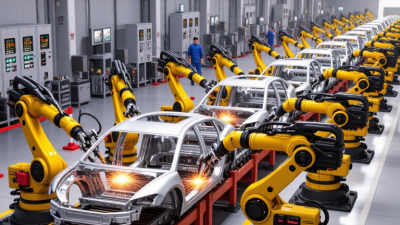
Across industries, the same logic supports different tasks. In automotive plants, robots coordinate welding, assembly, and inspection. Food processors use controlled temperatures, timed filling, and hygienic conveyor systems. Warehouses combine scanners, automated vehicles, and inventory software. Water facilities monitor flow and chemical levels continuously. Medical manufacturers require strict traceability for every batch. Each environment needs different sensors, safety controls, and response times.

The strongest systems are designed around real operating conditions, not attractive diagrams. A dusty factory may need protected components and simpler maintenance access. A remote site may depend on secure remote monitoring and local backup controls. Global buyers should examine training, spare parts, cybersecurity practices, and integration with existing equipment. Compatibility often matters more than advanced features. Small delays can become costly bottlenecks.

Automation is not fully automatic. Human judgment remains essential during abnormal events, maintenance, and process changes. I have seen well-planned systems struggle when operators receive unclear alarms or limited training. That weakness deserves attention. A reliable design leaves room for inspection, manual intervention, and honest performance testing. Better results usually come from steady adjustments, not one dramatic installation.

2026 Best Industrial Automation Technology for Global Buyers

How Industrial Automation Systems Work Across Industries

The chart shows annual global industrial robot installations in manufacturing from 2014 to 2023. Robots are commonly integrated with programmable logic controllers, machine vision, motion-control systems, sensors, and manufacturing execution software across automotive, electronics, metalworking, food processing, chemical, and logistics applications. Figures are rounded to the nearest thousand units and reflect global industry totals reported in international robotics market research.

Key Benefits, Challenges, and Global Buying Considerations

2026 Best Industrial Automation Technology for Global Buyers

Industrial automation is moving from isolated machines toward connected, data-driven production cells. The International Federation of Robotics reported 541,302 industrial robot installations worldwide in 2023. This scale signals strong demand, but adoption alone does not guarantee value. Buyers should measure cycle time, changeover speed, energy use, and unplanned downtime before approving a system. Numbers matter.

The benefits are tangible. Sensors can expose motor vibration before a costly stoppage. Automated inspection can reduce inconsistent quality at high production volumes. However, integration remains difficult. Legacy equipment may use incompatible protocols, while poor data architecture can limit artificial intelligence applications. Deloitte’s 2024 smart manufacturing research found that many manufacturers still struggle to connect operational technology with enterprise systems. Skilled technicians are also scarce in several markets. Training is not optional.

Global purchasing requires more than comparing equipment prices. Buyers should verify safety documentation, cybersecurity controls, spare-parts availability, language support, and local service capacity. International standards, including ISO 10218 for industrial robot safety, should guide risk assessments, while regional conformity rules still require careful review. The International Energy Agency reports that industry accounts for roughly 37% of global final energy demand, making efficient automation increasingly important. Yet the greenest system is not always the newest one. A smaller, repairable solution may outperform a sophisticated platform over ten years. My caution is simple: forecasts often assume perfect data, perfect workers, and perfect integration. Real factories rarely provide all three.

2026 Best Industrial Automation Technology for Global Buyers - Key Benefits, Challenges, and Global Buying Considerations

Technology Category Primary Industrial Uses Key Benefits Main Challenges Global Buying Considerations Typical Data and Infrastructure Needs Best Fit for 2026
Industrial Internet of Things (IIoT) Machine monitoring, asset tracking, energy management, production visibility, and condition-based maintenance. Improves operational visibility, supports earlier fault detection, and connects production data with maintenance and enterprise systems. Legacy equipment may lack connectivity; data quality, device security, and integration effort can be significant. Check protocol support, gateway compatibility, local data-protection rules, cybersecurity features, and availability of regional technical support. Sensors, industrial gateways, segmented networks, time-synchronized data, and secure storage or analytics platforms. Plants seeking connected operations without replacing all existing machinery.
Artificial Intelligence and Machine Learning Visual inspection, predictive maintenance, process optimization, demand forecasting, and anomaly detection. Can identify complex patterns, reduce manual inspection work, and support faster operational decisions when trained on reliable data. Requires representative data, model validation, skilled personnel, explainability controls, and protection against incorrect predictions. Evaluate data-residency options, model ownership, auditability, language support, lifecycle costs, and whether processing occurs at the edge or in the cloud. Historical production data, labeled images or sensor records, suitable computing capacity, model monitoring, and secure interfaces. High-volume operations with repeatable processes and measurable quality or maintenance data.
Collaborative Robots Assembly, machine tending, packaging, palletizing, inspection, and ergonomic assistance. Supports flexible automation, can operate near workers under validated safety conditions, and is suitable for varied production tasks. Payload and speed may be lower than traditional industrial robot cells; task variability and safety validation affect deployment time. Confirm applicable machinery-safety requirements, end-effector compatibility, training availability, spare-parts access, and regional service coverage. Robot arm, safety functions, tooling, vision or force sensing when required, and integration with production-control systems. Small and medium-sized manufacturers or facilities requiring quick changeovers and gradual automation.
Autonomous Mobile Robots Material movement, warehouse replenishment, line-side delivery, and internal logistics. Reduces repetitive transport work, improves traceability, and can adapt routes in changing facility layouts. Traffic management, floor conditions, pedestrian interaction, charging logistics, and integration with warehouse systems require planning. Assess local safety rules, map-update procedures, wireless coverage, battery and charging standards, and compatibility with existing vehicles and racks. Navigation maps, fleet-management software, reliable wireless networking, traffic controls, and interfaces to warehouse or manufacturing systems. Facilities with repetitive intralogistics routes and clear material-flow bottlenecks.
Digital Twins and Simulation Production-line design, capacity planning, commissioning, process optimization, and operator training. Allows scenarios to be tested before physical changes, helping identify bottlenecks and reduce commissioning risk. Model accuracy depends on current engineering and operating data; software integration and specialist skills can increase project complexity. Verify data-import formats, intellectual-property terms, interoperability, licensing structure, and support for local engineering workflows. Engineering models, equipment parameters, process data, simulation software, and secure connections to operational systems where required. Complex projects where downtime, layout changes, or commissioning errors have high financial impact.
Edge Computing Low-latency control support, local analytics, machine vision, and operation during intermittent connectivity. Processes data close to machines, reduces dependence on wide-area connections, and can improve response time for time-sensitive applications. Distributed devices increase administration requirements; hardware maintenance, software updates, and physical security must be managed. Check operating-temperature ratings, regional electrical requirements, remote-management capability, cybersecurity updates, and cloud interoperability. Industrial computers, local storage, secure device management, network segmentation, and defined data-retention policies. Remote, bandwidth-constrained, or latency-sensitive production environments.
Industrial Cloud Platforms Multi-site analytics, centralized reporting, remote monitoring, asset management, and enterprise integration. Enables broader data access, scalable computing, cross-site benchmarking, and centralized application management. Connectivity interruptions, cybersecurity exposure, recurring subscription costs, and data-governance obligations must be addressed. Review hosting location, cross-border data-transfer rules, service-level commitments, exit and portability terms, and local support arrangements. Secure connectivity, identity management, encrypted data flows, scalable storage, backup procedures, and documented application interfaces. Organizations operating multiple plants that need standardized monitoring and analytics.
Industrial Cybersecurity Network segmentation, access control, threat monitoring, secure remote access, and protection of operational technology. Reduces the likelihood and impact of unauthorized access, malware, operational disruption, and unsafe system changes. Older control systems may be difficult to patch; security improvements must avoid interrupting safety-critical operations. Require documented security responsibilities, vulnerability disclosure processes, update policies, audit evidence, and alignment with applicable national requirements. Asset inventory, segmented networks, multifactor access where suitable, backups, monitoring, incident response, and tested recovery procedures. Every connected industrial environment, especially critical infrastructure and globally distributed operations.
Advanced Manufacturing Execution Systems Production scheduling, genealogy, quality records, work instructions, electronic batch records, and performance monitoring. Creates standardized production records, improves traceability, and connects shop-floor activity with planning and quality processes. Implementation can require process redesign, master-data cleanup, user training, and integration with older enterprise applications. Confirm multilingual capability, electronic-record requirements, deployment model, integration methods, local compliance needs, and total cost of ownership. Reliable production data, role-based access, workflow configuration, database capacity, reporting tools, and interfaces to control and enterprise systems. Regulated, traceability-focused, or multi-stage manufacturing operations.
Machine Vision Defect detection, dimensional checks, identification, counting, orientation, and robotic guidance. Provides consistent inspection at production speed and creates objective image-based quality records. Lighting, camera positioning, product variation, reflective surfaces, and maintenance of inspection recipes affect performance. Evaluate environmental ratings, calibration support, local integration skills, replacement availability, and compliance with measurement requirements. Cameras, optics, controlled lighting, image-processing software, stable mounting, and interfaces to production-control equipment. High-volume lines with repetitive visual inspection and clearly defined acceptance criteria.
Global buyer evaluation priorities: interoperability, cybersecurity, functional safety, regulatory compliance, data governance, local service capability, spare-parts availability, workforce training, scalability, lifecycle support, and total cost of ownership.

Future Trends in Industrial Automation Technology for 2026 and Beyond

By 2026, industrial automation will move beyond isolated machines toward connected, adaptive production systems. Factories will combine edge computing, digital twins, machine vision, and collaborative robots across one operational network. This shift can improve production visibility, energy efficiency, and response speed. Production teams increasingly expect real-time dashboards that show machine health, material flow, and quality changes. Yet connectivity alone does not create resilience.

AI will support predictive maintenance, energy control, and quality inspection, but human review will remain essential. A sensor can flag rising motor temperature before a stoppage, while an engineer checks the cause. This combination reduces blind trust in automated recommendations. Cybersecurity will become a design requirement, not a late purchase. Buyers should request role-based access, offline recovery plans, audit logs, and clear data ownership. Standards and worker training also need attention.

Modular equipment will help global buyers adapt to changing labor costs, product sizes, and regional regulations. Open communication protocols can reduce dependence on one supplier, although integration is rarely effortless. Expect friction. Legacy controllers, inconsistent data, and weak network coverage can delay results. A realistic 2026 roadmap starts with one measurable bottleneck, such as scrap rate or unplanned downtime. Teams can test a small cell, compare verified data, and expand only after operators accept the workflow. Not every factory needs full autonomy. That assumption deserves scrutiny.

×
img

    Contact Info

    PHONE NUMBER

    +1 (619) 661-5985

    EMAIL ADDRESS

    sale@roboticemotion.com

    ADDRESS INFO

    10030 Via de la Amistad San Diego CA 92154, United States