Choosing the right Belt Annealing Furnace in 2026 requires more than comparing heating temperatures or catalog prices. Global buyers must match furnace design with material, production volume, atmosphere, and local operating conditions. A small fastener plant may need a compact mesh-belt system. A high-volume automotive supplier may require a wider continuous line with precise atmosphere control.
This guide introduces major furnace types, including mesh belt, roller-hearth, and continuous protective-atmosphere systems. It explains how each design affects heating uniformity, cooling performance, energy use, maintenance, and product handling. Real purchasing decisions often depend on details such as belt width, loading density, furnace length, gas consumption, and temperature recovery after door opening. These details matter.
Experience shows that impressive specifications do not always guarantee stable results. A furnace rated for 1,000°C may still deliver uneven parts if airflow, insulation, or loading patterns are poorly designed. That assumption can fail. Buyers should review temperature records, material certificates, trial-run data, and after-sales response times before signing a contract.
Reliable suppliers should explain standards, safety systems, control accuracy, spare-part availability, and operator training clearly. They should also identify limitations instead of promising perfect performance. This article compares practical Belt Annealing Furnace options for different industries and regions. It considers factory layout, climate, energy infrastructure, import requirements, and long-term service support. The best choice is not always the most advanced model. It is the system that produces consistent results, remains maintainable, and fits the buyer’s real process. Mistakes are possible, especially when data is incomplete. Careful testing reduces that risk.
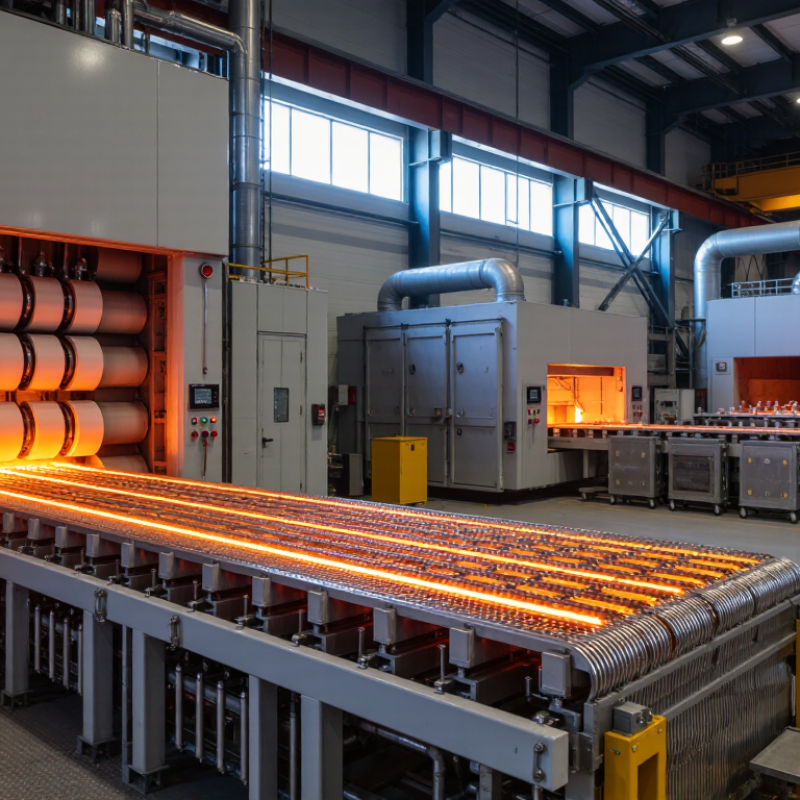
A belt annealing furnace is a continuous heat-treatment system for metals, fasteners, wire parts, and precision components. It uses a moving belt to carry workpieces through controlled heating, soaking, and cooling zones. The belt moves continuously. Unlike batch furnaces, this design supports steady production and more consistent handling.
During operation, burners or electric elements raise the material to a specified annealing temperature. The workpiece then remains in a soaking zone long enough for heat to reach its core. Controlled cooling follows, often inside a protective atmosphere. Nitrogen-based gases can reduce oxidation and surface discoloration. Sensors monitor temperature, belt speed, gas flow, and furnace pressure. Small changes matter. A faster belt can reduce softening and create uneven hardness.
Mesh-belt furnaces suit small parts and allow good gas circulation. Solid-link or cast belts handle heavier loads and abrasive components. Roller-based systems can support larger workpieces with less belt contact.
Global buyers should check useful width, temperature uniformity, atmosphere control, belt material, and maintenance access. Load testing is essential before approval. In practice, the first thermal profile rarely performs perfectly. Product spacing, oil residue, and belt wear can change results. A documented trial, reviewed by a qualified heat-treatment engineer, provides more reliable evidence than a catalog rating.
In 2026, global buyers can choose among several belt annealing furnace types. The right option depends on material, throughput, atmosphere, and cooling requirements. Continuous mesh-belt furnaces suit small parts, fasteners, and precision components. Their moving mesh supports steady heating and controlled cooling. They also allow easy integration with washing and quenching sections.
Roller-belt furnaces handle heavier parts and wider metal strips. Rollers reduce contact resistance and support stable transport at higher loads. Pusher-style belt furnaces offer another solution for dense batches. They use controlled pushing action through heated zones, although maintenance can become more demanding. That detail is easy to overlook.
Atmosphere selection creates another major category. Nitrogen-based furnaces provide basic oxidation protection for many steels. Endothermic gas systems offer stronger control for specific carbon-steel processes. Hydrogen-rich atmospheres can improve surface cleanliness, but they require strict safety systems and qualified operation. Vacuum belt furnaces serve sensitive materials requiring very low oxidation, though their investment and cycle design may limit production speed.
From practical equipment reviews, temperature uniformity matters more than impressive maximum temperature. Buyers should examine belt width, usable heating length, zone accuracy, gas consumption, and spare-part access. Ask for load trials using real parts. Laboratory results can look excellent, yet production behavior may differ. Energy recovery is valuable, but poorly tuned controls can erase its benefits. No single design wins every plant.
| Belt Annealing Furnace Type | Typical Temperature Range | Atmosphere Options | Suitable Materials and Products | Main Advantages | Key Limitations | Typical Buyer Application |
|---|---|---|---|---|---|---|
| Open-Atmosphere Mesh Belt Furnace | Approximately 150–850°C | Air; optional exhaust and oxidation-control arrangements | Carbon-steel fasteners, springs, stamped parts, small castings, and general heat-treated components | Simple operation, continuous production, relatively easy loading and unloading, and suitable for a wide range of small parts | Parts may oxidize or discolor; surface protection is limited compared with controlled-atmosphere systems | General stress relieving, soft annealing, tempering, and preheating of bulk metal parts |
| Controlled-Atmosphere Mesh Belt Furnace | Approximately 500–950°C | Nitrogen, endothermic gas, exothermic gas, hydrogen-containing mixtures, or other specified process gases | Steel fasteners, precision components, powdered-metal parts, and products requiring reduced oxidation | Improved surface consistency, reduced scale formation, controlled carbon potential for selected steel processes, and repeatable results | Higher installation and operating complexity; gas safety, sealing, monitoring, and maintenance are required | Continuous annealing, neutral hardening, carburizing-related processes, and high-volume precision production |
| Muffle-Type Mesh Belt Furnace | Approximately 300–1,100°C | Air or controlled gas atmosphere inside a sealed muffle | Small metal parts, stainless-steel components, copper alloys, electrical parts, and products sensitive to direct flame or heating-element exposure | Uniform thermal environment, protected product path, and good separation between heating elements and the process atmosphere | Muffle components are consumable or maintenance-sensitive; heat-up response can be slower and energy use can be higher | Bright or low-oxidation annealing, precision heat treatment, and clean-surface production |
| Radiant-Tube Heated Belt Furnace | Approximately 600–1,100°C | Air, nitrogen-based atmospheres, endothermic gas, or other controlled process atmospheres | Steel, stainless steel, copper alloys, brass parts, wire products, and components requiring indirect heating | Heating elements are isolated from the process atmosphere; suitable for controlled atmospheres and continuous high-temperature operation | Radiant tubes require inspection and replacement; temperature uniformity depends on tube layout and furnace loading | Continuous annealing and bright heat treatment where contamination and atmosphere control are important |
| Electric Resistance Mesh Belt Furnace | Approximately 150–1,100°C | Air or inert/controlled atmosphere, depending on furnace sealing and gas system | Metal parts, wire components, stainless-steel products, nonferrous alloys, and general industrial components | Precise zone-by-zone temperature control, clean heat generation, and easy integration with programmable controls | Electricity demand can be significant; heating elements and belt components require scheduled maintenance | Factories requiring accurate recipes, flexible production, and low-emission onsite heating |
| Gas-Fired Belt Annealing Furnace | Approximately 500–1,100°C | Combustion products in direct-heating designs or a separate controlled atmosphere in indirect-heating designs | Large-volume steel parts, castings, fasteners, and applications where fuel availability supports continuous operation | Can provide high heating capacity and competitive operating costs where industrial fuel infrastructure is available | Combustion control, ventilation, emissions management, and atmosphere separation may be necessary | High-throughput annealing and stress-relief lines with substantial thermal demand |
| Bright-Annealing Belt Furnace | Approximately 750–1,150°C, material dependent | High-purity hydrogen, nitrogen-hydrogen mixtures, or other low-oxidation atmospheres | Stainless steel, copper, brass, nickel alloys, and precision components requiring a bright or clean surface | Reduces oxidation and can produce a cleaner surface without conventional post-treatment or extensive pickling | Requires strict gas purity, sealing, dew-point control, safety systems, and accurate temperature management | Stainless-steel strip, tubes, wire, electrical components, and decorative or corrosion-sensitive parts |
| Low-Temperature Stress-Relief Belt Furnace | Approximately 150–450°C | Air, nitrogen, or other inert gas when discoloration must be minimized | Machined parts, welded assemblies, plated components, aluminum products, and selected polymer or composite-metal assemblies | Reduces residual stresses while limiting dimensional change and avoiding the higher temperatures used for full annealing | Does not provide the same metallurgical softening as full annealing; process time can be relatively long | Post-machining stress relief, weld stress relief, stabilization, and treatment of heat-sensitive parts |
| Strip or Continuous Wire Belt Annealing Furnace | Approximately 500–1,150°C | Air, nitrogen, hydrogen-containing atmospheres, or application-specific protective gas | Metal strip, wire, ribbon, narrow sheet, tubing, and other continuously fed products | Maintains continuous product flow, supports consistent line speed, and allows accurate control of heating and cooling zones | Requires careful belt or conveyor alignment, tension control, product tracking, and line-speed coordination | Wire drawing lines, strip processing, tubing production, and high-volume continuous manufacturing |
In 2026, global buyers should compare belt annealing furnaces by heat transfer, not by furnace size alone.
Direct gas heating offers fast thermal response and lower electrical demand. However, flame placement must remain uniform across the belt width.
Indirect heating uses radiant tubes or protected elements. It provides cleaner control for sensitive alloys and coated strip.
Electric resistance heating is precise, but power quality and insulation design still matter.
Small temperature errors can change hardness, grain structure, and surface color.
Atmosphere selection is equally important.
Nitrogen reduces oxidation in many steel applications, while hydrogen-containing atmospheres can support brighter surfaces and oxide reduction.
Hydrogen requires engineered sealing, monitoring, and safe operating procedures.
Vacuum or low-oxygen conditions may suit specialized materials, but they increase equipment and maintenance demands.
Dew point deserves close attention. A dry atmosphere can protect the surface; excessive moisture may leave scale or discoloration.
Real production is less predictable.
The best results come from matching gas flow to strip speed, thickness, and alloy chemistry.
Too much gas wastes energy.
Too little creates uneven protection.
Zone-by-zone temperature mapping should use calibrated instruments, not only the controller display.
Belt tension and loading can also change residence time.
There is no universal recipe.
Trial data still matters, and a well-designed furnace may need adjustment after production begins.
Global buyers should compare belt annealing furnaces by usable output, not brochure capacity. A furnace rated at 500 kilograms per hour may deliver less with thin strip, frequent coil changes, or strict temperature uniformity. Ask for tested throughput, heating-zone length, belt width, and recovery time. The IEA’s Energy Technology Perspectives 2024 reports that industry consumes about 37% of global final energy, making thermal efficiency a purchasing priority. Request energy data in kWh per tonne, measured at a defined production load.
Energy use can change sharply between continuous and batch-style operation. Insulation quality, exhaust heat recovery, atmosphere control, and standby settings deserve attention. The U.S. Department of Energy’s Industrial Decarbonization Roadmap identifies process heating as a major manufacturing energy load. However, suppliers may quote ideal conditions. I would require a witnessed trial using the buyer’s actual material, target hardness, line speed, and cooling method. Small details matter.
Automation should be judged through measurable control functions. Useful features include automatic tension control, recipe locking, alarm history, oxygen monitoring, and remote data export. ISO 50001 guidance supports continuous measurement and energy-performance tracking, but software alone cannot repair poor furnace loading. Advanced sensors can reduce operator variation, yet complicated interfaces may create new errors. Keep manual override options. A practical comparison should include maintenance hours, spare-part access, calibration records, operator training, and five-year energy costs. The cheapest furnace may become expensive when production stops for belt replacement or unstable atmosphere control.
2026 Best Belt Annealing Furnace Types for Global Buyers?
Safety begins with the furnace’s operating atmosphere, not its heating speed. Mesh-belt, roller-hearth, and continuous belt furnaces need different guarding and control strategies. Check door interlocks, emergency stops, over-temperature protection, and automatic gas shutoff. NFPA 86 provides recognized guidance for industrial ovens and furnaces. ISO 13577 also addresses combustion and fuel-handling safety. Requirements still vary by country.
Ask for documented factory testing, electrical diagrams, calibration records, and risk assessments. The International Labour Organization estimated 2.93 million work-related deaths globally in 2019. That figure is broader than furnace operations, but it shows why informal safety checks are weak evidence. Confirm compliance with applicable electrical, machinery, emissions, and pressure-equipment rules. CE marking alone may not satisfy every importing market. A local review is still necessary.
Tips: Inspect belt alignment weekly. Verify thermocouples against a reference device. Test interlocks under controlled conditions. Record atmosphere leakage, fan vibration, and refractory damage. Keep critical sensors and belt links in stock. Maintenance teams often focus on visible wear while ignoring slow calibration drift. That mistake can ruin hardness results before an alarm appears. Ask how quickly service support can respond. A perfect acceptance test does not guarantee stable production six months later.
+1 (619) 661-5985
sale@roboticemotion.com
10030 Via de la Amistad San Diego CA 92154, United States
We can supply pre-cut pipes and roller tracks, with the appropriate number of joints and accessories; delivered in kit form as per your specifications.