Choosing a sealing-ring manufacturer is a practical reliability decision. A ring may look simple on a drawing, yet a small mismatch in material or groove dimensions can cause leakage, wear, and costly downtime. Buyers need more than a polished catalog. They need traceable materials, controlled production, clear test records, and support for the actual operating conditions.
The wider sealing market offers useful context. MarketsandMarkets’ Mechanical Seals Market report estimated that market at USD 3.6 billion in 2023, with a forecast of USD 4.5 billion by 2028. Mechanical seals are not the same product as Sealing Rings, so these figures should not be treated as ring-market statistics. They do, however, signal continuing industrial demand for dependable sealing solutions. Important details remain specific: fluid compatibility, pressure, temperature, movement, and installation.
Machinery reliability author Heinz P. Bloch provides a useful perspective on evaluating components. A practical, non-verbatim takeaway from his reliability guidance is: “Choose for actual operating duty, not catalog claims.” That distinction matters when comparing Sealing Rings manufacturers across regions. A supplier’s material data, dimensional tolerances, inspection process, and response to technical questions can reveal more than a low unit price. No shortlist is perfect. Buyers should verify critical claims and test samples under realistic conditions before committing to volume orders. This guide introduces manufacturers for global buyers, with attention to capability, product range, quality evidence, and fit for application.
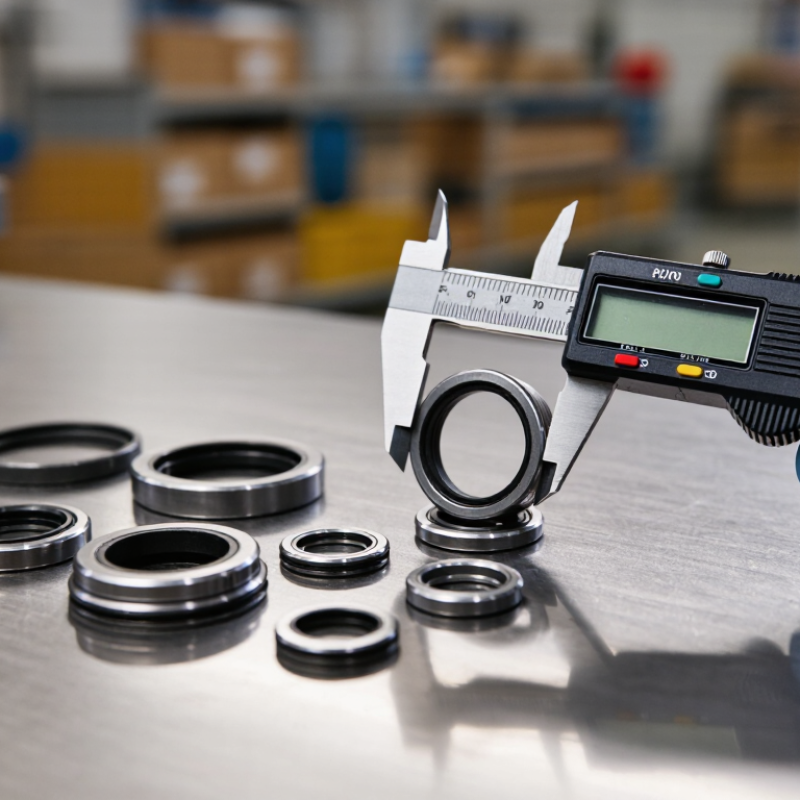
A sealing ring is a shaped component that limits fluid or gas leakage between joined surfaces. Many designs use an elastomer ring seated in a machined groove. When the parts come together, the ring compresses and fills small surface gaps. That contact creates the seal. Simple in appearance, but sensitive to details.
Some rings seal stationary joints, such as a pump housing cover. Others work around moving shafts or pistons, where friction and wear matter. Pressure can help press a ring against a sealing surface, but excessive pressure or poor support may deform it. Material choice matters too: temperature, fluid compatibility, and movement all affect performance. A ring that suits cool water may not suit hot oil. Measure the groove and mating surfaces carefully; a close-looking replacement can still fit poorly. Clean installation helps prevent cuts from sharp edges or trapped debris. In practice, the neat diagram is not the whole story. Real equipment can have vibration, uneven surfaces, or changing temperatures, so selection often needs careful review.
Common sealing ring materials serve different conditions, and the right choice depends on the fluid, temperature, pressure, and movement involved. Nitrile rubber is often used in oil systems, such as pump housings and hydraulic fittings. It can be a practical option, but it may not suit prolonged exposure to sunlight or ozone. Small details matter.
EPDMEPDM is commonly selected for water, outdoor equipment, and some steam applications. It generally performs poorly with petroleum oils, so checking the exact fluid is essential.
FluoroelastomersFluoroelastomers can handle many hot, demanding environments, including some fuel and chemical systems. Their resistance still varies by compound and exposure conditions.
SiliconeSilicone remains useful where flexibility across temperature changes is important, though abrasion can be a weakness.
PTFEPTFE offers low friction and broad chemical resistance, but its stiffness may require a carefully designed groove or supporting element.
In practice, a sealing ring in a static pipe joint faces different demands from one moving inside a rotating shaft. Buyers should compare operating temperature, media compatibility, pressure, surface finish, and compression set—not just the material name. Ask for compound data and test samples under realistic conditions when failure would be costly. A catalog chart helps, but it can oversimplify. Real equipment is rarely that tidy.
Evaluating Sealing Ring Manufacturers
A reliable supplier should explain how each compound suits the fluid, temperature, pressure, and motion in your application. Ask for material identification, batch traceability, dimensional inspection records, and test conditions—not just a general certificate. ISO 3601-1 specifies O-ring dimensions and tolerances, giving buyers a useful basis for checking drawings and samples. Small defects matter. A ring that looks smooth may still have an incorrect cross-section or material.
Request compression-set results with the test temperature, duration, and method clearly stated. ASTM D395 describes methods for measuring compression set in rubber; results are meaningful only when test conditions match your needs. The U.S. Department of Energy’s Improving Compressed Air System Performance: A Sourcebook reports that leaks can waste 20–30% of compressed-air consumption in some industrial systems. That figure covers system leakage, not sealing rings alone, but it shows why leakage control deserves attention. Ask manufacturers how they inspect flash, surface damage, and dimensions, and whether they retain samples from production lots.
A factory audit can help, but it cannot replace application testing. Check whether the supplier can produce trial quantities and investigate failures with documented root-cause analysis. A polished certificate is not the part. I would also verify lead times and change-control procedures; these details are easy to overlook, and supply records can be imperfect. Test samples under realistic pressure cycles before approving a production order.
| Evaluation dimension | What to evaluate | Evidence and buyer checks | Suggested weight |
|---|---|---|---|
| Application fit | Ability to match the seal to the fluid or gas, pressure, temperature, motion, surface finish, and installation method. | Provide the operating envelope and ask for a written material and design recommendation. Check compatibility against a recognized chemical-resistance reference and validate critical applications with testing. | 15% |
| Material expertise | Availability and documented control of suitable elastomers, such as NBR, EPDM, FKM, and silicone, as well as any requested compound-specific properties. | Request compound identification, hardness, relevant test data, and batch traceability. Confirm that the proposed grade—not only the generic polymer family—fits the service conditions. | 15% |
| Dimensional capability | Ability to manufacture the specified cross-section, inside diameter, profile, and tolerances consistently. | Compare inspection results with the drawing and the applicable dimensional standard. For O-rings, ask whether ISO 3601 requirements apply to the requested size and application; do not assume one tolerance fits every design. | 15% |
| Quality management | Documented process controls for mixing or compound sourcing, molding, curing, finishing, inspection, and nonconforming-product handling. | Review the current quality-management certificate and its scope, request a sample inspection report, and ask how corrective actions and process changes are recorded. | 15% |
| Testing and validation | Testing appropriate to the application, which may include hardness, tensile properties, compression set, dimensional inspection, or fluid exposure. | Ask for test methods, acceptance criteria, sample size, and results linked to the supplied batch. Confirm that test conditions represent the intended service rather than relying on generic material claims. | 10% |
| Traceability and documentation | Clear identification of material, production batch, inspection status, and any customer-specific requirements. | Request sample certificates of conformity, material declarations, batch records, and change-notification procedures. Check that documents can be matched to product labels and purchase orders. | 10% |
| Sampling and customization | Support for prototypes, custom profiles, tooling, and controlled transition from samples to production. | Confirm sample lead time, tooling ownership and maintenance terms, drawing revision control, and how first-article approval is handled. | 8% |
| Capacity and delivery | Ability to meet forecast demand, manage replenishment, and communicate realistic production and shipping lead times. | Request lead times for samples and repeat orders, minimum order quantities, capacity-planning details, and the process for notifying buyers about delays. | 7% |
| Packaging and export readiness | Protection from contamination, deformation, and mix-ups during storage and international transport. | Specify packaging, labeling, quantity per pack, shipping terms, and required export documents. Confirm storage guidance for the selected material and product. | 5% |
| Total suggested evaluation weight | 100% | ||
Leading sealing ring manufacturers for global buyers do more than supply standard sizes. They help match ring geometry and material to pressure, temperature, motion, and contact media. A seal for a static pump joint may not suit a rotating shaft. Reliable suppliers ask for groove dimensions, operating cycles, and service conditions before recommending a design. That is practical expertise, not guesswork.
Material selection affects wear, compression recovery, and resistance to heat or fluids. Manufacturers should explain why a compound fits the stated conditions and identify its limits. Ask how dimensions are inspected, how batches are traced, and what test records can be shared. Clear answers matter. A polished catalogue is not proof of consistent production. Buyers should also check samples against the actual groove, using calipers and a careful fit check where possible.
For international orders, communication and repeatability deserve attention alongside price. Confirm drawings, tolerances, packaging, lead times, and replacement procedures in writing. Specifications can look complete, yet one overlooked detail—such as shaft movement—may change the recommendation. Even experienced teams miss things. A useful manufacturer will raise questions early, document decisions, and explain when available data is not enough to make a confident choice.
A practical reference for global buyers comparing sealing material options.
The ranges shown are approximate typical service temperatures, not guaranteed limits. Actual performance depends on the compound, fluid, pressure, and operating conditions; confirm specifications with the manufacturer.
For global buyers, sourcing sealing rings means looking beyond unit price. A supplier’s process should explain material selection, mold control, inspection, and lot traceability. Ask for dimensional reports showing inner diameter, cross-section, and tolerances—not just a pass stamp. Small variations can cause a ring to twist during installation or leak under pressure. Check material compatibility against the fluid, temperature range, and cleaning agents at the actual site. Details matter.
Quality and compliance records should match the product being shipped. Review test reports, material declarations, labeling, and packaging details, then confirm they meet the destination market’s requirements. For recurring orders, compare samples from different production lots and keep approval records beside purchase specifications. A supplier audit can reveal gaps, but it cannot guarantee every future batch will be consistent. That deserves attention. I would also ask how rejected parts are isolated and how process changes are communicated; buyers sometimes overlook these practical questions. No checklist is perfect. When specifications remain unclear, pause and resolve them before placing a large order.
+1 (619) 661-5985
sale@roboticemotion.com
10030 Via de la Amistad San Diego CA 92154, United States
We can supply pre-cut pipes and roller tracks, with the appropriate number of joints and accessories; delivered in kit form as per your specifications.