How to Choose the Best Clay Graphite Crucible?

Choosing the right Clay Graphite Crucible is a practical decision, not a simple product comparison. Foundries, laboratories, and metalworking shops expose crucibles to different thermal and chemical conditions. A crucible handling copper alloys may fail quickly with aggressive aluminum fluxes. The reverse can also happen.

Industry data explains why material selection deserves care. The U.S. Geological Survey reported approximately 1.6 million metric tons of natural graphite mine production worldwide in 2023. Its Mineral Commodity Summaries 2024 also highlighted graphite’s importance across industrial and energy applications. The International Energy Agency’s Global Critical Minerals Outlook 2024 reported strong graphite demand growth, largely driven by battery manufacturing. These figures do not measure crucible quality directly. They do show why graphite sourcing, purity, and supply consistency deserve attention.

Temperature is only one part of the decision. Check the working temperature, alloy composition, heating method, and expected heating cycles. Examine wall thickness and pouring design. A thin wall may heat quickly but tolerate less mechanical shock. A dense clay-graphite body may resist oxidation better, yet still crack after careless preheating. Small details matter. Even storage humidity can influence performance.

The best choice depends on the furnace, operator habits, and metal being melted. There is no universal specification. That is easy to overlook. A reliable evaluation should compare graphite content, clay binder quality, thermal-shock resistance, oxidation protection, capacity, and manufacturer testing. Product certificates and traceable technical data improve confidence. Still, real workshop experience remains necessary. Laboratory ratings may not perfectly represent a busy furnace floor.
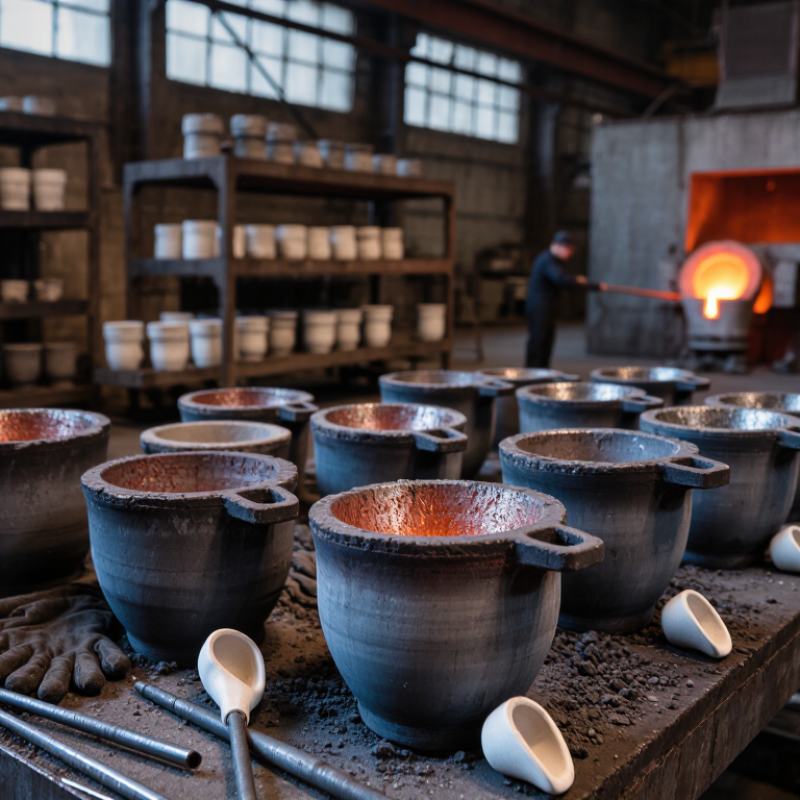
How to Choose the Best Clay Graphite Crucible?

Understanding Clay Graphite Crucibles and Their Main Applications

Clay graphite crucibles combine graphite’s thermal conductivity with clay’s structural strength. They are widely used for melting aluminum, copper, brass, bronze, and other nonferrous alloys. Their graphite content supports fast heat transfer, while the clay bond helps the crucible resist mechanical stress during handling.

The market need is substantial. The U.S. Geological Survey’s Mineral Commodity Summaries 2024 recorded approximately 70 million metric tons of global aluminum smelter production in 2023. The same report listed global mined copper production at about 22 million metric tons. These figures reflect the scale of industries relying on controlled melting and reliable refractory equipment. Foundries, machine shops, technical schools, and laboratory operations use clay graphite crucibles for batch melting, alloy preparation, and small-scale casting.

Choosing the right crucible requires more than checking capacity. Match its volume to the metal charge, leaving space for expansion and safe pouring. Check the alloy, furnace temperature, heating method, and expected cycle frequency. A crucible exposed to repeated thermal shock may fail early, even when its rated temperature looks sufficient. Keep it dry, preheat it gradually, and inspect it for cracks or unusual wear.

No crucible is universally best. In practice, operators sometimes prioritize price and overlook wall condition or furnace compatibility. That mistake can become expensive. The American Foundry Society emphasizes process control and inspection as key factors in foundry reliability. A practical choice should consider thermal performance, chemical resistance, handling safety, and the actual working environment—not just a catalog specification.

Identifying the Crucible Size, Shape, and Capacity You Need

Choosing a clay graphite crucible starts with the metal charge, not the furnace opening. Measure the actual chamber clearance, including lid movement and lifting tools. A crucible that barely fits can become difficult to handle when hot.

Capacity should include working volume, not only the manufacturer’s maximum rating. Leave space for expansion, stirring, and a controlled pour. For many melting tasks, using about 70–80% of the stated capacity provides better control. Calculate capacity from the metal’s density and mass. Copper, aluminum, and cast iron occupy different volumes.

Shape affects heating and pouring. A taller crucible can suit narrow furnaces, while a wider body may improve stability and heat distribution. A rounded bottom often supports even heating, but it may require a compatible furnace base. Check the pouring lip carefully. A clear, smooth lip reduces drips and helps direct metal into a small mold.

Small details matter.

I once assumed the largest crucible was the most efficient choice. It was not. Excess empty space slowed heating and made pouring less precise. Wall thickness also deserves attention, because thicker walls improve durability but may require more heating time.

Review the crucible’s rated temperature, recommended charge, and handling method before purchase. These figures should come from technical documentation, not guesswork. If your furnace or material changes, recheck the size calculation. q

Comparing Graphite Purity, Clay Quality, and Thermal Performance

Choosing a clay graphite crucible starts with the metal and furnace, not the catalogue photograph. Graphite purity affects oxidation resistance, thermal conductivity, and contamination risk. Higher purity helps sensitive alloys, but it cannot prevent every failure. A crucible with moderate graphite content may outperform a purer model when its clay bond is stronger. Request data for graphite percentage, porosity, density, and maximum working temperature. Supplier documents matter. Furnace records matter more.

Clay quality controls strength during heating, pouring, and cooling. Well-processed clay should resist cracking and maintain shape after repeated thermal cycles. Look for consistent wall thickness and a smooth inner surface. Rough patches can trap metal residue and complicate cleaning. Small cracks matter. Inspect the rim and base before every use. I have found that rushed preheating causes more damage than many operators expect, especially when moisture remains inside the crucible.

Thermal performance includes heat-up speed, temperature stability, and resistance to thermal shock. Match the crucible size to the furnace; oversized vessels often heat unevenly. Check whether the working temperature leaves a safe margin below the material’s stated limit. The limit may assume ideal conditions. Real furnaces fluctuate. Record heating time, melt appearance, wall wear, and pouring behavior across several cycles. A simple log can reveal whether poor results come from clay quality, graphite purity, or an unstable firing schedule.

Checking Compatibility With Metals, Alloys, and Melting Conditions

How to Choose the Best Clay Graphite Crucible?

Checking compatibility begins with the metal, not the crucible shape. Clay graphite crucibles suit many nonferrous metals, including aluminum, copper, brass, and bronze. Their graphite content improves thermal shock resistance and heat transfer. However, molten zinc can attack graphite and clay, especially at prolonged temperatures. Fluxes may cause even faster erosion. Always compare the alloy’s melting point, holding time, and chemical activity with the crucible’s verified working limit.

The temperature margin matters. Aluminum melts near 660°C, while copper melts at 1,085°C. Iron requires about 1,538°C, creating a harsher operating environment.

The USGS Mineral Commodity Summaries 2024 reported approximately 70 million metric tons of primary aluminum production in 2023. The World Steel Association reported about 1.85 billion tonnes of crude steel production during the same year.

These figures show why crucible selection must reflect real furnace demands, not general material labels. A crucible rated for copper may still fail during repeated, extended heating. That detail is easy to underestimate.

Tips: Check the alloy and flux compatibility chart. Measure the furnace atmosphere. Oxidizing flames accelerate graphite loss. Preheat gradually, and avoid sudden charging with wet scrap. Inspect for hairline cracks after every cycle. In practice, no selection is perfect; actual melt residues may reveal problems earlier than specifications. Use a trial batch before full production.

Evaluating Durability, Safety Features, and Overall Cost Value

Choosing the best clay graphite crucible requires more than comparing purchase prices. In daily foundry work, durability depends on graphite purity, clay bonding, wall uniformity, and resistance to thermal shock. A crucible that survives repeated heating usually delivers better value than a cheaper unit that cracks after several cycles. My first cost estimate was wrong. I ignored production downtime and metal loss.

Safety deserves equal attention. The crucible should have a stable base, predictable pouring lip, and enough wall strength for mechanical handling. A fitted lid can reduce oxidation, splashing, and heat loss during melting. OSHA’s exposure limits for graphite dust include a 15 mg/m³ total-dust limit and a 5 mg/m³ respirable-fraction limit. Good ventilation, careful loading, and clean handling remain essential. The crucible itself cannot replace workplace controls.

Overall cost value is best measured by cost per successful melt. Record purchase price, service life, rejected batches, fuel use, and disposal time. USGS Mineral Commodity Summaries 2024 reported approximately 1.6 million metric tons of global natural graphite production in 2023, reminding buyers that raw-material markets can shift. A 20% price increase may matter less than a 30% reduction in usable cycles. Still, laboratory ratings are not factory results. Test a small batch first, inspect cracks after cooling, and compare actual cycle data before committing to larger orders.

How to Choose the Best Clay Graphite Crucible? - Evaluating Durability, Safety Features, and Overall Cost Value

Selection Profile Typical Graphite Content Typical Service Temperature* Thermal-Shock Resistance Oxidation Protection Recommended Metal Applications Expected Durability Relative Purchase Cost Overall Cost Value
Standard clay-graphite Approximately 25–40% by mass About 1,200–1,400 °C, depending on design and atmosphere Good when preheated correctly Basic glaze or protective coating; graphite must be shielded from prolonged air exposure Aluminum, copper, brass, and other nonferrous alloys Low to medium; sensitive to overheating, impact, and rapid temperature changes 1.00 × baseline High for intermittent, moderate-duty melting
High-density clay-graphite Approximately 30–50% by mass About 1,300–1,500 °C, depending on formulation and furnace conditions Very good; lower porosity helps reduce penetration and cracking Usually supplied with a more protective glaze or coating Frequent aluminum, copper, brass, and bronze production Medium to high under controlled charging and heating 1.20–1.60 × baseline Very high when reduced replacement frequency matters
Silicon-carbide-reinforced clay-graphite Graphite and silicon-carbide content varies by formulation About 1,400–1,600 °C in suitable furnace conditions Excellent; designed for repeated heating and cooling cycles Typically uses a high-temperature coating; oxidation control remains necessary High-throughput aluminum, copper alloys, brass, and bronze High under continuous or demanding production conditions 1.50–2.20 × baseline High for high utilization and severe thermal cycling
Heavy-wall production crucible Formulation varies; generally optimized for mechanical strength Usually about 1,200–1,500 °C, subject to the manufacturer’s rating Very good after gradual drying and preheating Coating quality and furnace atmosphere are critical Large-batch nonferrous melting where physical handling loads are high Medium to high; added mass increases heat-up time 1.30–1.90 × baseline High when impact resistance and service life are priorities
Small-capacity laboratory crucible Approximately 20–40% by mass About 1,100–1,400 °C, depending on size and furnace type Good because of the small thermal mass; still requires gradual heating Protective coating recommended for repeated use Small samples of aluminum, copper, brass, and precious-metal alloys Low to medium; small dimensions make handling damage more likely 0.60–1.10 × baseline High for testing, sampling, and low-volume work

*Temperature and cost guidance: Service-temperature ranges are typical operating ranges for clay-graphite crucibles and are not universal ratings. The actual limit depends on crucible geometry, composition, coating, furnace atmosphere, heating rate, and molten-metal chemistry.

Relative purchase cost: The baseline represents a standard crucible of comparable capacity. Actual pricing varies with size, wall thickness, production volume, coating, and delivery requirements.

Safety checklist: Inspect for cracks, chips, swelling, and coating failure before use; keep the crucible dry; dry and preheat it gradually; avoid charging wet or contaminated metal; use suitable lifting tools and heat-resistant personal protective equipment; and follow the furnace and crucible supplier’s rated limits.

×
img

    Contact Info

    PHONE NUMBER

    +1 (619) 661-5985

    EMAIL ADDRESS

    sale@roboticemotion.com

    ADDRESS INFO

    10030 Via de la Amistad San Diego CA 92154, United States